A New European Bloc?
The E5 format, which includes the UK despite its EU exit, could form the nucleus of a new strategic bloc, with members focusing on defence production and military mobility.
Europe's next major political organization may not necessarily emerge from another round of European Union enlargement.
Instead, the continent's changing security environment is creating conditions for a more flexible European organization operating alongside — rather than replacing — the EU and NATO.
Such an organization does not currently exist in the form described here. But developments in 2026 suggest that many of its building blocks already do.
The United Kingdom is outside the European Union but remains one of Europe's most important military powers. Norway is outside the EU but deeply integrated into European economic and security structures. Türkiye is a NATO member, a major regional military power and an EU candidate. Ukraine has become central to European security calculations.
At the same time, France, Germany, Poland, Italy, the Nordic countries and the Baltic states are developing increasingly flexible forms of cooperation outside traditional EU decision-making mechanisms.
The result raises an important question:
Could Europe eventually develop a new organization based not on political integration, but on strategic cooperation?
The E5 Shows What the Core Could Look Like
One of the most significant developments came in June 2026.
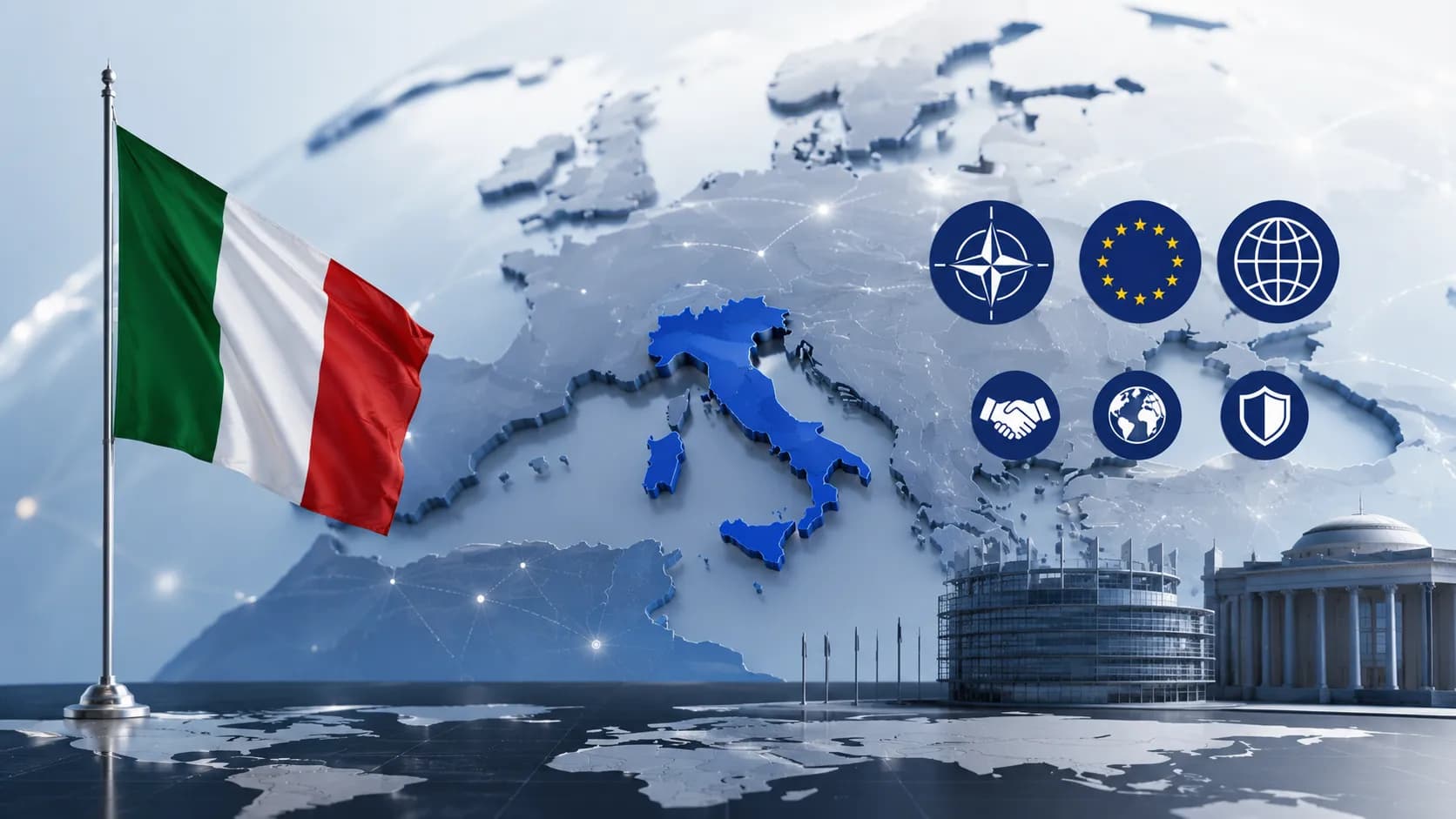
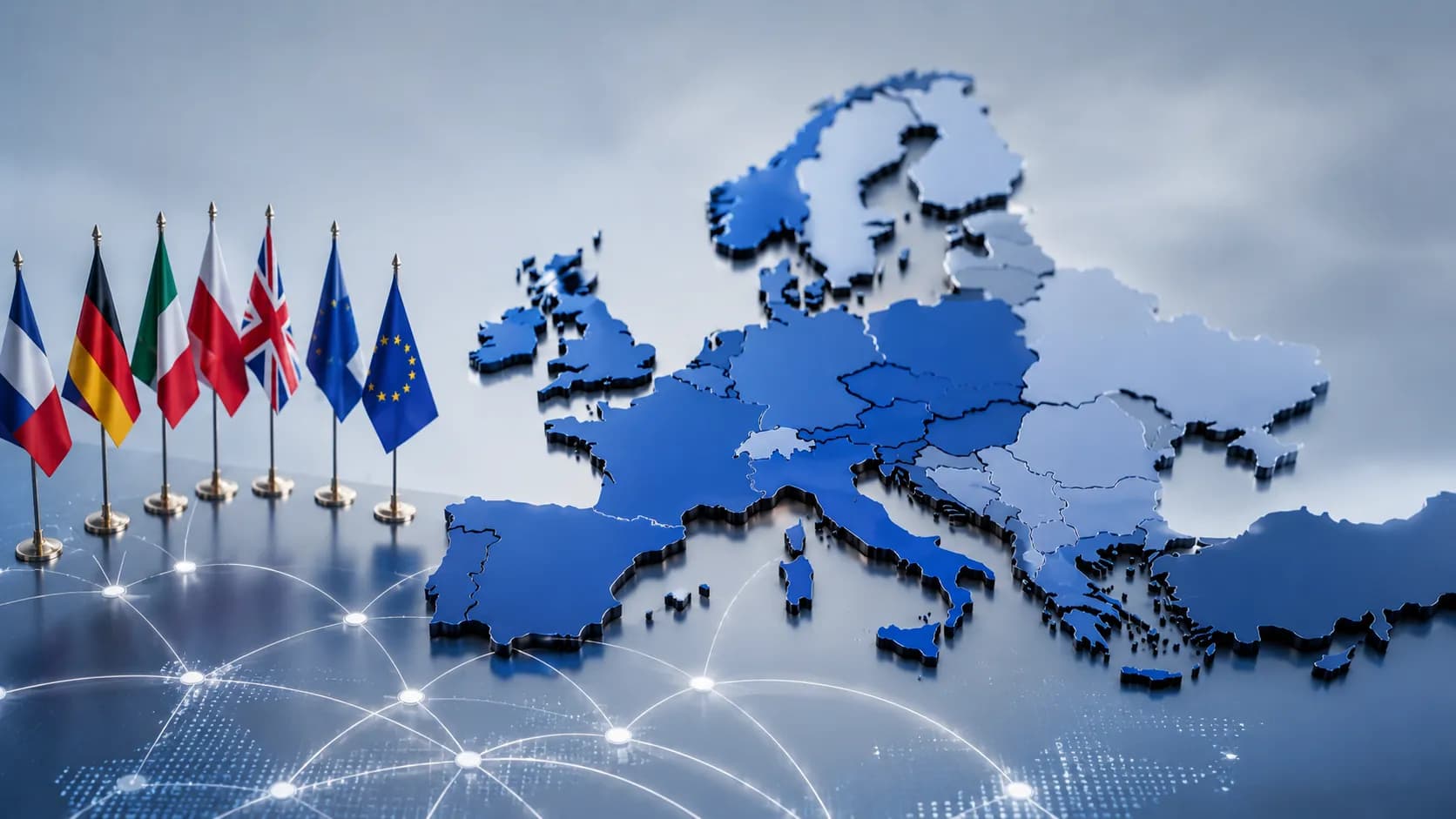
The leaders of France, Germany, Italy, Poland and the United Kingdom met in Berlin under the E5 format.
Together, these countries represent an extraordinary concentration of European economic, diplomatic and military power.
Their governments agreed to deepen cooperation in areas including defence production, military mobility, long-range weapons, air and missile defence and support for Ukraine.
The significance of the E5 lies partly in its membership.
The United Kingdom participates despite being outside the European Union.
This means the format is based primarily on strategic capability rather than EU institutional membership.
If expanded, an E5-style structure could become the political nucleus of a broader European strategic organization.
Northern Europe Already Has a Model
Northern Europe provides an even more developed example.
The Joint Expeditionary Force brings together the United Kingdom, Denmark, Estonia, Finland, Iceland, Latvia, Lithuania, the Netherlands, Norway and Sweden.
In March 2026, JEF leaders agreed to deepen cooperation on Ukraine, drones, technological innovation and security across the Baltic Sea, North Atlantic and High North.
By July, all ten countries had agreed on a new maritime initiative designed to increase integration between their naval forces.
The objective goes beyond occasional military exercises.
Participating navies are increasingly aligning doctrine, planning, training, logistics and capability development.
The Nordic-Baltic Eight is developing in parallel.
Denmark, Estonia, Finland, Iceland, Latvia, Lithuania, Norway and Sweden are strengthening cooperation in defence, digitalization, competitiveness and economic resilience.
Together, these countries represent a regional economy comparable in scale to a major global economic power.
These structures demonstrate that European countries can create effective regional organizations without transferring sovereignty to Brussels.
The Organization Could Be Wider Than the EU
A hypothetical new European organization could therefore have a fundamentally different membership philosophy from the European Union.
Instead of requiring countries to adopt a common legal and political system, membership could depend on strategic geography, economic capability and willingness to cooperate.
A possible core could include:
France, Germany, the United Kingdom, Italy and Poland as the largest strategic powers.
The Nordic and Baltic countries as the northern security bloc.
Türkiye as the connection between Europe, the Black Sea, Mediterranean, Caucasus and Middle East.
Ukraine as a major eastern military and agricultural power.
Norway as an important energy and maritime state.
Other European countries could participate according to their interests and capabilities.
Such a structure would create something the EU currently cannot fully provide: a continental platform capable of including EU members and major non-EU European powers under the same strategic framework.
Defence Would Be the First Pillar
Security would probably provide the strongest justification for creating such an organization.
Russia's war against Ukraine has dramatically changed European threat perceptions.
In June, leaders from Estonia, Finland, Latvia, Lithuania, Poland, Romania and Sweden described Europe's eastern flank from the Arctic through the Baltic to the Black Sea as the continent's first line of defence.
They called for deeper cooperation in drones, air defence, military mobility, infrastructure protection and defence production.
A new European organization could connect these regional initiatives.
Instead of creating a separate European army, participating countries could coordinate defence industries, ammunition production, drone technologies, cyber security, military logistics and critical infrastructure.
NATO would remain responsible for collective defence.
The new organization would concentrate on building European capacity.
Economics Could Become the Second Pillar
Defence alone would probably not be enough to sustain such an organization.
Economic cooperation would therefore be essential.
Unlike the EU single market, the new structure would not necessarily require common regulations across every sector.
It could concentrate on strategic industries.
Energy networks could connect Norway, the North Sea, the Mediterranean, Türkiye and Eastern Europe.
European defence companies could develop common production platforms.
Joint investment funds could finance ports, railways, energy corridors and digital infrastructure.
Critical minerals and industrial supply chains could be coordinated across participating countries.
Ukraine could provide agricultural capacity, industrial potential and eventually critical raw materials.
Türkiye could provide manufacturing, logistics and access toward Central Asia and the Middle East.
Britain, France and Germany could contribute financial markets, technology and advanced industry.
Northern Europe could contribute energy, digital technology and maritime expertise.
The result would resemble a strategic economic network rather than another European single market.
Türkiye Could Become a Key Member
Türkiye would be particularly important in such a model.
Traditional European institutions often view Türkiye primarily through the question of EU membership.
A strategic European organization would approach the country differently.
Türkiye controls access between the Black Sea and Mediterranean, possesses one of NATO's largest militaries, has a rapidly developing defence industry and provides transport connections toward the Caucasus, Central Asia and Middle East.
Its geographic position would make it difficult to construct a genuinely continental European security architecture without Turkish participation.
A flexible organization could therefore integrate Türkiye strategically without requiring the unresolved question of full EU membership to be settled first.
The European Political Community Is Already a Prototype
Europe already possesses another possible foundation.
The European Political Community brought together around 50 European countries at its May 2026 summit in Yerevan.
Its membership extends considerably beyond the European Union and provides a platform for discussing security, connectivity, energy and economic resilience.
The EPC deliberately avoids creating another highly bureaucratic institution.
That flexibility is both its weakness and its potential strength.
If European governments eventually wanted to create a more operational organization outside the EU, the EPC could provide the political umbrella while smaller groups such as the E5, JEF and NB8 provide the operational architecture.
Europe would then develop through overlapping circles rather than one centralized organization.
Not an Alternative to the EU
The most realistic version of such a bloc would not attempt to replace the European Union.
Recreating the EU would require another enormous bureaucracy, common legislation, courts, budgets and political institutions.
There is little evidence that European governments want that.
A new organization would instead focus on areas where flexible cooperation produces faster results:
defence, energy, strategic infrastructure, technology, critical minerals, border security and supply chains.
EU members could remain fully inside the European Union while simultaneously participating in the new structure.
Britain, Norway, Türkiye and potentially Ukraine could participate without becoming EU members.
The organization would therefore fill the geopolitical space between the EU and NATO.
Europe May Become a Continent of Overlapping Alliances
The deeper trend emerging in 2026 is already visible.
European cooperation is becoming increasingly flexible.
France and Germany are deepening bilateral strategic and defence cooperation.
Britain, France and Germany cooperate through the E3.
France, Germany, Britain, Italy and Poland are developing the E5.
Northern Europe has the JEF.
The Nordic and Baltic countries have the NB8.
Around 50 countries participate in the European Political Community.
Eastern flank countries are developing their own security coordination.
Rather than producing one new European super-organization, these structures may eventually begin connecting with each other.
That could create a new model of European integration.
The European Union would remain Europe's economic and regulatory centre.
NATO would remain the foundation of collective defence.
But between them could emerge a third structure — a flexible European strategic organization connecting EU and non-EU powers around defence, energy, technology, infrastructure and economic security.
If such an organization ever appears, it may not begin with a treaty or a new headquarters.
Its foundations may already be forming through the alliances Europe is building today.
Alvara Merrick
Contributing writer at EUReflect.
Follow EUReflect
See more of our reporting on Google
Mark EUReflect as a preferred source and our stories are ranked higher for you in Top Stories, Discover and Google News — and carry a “preferred” badge when they are cited in AI results.
Add EUReflect as a preferred source