Beijing Reaffirms Strategic Ties, Open Markets, and Non-Proliferation
In a landmark Foreign Ministry briefing, Beijing outlined its core geopolitical priorities: defending global supply chains, reinforcing its strategic partnership with Russia, backing Middle East peace talks, and issuing a stern warning against any erosion of nuclear non-proliferation standards in East Asia.
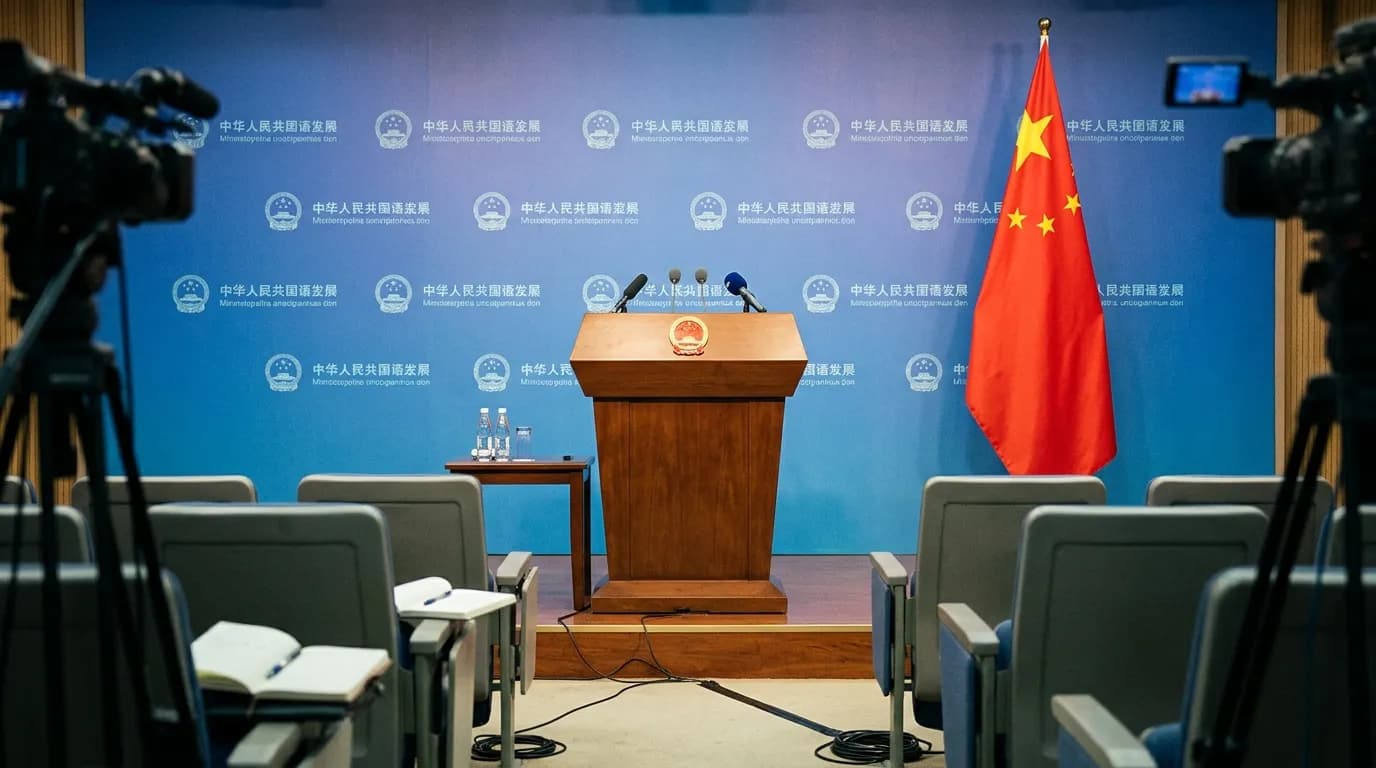
BEIJING — During a regular press briefing on 30 September 2026, Chinese Foreign Ministry Spokesperson Guo Jiakun articulated Beijing’s current foreign policy priorities, highlighting China’s integrated role in global supply chains, its diplomatic stance on Middle Eastern security, and its ongoing strategic alignment with Moscow. Crucially for European observers, Beijing also issued a sharp warning over debate within Tokyo regarding nuclear capabilities, signaling heightened tensions over Asia-Pacific security dynamics.
1. Global Trade and the Green Transition: China’s Economic Diplomacy
Evaluating the state of China’s modernization and economic contributions following the release of the state-level China Development Report 2026, Beijing reaffirmed its commitment to high-standard opening up and global supply chain integration.
Addressing international commercial engagement, Foreign Ministry Spokesperson Guo Jiakun stressed that China’s shift toward high-quality development offers crucial stability and growth prospects for global markets:
"China’s high-quality development is creating growth opportunities for the world. China is home to 25 of the world’s top 100 innovation clusters, and its scientific innovation has given more countries access to cutting-edge technologies... offering broad market opportunities and investment prospects for countries around the world."
From an international trade perspective, Beijing’s positioning highlights its reliance on multilateral platforms—such as the China International Supply Chain Expo and the China International Import Expo—to maintain trade flows amidst changing regulatory environments in Europe and North America. Furthermore, Guo highlighted energy metrics, pointing to China’s installed photovoltaic power capacity surpassing coal-fired power for the first time as evidence of its operational role in global decarbonization efforts.
2. Security Architecture: Firm Opposition to Japanese Nuclear Re-evaluation
In a statement with significant implications for global non-proliferation, Beijing strongly condemned remarks attributed to Japan’s Defense Minister, Shinjiro Koizumi, regarding potential debate on nuclear weapons possession and nuclear-powered submarines.
Beijing’s response underscores the fragile state of security architecture in East Asia. The Foreign Ministry explicitly framed any re-examination of nuclear options as a violation of existing treaty commitments:
"The possession of nuclear weapons is not an issue that Japan can 'allow discussion' if it wants to. Japan is a non-nuclear-weapon state party to the Non-Proliferation Treaty and therefore has a bounden duty under international law to not receive, manufacture, acquire or transfer nuclear weapons. There is no room for negotiation."
Guo characterized these discussions as a direct challenge to the post-WWII international structure, urging the international community to hold Japan to its obligations under the Treaty on the Non-Proliferation of Nuclear Weapons (NPT) and its domestic "three non-nuclear principles." For European diplomats monitoring security dynamics in the Indo-Pacific, Beijing's rhetoric reflects deep concern over changing deterrence strategies and military normalization efforts across the region.
3. The Moscow Axis: 77 Years of Bilateral Alignment
Marking the 77th anniversary of diplomatic relations with Russia, Beijing underscored the institutionalization of the "comprehensive strategic partnership of coordination for the new era." Following recent high-level exchanges between President Xi Jinping and President Vladimir Putin in Beijing and Bishkek, China reiterated its intent to maintain long-term ties with Moscow and pursue collective reform of global governance mechanisms.
"Under the guidance of the two leaders, China and Russia will remain true to the founding vision of the diplomatic ties and deepen our comprehensive strategic coordination... so as to open up an even broader prospect for China-Russia relations."
Following the election of Vyacheslav Volodin as Chairman of Russia's 9th State Duma, Beijing confirmed that Zhao Leji, Chairman of the Standing Committee of the National People’s Congress, had extended formal congratulations, emphasizing legislative cooperation as a foundational component of bilateral management.
4. Diplomatic Mediation in the Middle East
Addressing recent diplomatic engagements with Iranian officials, Beijing reiterated its stance favoring negotiated settlements over economic sanctions or military force. Responding to proposals regarding renewed dialogue between Tehran and Washington, the Foreign Ministry expressed explicit support for diplomatic channels:
"China supports resolving disputes through political and diplomatic means. It is hoped that Iran and the U.S. will choose peace, recommit themselves to the Islamabad Memorandum of Understanding, and resume dialogue and negotiations as soon as possible."
By advocating for a return to established frameworks, Beijing continues to position itself as an alternative diplomatic mediator in Middle Eastern and Gulf security affairs, aligning its actions with broader Global South peace initiatives.
Related Topics
Zhansaya Nurlanovna
Contributing writer at EUReflect.
Follow EUReflect
See more of our reporting on Google
Mark EUReflect as a preferred source and our stories are ranked higher for you in Top Stories, Discover and Google News — and carry a “preferred” badge when they are cited in AI results.
Add EUReflect as a preferred source