Berlin and Beijing Urge Economic Stability Amid Rising EU-China Trade Friction
China's Foreign Minister Wang Yi has urged Germany to oppose trade protectionism and maintain open markets following talks with German representative Johann Wadephul. While Beijing advocated for dialogue and mutual cooperation to avoid a trade war, Berlin emphasized that stable economic relations require a genuine level playing field and fair competition for European companies. The high-level discussions also touched on global security issues, including Ukraine, Iran, and stability in the Taiwan Strait.
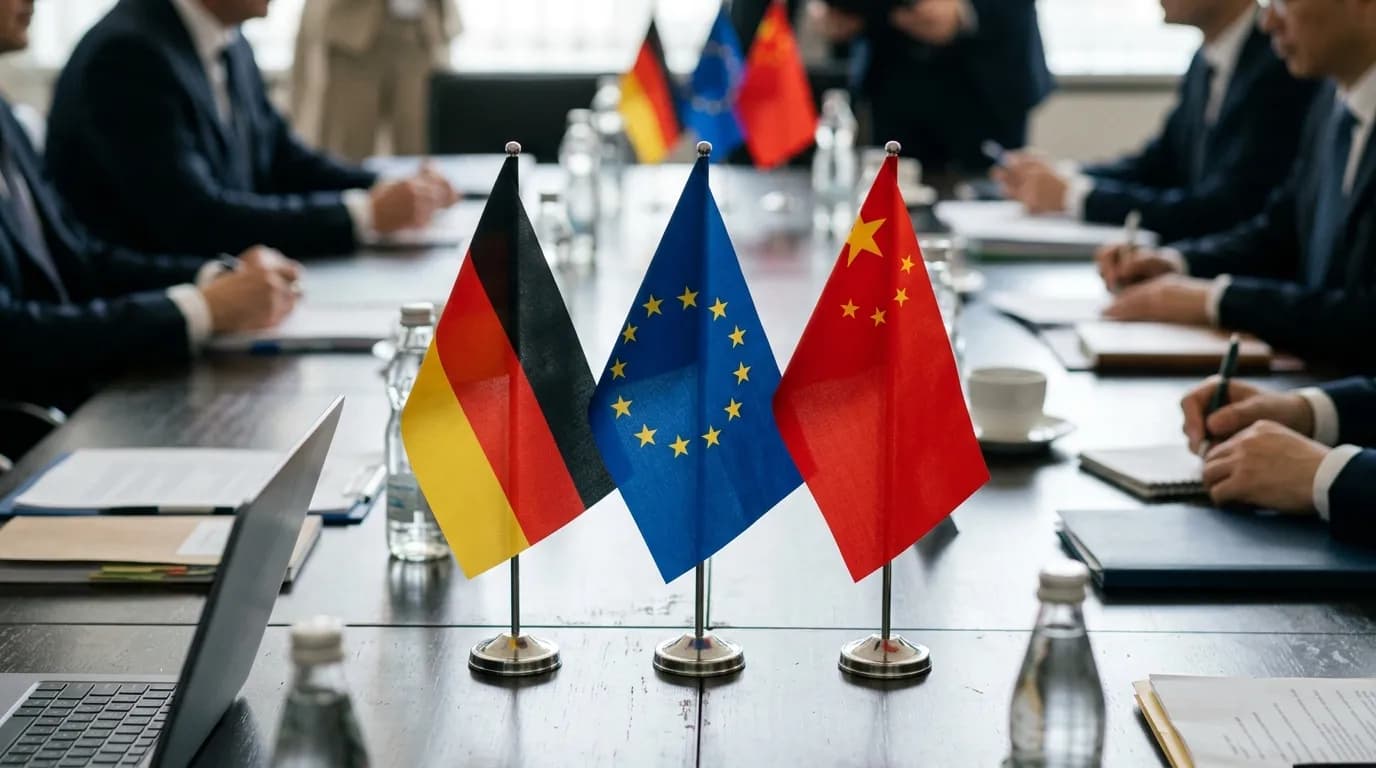
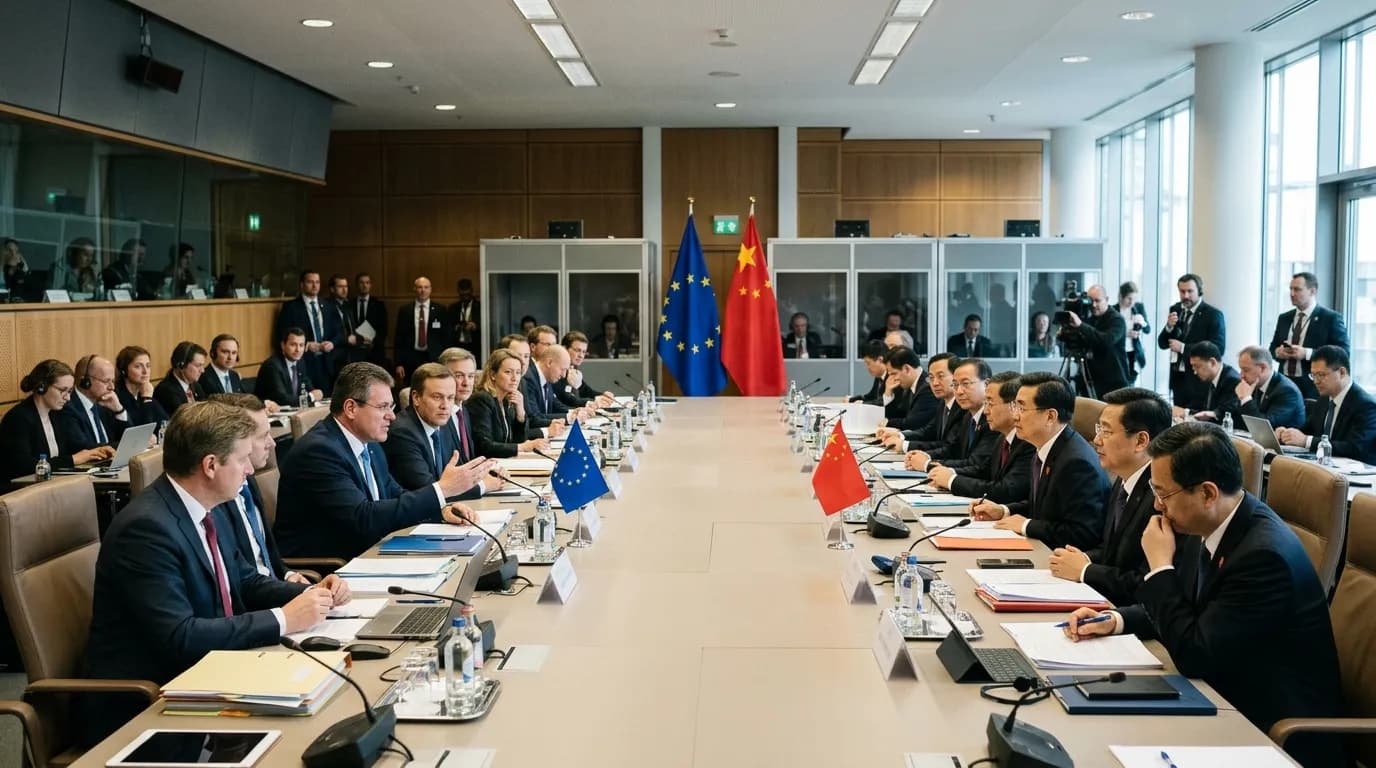
BRUSSELS — Top diplomats from Germany and China held talks on the 21st of September to address growing economic friction between Beijing and the European Union, reaffirming the need for stable trade relations while highlighting ongoing disagreements over market fairness and regional security.
In a telephone call between Chinese Foreign Minister Wang Yi and German politician Johann Wadephul, Beijing emphasized the strategic importance of Sino-European relations, warning against an escalation into protectionism. According to a statement released by the Chinese Foreign Ministry, Wang urged Germany to maintain a pragmatic stance within the bloc and support free-market principles, framing bilateral cooperation as essential to the economic interests of both nations.
Wang stressed that China and the EU remain comprehensive strategic partners that should avoid engaging in trade disputes. He called on European decision-makers to meet Beijing "halfway" through dialogue rather than unilateral measures, while urging Berlin to play a constructive role in preventing trade barriers within the single market.
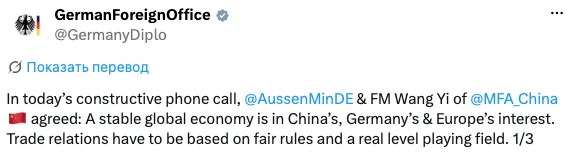
Responding to the exchange, the German Foreign Ministry confirmed that both sides agreed on the critical need for global economic stability. However, Berlin reinforced Brussels' broader stance on commercial policy, emphasizing on social media that future trade relations must strictly adhere to fair rules and a genuine level playing field for European businesses.
The diplomatic engagement comes at a sensitive moment for EU-China relations, as European institutions scrutinize structural trade imbalances and supply chain dependencies. Beyond economic policy, the call touched on major geopolitical issues, including the conflicts in Ukraine and Iran, as well as stability across the Taiwan Strait. Chinese officials called on Germany to respect Beijing's core interests regarding Taiwan to maintain the necessary conditions for upcoming high-level bilateral exchanges.
Related Topics
Botakoz Unbayeva
Contributing writer at EUReflect.
Follow EUReflect
See more of our reporting on Google
Mark EUReflect as a preferred source and our stories are ranked higher for you in Top Stories, Discover and Google News — and carry a “preferred” badge when they are cited in AI results.
Add EUReflect as a preferred source