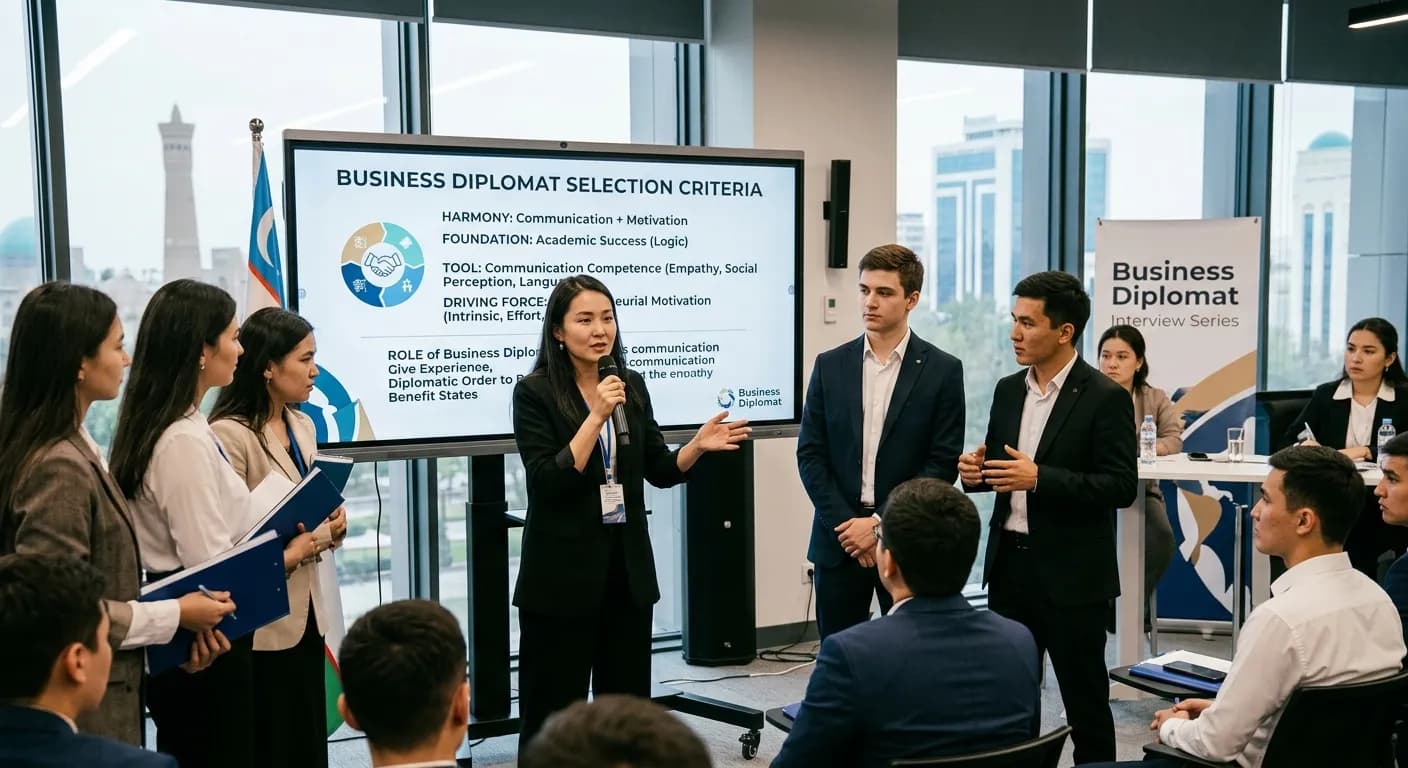
Business Diplomat: Diplomacy Education Begins in High School
This interview is conducted with Professor Jabborov Hazrat Husenovich, Professor at Tashkent State University of Oriental Studies and Doctor of Psychological Sciences (DSc).
Introduction
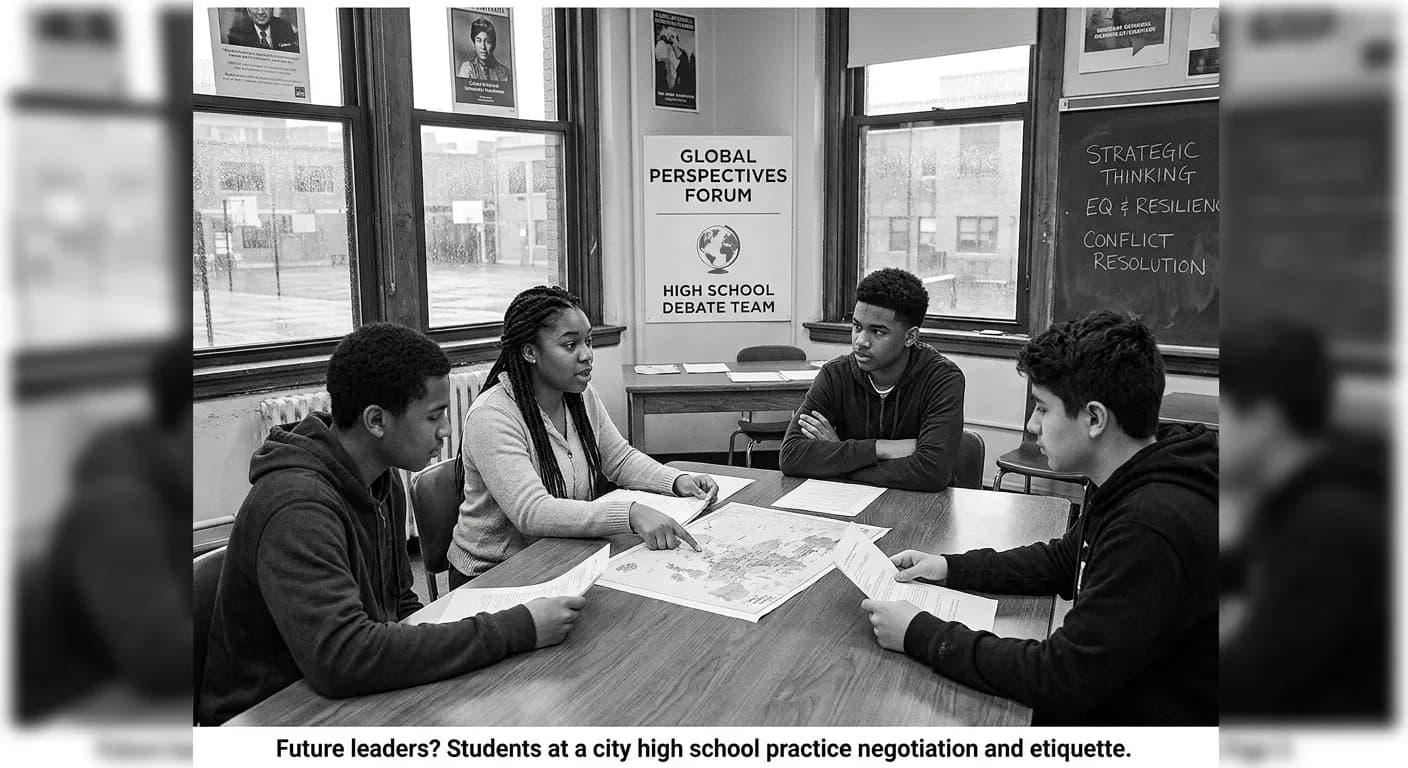
Diplomatic etiquette and negotiation skills are usually seen as subjects for university, or even for the first years of working life. Yet a young person's view of the world, way of arguing and habit of managing emotions take shape much earlier. In this part of its interview series, Business Diplomat puts the question of timing to a scholar: how early should these skills be taught, and are programmes at high-school level meaningful?
How early should diplomatic etiquette and negotiation skills be taught; are awareness programmes at high-school level meaningful?
"Yes, this is of very great significance and is highly necessary for contemporary education. Teaching diplomatic etiquette and negotiation skills only at university level is a belated step.
In our opinion, yes, this is of decisive importance in raising the young diplomats of the future. Teaching diplomatic culture and the art of negotiation only in professional life or at the university stage is a belated step.
Preparing a reserve of young diplomatic personnel early gives the following important results. A professional and personal foundation is formed. This has a psychological basis: the ages of 14–18 are the period in which strategic thinking, a global worldview and political and social awareness actively take shape in young people.
In addition, young people acquire emotional intelligence (EQ) and resilience skills. This too has a psychological basis. It is appropriate that the skills needed by a future diplomat, namely restraining anger, managing stress and a high level of empathy, be developed precisely from the school years.
Negotiation and communication skills form in young people. This too has a psychological basis. Giving the young generation international etiquette, logical argumentation and a culture of resolving conflicts peacefully at an early stage ensures that they grow into competent and intelligent diplomats in the future."
Business Diplomat commentary
The answer replies to the question with an unhesitating "yes" and says it twice. It then gives its reasoning under three headings, grounding each in psychology.
University is a belated step. The starting point is an objection to the common view. Teaching these skills only at university or in working life is described as "belated". The reasoning is simple: a young person arriving at university has largely formed their habits of argument and communication. Changing an established habit is much harder than forming it correctly from the start. Language learning is a good comparison: those who begin early speak more naturally.
First gain: a foundation. The answer defines the ages of 14–18 as the period in which strategic thinking, a global worldview and political and social awareness take shape. At this age a young person stops seeing the world as limited to their immediate surroundings and begins to look at a wider picture. A young person who meets other cultures, different points of view and international issues at exactly this time can also make their career choice accordingly. The phrase "reserve of personnel" is a reminder that this is a matter of human resource planning at national scale as much as an individual one.
Second gain: emotional intelligence and resilience. The answer names three skills: restraining anger, managing stress, and empathy. These develop through repetition and practice, not through information, and so they need time. Adolescence is when emotions are felt most intensely, and for that very reason it is the best time to learn to manage them. The benefit is not limited to diplomacy either: whatever profession they choose, a young person who can manage their emotions and understand others comes out ahead.
Third gain: negotiation and communication. The last heading contains three concrete subjects: international etiquette, logical argumentation and a culture of resolving conflicts peacefully. Logical argumentation teaches how to defend a view with reasons and how to listen to the opposing view. Peaceful conflict resolution shows that a disagreement is a problem to be solved, not a fight. At high-school age, debating, model negotiations and similar exercises are natural ways to teach these skills.
Awareness is a beginning. The question uses the phrase "awareness programmes", and that measure is right. At high-school level the aim is not to produce diplomats but to show young people that this field exists and to introduce the basic skills. Once the door is opened, a young person who is interested will continue along the path. The answer speaks of diplomats, but the same skills are just as valuable for young people heading into business.
The role of Business Diplomat. The platform's mission is to give young people experience, bring a diplomatic order to the business world, and benefit states by revitalising the economy. This answer offers guidance on where the word "young" in the first element of the mission should begin. Alongside university students and young professionals, Business Diplomat aims to consider awareness work for young people of high-school age and to remain open to cooperation with schools and educational institutions.
Conclusion
Introducing diplomatic etiquette and negotiation skills at high-school age is meaningful, because 14–18 is the period in which strategic thinking, emotional maturity and habits of communication take shape. Education that starts early provides a firm foundation, emotional resilience and communication skills. Waiting for university means missing that window. Business Diplomat aims to act on the understanding that the road to tomorrow's business diplomats begins at the school desk.
Mirzojon Kalandarov
Contributing writer at EUReflect.
Follow EUReflect
See more of our reporting on Google
Mark EUReflect as a preferred source and our stories are ranked higher for you in Top Stories, Discover and Google News — and carry a “preferred” badge when they are cited in AI results.
Add EUReflect as a preferred source