Business Diplomat: From Form to Substance
This interview is conducted with Professor Jabborov Hazrat Husenovich, Professor at Tashkent State University of Oriental Studies and Doctor of Psychological Sciences (DSc).
Introduction
Can diplomatic discipline be taught, and if so, how? For a platform that aims to bring a diplomatic order to the business world, the question is vital. Handing over the rules as a list is easy, but not everyone who knows the rules becomes a diplomat. In this part of its interview series, Business Diplomat puts the question directly to a scholar and receives clear advice about the platform's own method.
Question: As a scholar, what would be the most important advice you would give to a platform that aims to establish diplomatic discipline in the business world?
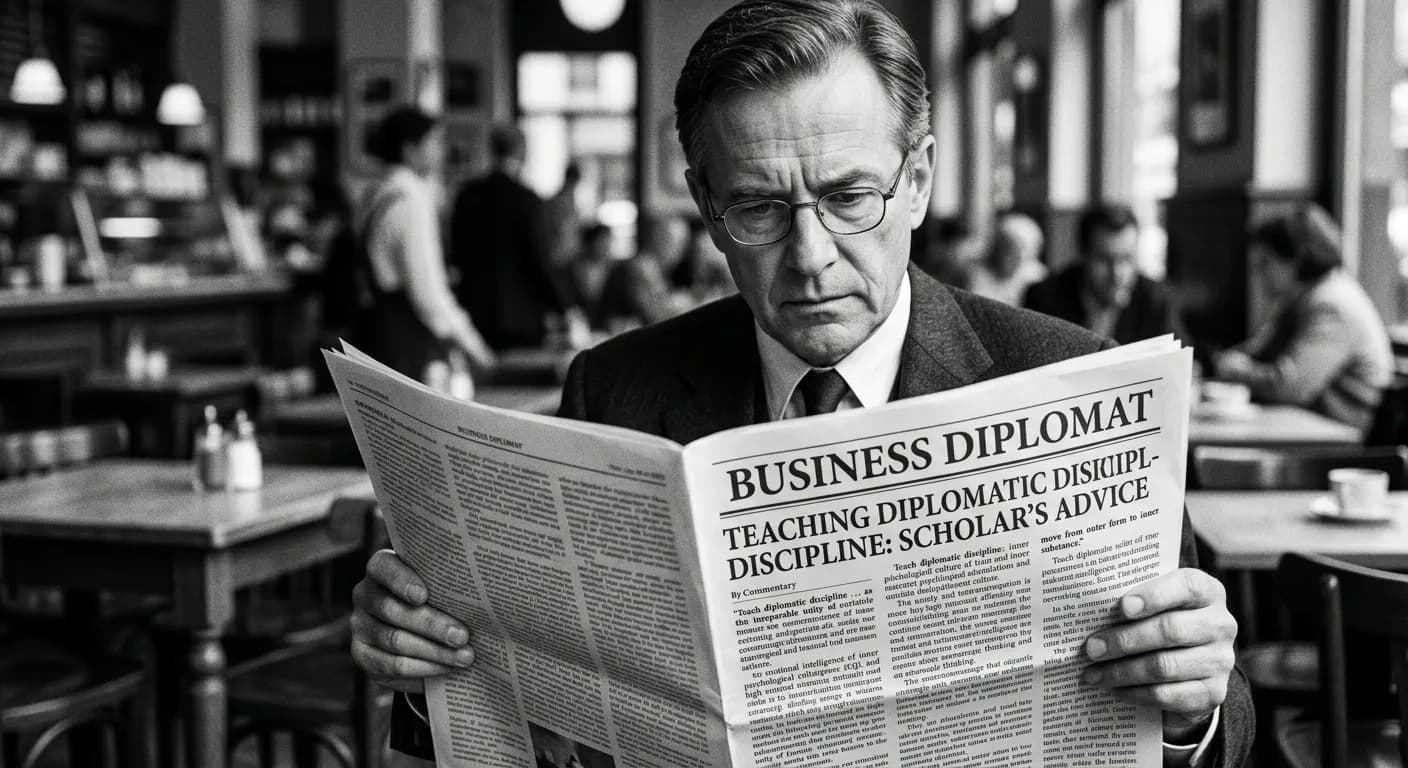
"Teach diplomatic discipline not only as a set of external rules, but as the inseparable unity of a person's inner psychological culture, high emotional intelligence (EQ) and strategic thinking.
In our view, its practical importance consists in this: the move from outer form to inner substance. Here, real diplomacy is not just a handshake or a dress code; it is understanding the worldview of representatives of different cultures, deep empathy and the ability to foresee a situation. The platform should not only make businesspeople memorise protocols; it should develop psychological flexibility and resilience to stress in them.
In addition, every commercial negotiation is, in a sense, a conflict of interests. Diplomatic discipline should serve as a psychological tool that allows businesspeople to rein in emotions (anger, anxiety) and direct communication into a constructive, not a destructive, channel. In my opinion, business diplomacy means creating mutual socio-psychological safety and a climate of long-term trust in the business environment."
Business Diplomat commentary
This answer is advice addressed directly to Business Diplomat, and the platform regards it as a guide. The message is clear: teaching the rule is not enough; the person who will carry the rule has to be developed.
The unity of three elements. The first sentence redefines what diplomatic discipline consists of: inner psychological culture, emotional intelligence and strategic thinking. The key word is "inseparable". A person who thinks strategically but has weak emotional intelligence makes the right plan and cannot carry it out at the table. A person with high emotional intelligence but no strategic view builds good relationships without knowing where they want to arrive. And a person whose inner culture has not settled forgets under pressure what they have learned. Discipline is these three working together.
From outer form to inner substance. This is the most memorable phrase in the answer. The handshake and the dress code are form, and they are necessary, but they are not diplomacy itself. The answer describes the substance through three abilities: understanding the worldview of other cultures, deep empathy, and foresight. The difference shows at once in practice. Someone who has memorised a rule does not know what to do when a situation arises that is not in the book. Someone who understands why the rule exists finds the right conduct in the new situation too, because they have grasped the respect and the logic behind it.
Resilience, not rote learning. The concrete request to the platform comes down to two abilities: psychological flexibility and resilience to stress. International business does not go as planned. Meetings are postponed, offers are refused, counterparts react unexpectedly. Flexibility is finding a new route when the plan breaks down. Resilience is keeping one's judgement under pressure. Neither can be passed on in a presentation; they develop through practice, experience and guidance.
Managing emotion is a tool. The third paragraph opens with a realistic observation: every commercial negotiation is in some sense a conflict of interests. That conflict is not denied; it is managed. The answer names two emotions in particular, and both are poor advisers in negotiation. Anger turns the other side into an enemy and burns bridges. Anxiety leads to hasty concessions and wrong decisions. Diplomatic discipline is described here as reining emotion in, not suppressing it: the person is aware of what they feel but does not hand their behaviour over to it. Communication then moves towards a conversation in search of a solution, not a destructive argument.
A definition of business diplomacy. The last sentence gives a concise definition: business diplomacy means creating mutual socio-psychological safety and a climate of long-term trust. This takes business diplomacy beyond individual deals. The aim is a lasting environment in which the parties feel safe and can therefore speak openly. Agreements are the natural product of that environment.
The role of Business Diplomat. The platform's mission is to give young people experience, bring a diplomatic order to the business world, and benefit states by revitalising the economy. This advice explains why the first element of the mission is "giving experience" and not "passing on knowledge". Flexibility, resilience and empathy develop through experience. Business Diplomat aims to build its programmes not only on protocol knowledge but on real situations, practical work and the guidance of experienced figures.
Conclusion
Diplomatic discipline is not a list of rules but the unity of inner culture, emotional intelligence and strategic thinking. Teaching it requires moving from form to substance, building flexibility and resilience in place of rote learning, and putting emotion at the service of constructive communication. Taking this advice as its roadmap, Business Diplomat aims to raise a generation of business diplomats who have internalised the rules, not merely learned them.
Mirzojon Kalandarov
Contributing writer at EUReflect.
Follow EUReflect
See more of our reporting on Google
Mark EUReflect as a preferred source and our stories are ranked higher for you in Top Stories, Discover and Google News — and carry a “preferred” badge when they are cited in AI results.
Add EUReflect as a preferred source