Business Diplomat: Greeted by Your Dress, Seen Off by Your Words
This interview is conducted with Prof. Dr. Birol Mercan, Professor of Economics at the Department of Economics, Faculty of Political Science, Necmettin Erbakan University, who is among Turkey’s forward-looking academics engaged in international work with young people. Prof. Dr. Mercan conducts academic research in areas including economic theory, regional economics, industrial economics, competition, innovation, social capital, and economic growth. In addition to his academic work, he places particular importance on providing young people with international experience and developing academic cooperation with different countries.
Introduction
Doing business in a foreign country is not only an investment decision. The entrepreneur goes there for their own interest, and the host country accepts them for its own. Whether these two interests can run side by side for long depends less on figures than on how the parties treat each other. In this part of its interview series, Business Diplomat presents an answer that explains the advantages of protocol knowledge through observations from the field and a proverb.
What advantages does knowing diplomatic rules and protocol give to businesspeople?
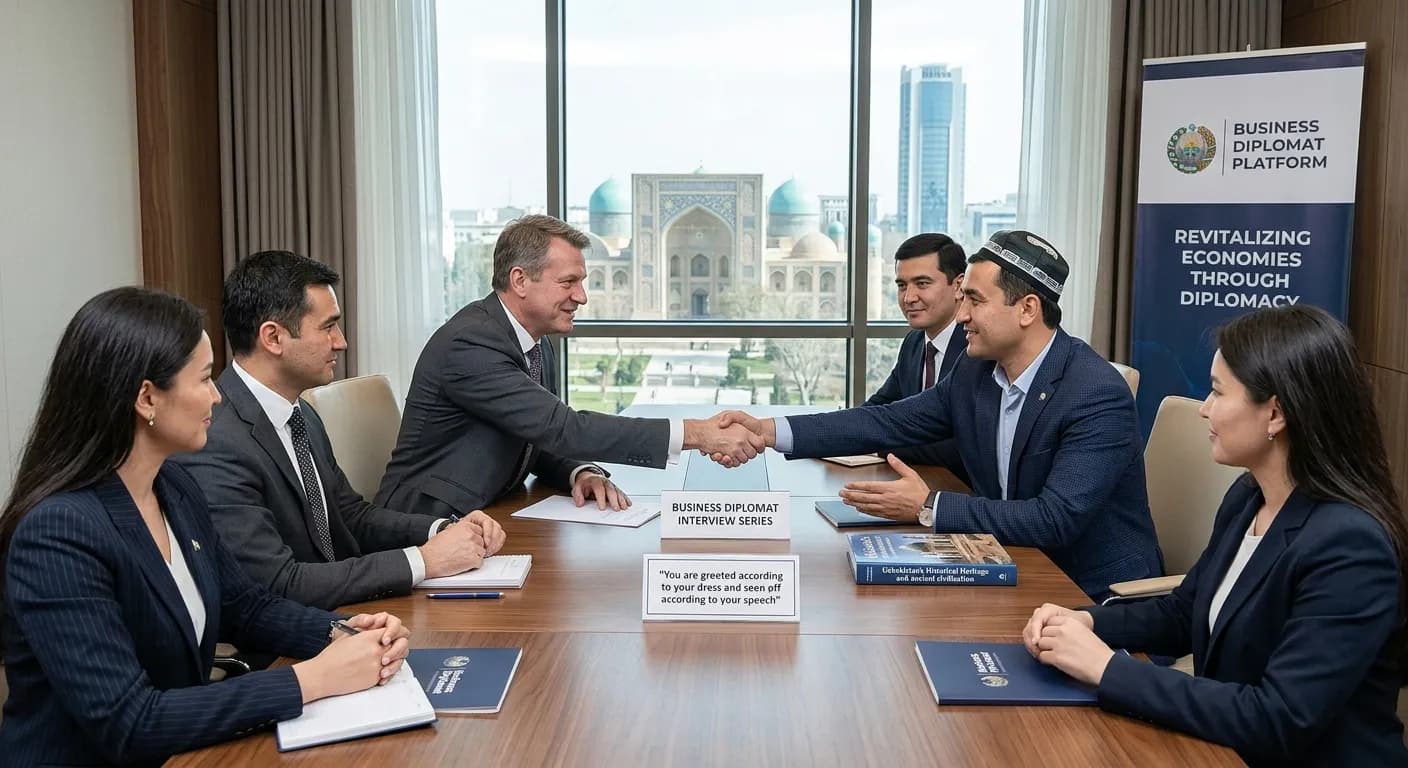
"There is a well-known saying: 'You are greeted according to your dress and seen off according to your speech.' Diplomacy is the art of managing processes such as protecting, sustaining and looking after mutual interests. A businessman invests in the country he goes to for his own interests, and the host country accepts him for its own interests. If there is no diplomat's finesse and wisdom in the process, it is not possible for mutual interests to continue for long. Developing countries in particular put forward their own value judgements and their ancient cultural distinction (for example, historical heritage among the Uzbeks, the ancient civilisation in Egypt, etc.) and want these to be respected. If these and similar concerns are ignored, the venture has no chance of success. I do not think these are given much attention in a developed country. In fact, a business meeting should not go beyond business. The country's political position, its relations with its neighbours and so on will affect the negotiation process. For this reason, it is important that a country's sensitive issues be reviewed before business meetings and that the entrepreneur be briefed on them. The same applies to the host country."
Business Diplomat commentary
This answer treats protocol not as a matter of manners but as the condition for mutual interest to last. The opening proverb sums up the whole.
Dress and speech. The saying separates two stages. The first impression is formed by appearance, dress and correct conduct. The lasting impression is decided by what a person says and how. Protocol knowledge helps at both stages: it gets you through the door properly, but the real test begins at the table. A businessperson who is well dressed but speaks without regard for the host's sensitivities is greeted warmly and seen off coldly.
Both sides have an interest. The answer defines diplomacy as the art of managing mutual interests and takes an honest look at the business relationship: the investor comes for their own interest, and the host country accepts them for its own. That is healthy ground. The problem lies not in the existence of interests but in failing to manage them. This is where the two qualities the answer looks for come in: finesse and wisdom. Finesse is being able to speak without giving offence. Wisdom is knowing when to press and when to hold back. Without them, even a partnership that benefits both sides on paper will not last.
Respect for cultural pride. The most concrete observation concerns the value countries place on their historical and cultural heritage. Uzbekistan's historical heritage and Egypt's ancient civilisation are given as examples. When an entrepreneur going to these countries shows that they know their counterparts are heirs to a deep past, and that they respect it, doors open differently. Conversely, an investor who looks at the counterpart only as a market or a cheap place to produce is met with distance even when bringing the best offer. The verdict is firm: if these sensitivities are ignored, the venture has no chance.
A note on developed countries. The answer takes the view that such matters receive less attention in developed countries. The observation is that cultural pride is expressed more openly in developing countries, and it reflects experience from the field. From Business Diplomat's side a note can be added: in developed countries sensitivities do not vanish; they usually change form. There, the points that matter may be punctuality, legal procedure, transparency and compliance with institutional rules. Preparation is needed in every market; only what one prepares for changes.
The business table and the shadow of politics. Here the answer strikes a fine balance. On one hand it says a business meeting should not go beyond business: the entrepreneur should not enter political debates or take sides. On the other it accepts that a country's political position and relations with its neighbours will affect the negotiation. The two do not conflict. To avoid talking politics, one has to know it. Someone who does not know which subject is sensitive can say the wrong thing without meaning to, give the wrong example or speak warmly of a country with which the host has tense relations.
Briefing in advance. The practical recommendation is clear: before meetings, the country's sensitive issues should be reviewed and the entrepreneur briefed. Diplomats go to every posting with such preparation. Most businesspeople do not have that facility. The last sentence is an important complement: the same applies to the host country. Respect and preparation do not run one way. The side receiving the investor should also know the investor's country, expectations and sensitivities.
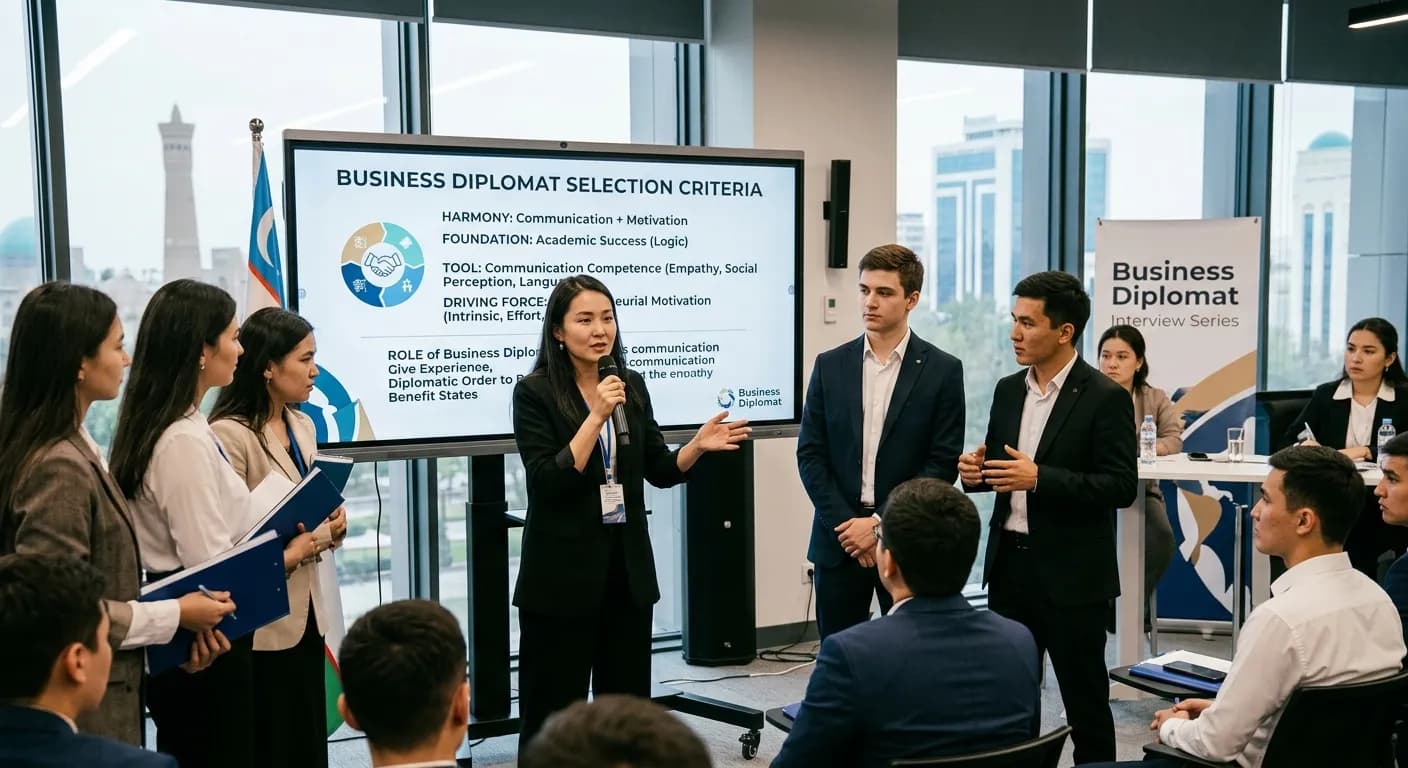
The role of Business Diplomat. The platform's mission is to give young people experience, bring a diplomatic order to the business world, and benefit states by revitalising the economy. The advance briefing the answer proposes is one of the most concrete services a platform can take on. Business Diplomat aims to offer its members preparation on the cultural, historical and political sensitivities of the countries they are going to, and to make that preparation mutual, for both the investor and the host.
Conclusion
Protocol knowledge earns a businessperson a good welcome; finesse and wisdom earn a good farewell. Whether mutual interest lasts depends on respect shown for the host country's values and cultural heritage and on being prepared in advance for sensitive issues. That preparation applies to both sides. Business Diplomat aims to be a platform that equips businesspeople before they sit down at the table and makes mutual respect the basis of the business relationship.
Alıntıda yazım hatalarını düzelttim ve bir cümleyi anlamına göre toparladım ("karşılıklı çıkarların uzun süre devam etmesi mümkün olmamaktadır"); yanlış anladıysam söyleyin, düzeltirim.

İsmail Polat
Ph. D. in International Relations
Follow EUReflect
See more of our reporting on Google
Mark EUReflect as a preferred source and our stories are ranked higher for you in Top Stories, Discover and Google News — and carry a “preferred” badge when they are cited in AI results.
Add EUReflect as a preferred source