Business Diplomat: Summit or Round Table?
Business Diplomat's own event strategy is on the table: one annual summit for visibility, or year-round round tables and workshops. The proposed answer rejects the choice and stacks both into a single two-layered structure.
Introduction
Every platform faces the same choice at some point: should it put its resources into one large, impressive gathering a year, or into small, focused meetings that run throughout the year? The first makes noise; the second leaves a mark. In this question of its expert interview series, Business Diplomat puts its own event strategy on the table. The answer, instead of choosing, proposes a detailed model that joins both options in a single structure.
Which increases the platform's impact more: one large international summit a year, or small-scale workshops and round-table meetings spread across the year?
"In my view, to increase the platform's impact it would be better to build a two-layered model than to see the two as alternatives. A large summit held only once a year provides visibility, but small-scale meetings held throughout the year increase the platform's continuity and its capacity to produce real relationships.
The most important advantage of a large international summit is that it creates brand and visibility. Bringing together senior state representatives, ambassadors, academics, the business world and international organisations can raise the platform's public profile. However, holding such an event only once a year can also make the platform appear passive for the rest of the period.
Workshops and round-table meetings serve a different function. The limited number of participants allows more open discussion on a specific subject and the development of personal relationships. Especially in areas where diplomacy, business and public administration intersect, trust may form in smaller, regular meetings more than at large summits.
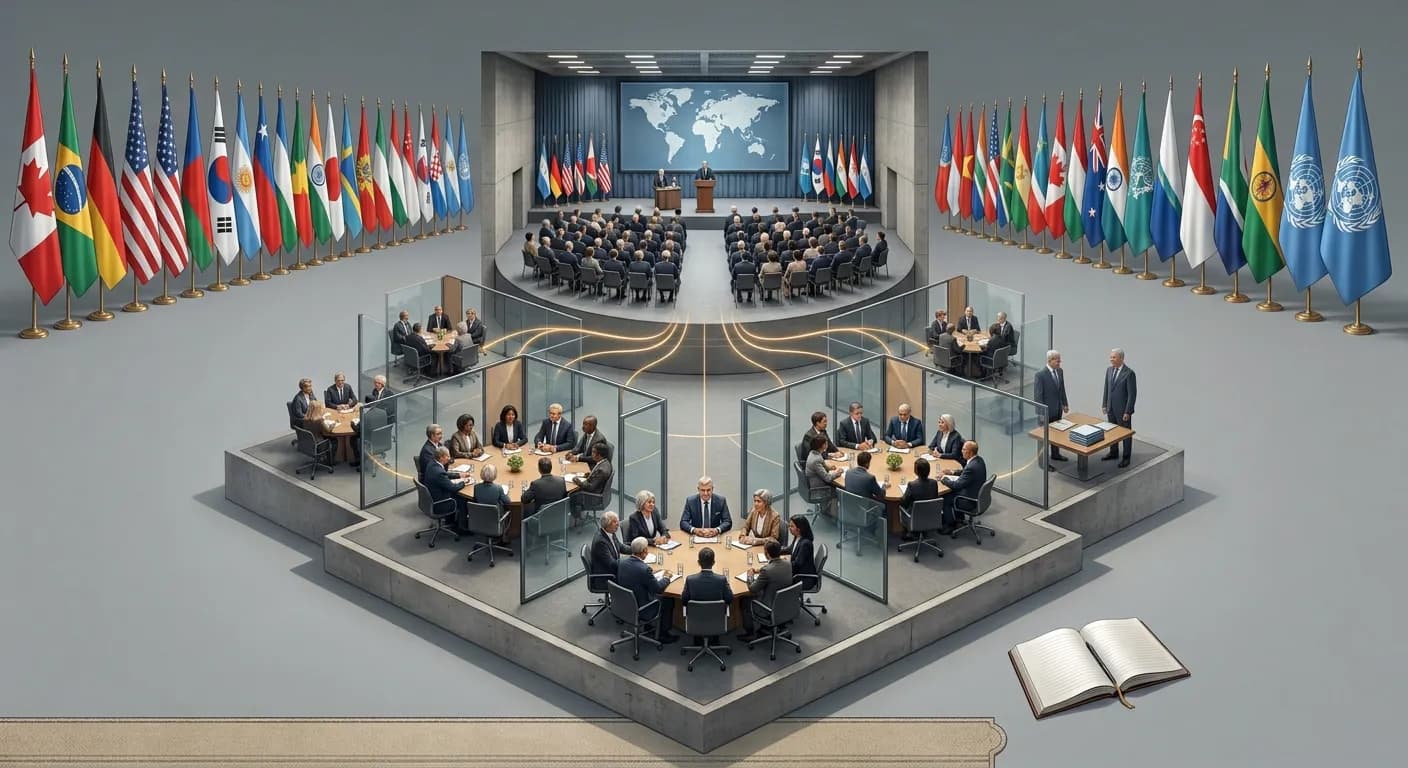
For this reason, a structure like the following could be more effective:
1 large summit a year → the platform's showcase
3–4 thematic round tables → relations with decision-makers
6–8 small workshops → expertise and content production
Digital publications/reports between meetings → continuity
The critical point here is that the small meetings should not be organised independently of the large summit. The discussions, proposals and relationships that emerge in meetings during the year should be accumulated and carried onto the agenda of the year-end summit. In this way the summit ceases to be a stand-alone event and becomes the result of a year-long intellectual and relational process.
For example, the platform could have a single main theme each year. During the year, closed round-table meetings are held on different dimensions of this theme. The findings are then turned into a policy brief or report. At the end of the year, these results are discussed with a wider audience at the international summit.
So my answer to the question 'a big event or small events?' is this: small meetings increase the platform's real impact, and the large summit increases the visibility of that impact. The strongest model is a continuous event architecture that connects the two.
Indeed, it would be more meaningful to measure the platform's success not only by how many people attended the summit but by what one meeting produced for the next. In the long run, what makes a strong platform is less the number of events than the knowledge produced, the relationships built, and the turning of those relationships into concrete cooperation."
Business Diplomat commentary
This answer begins by rejecting the dilemma in the question and puts an architecture in its place. Its value for Business Diplomat is that it offers not just an opinion but a roadmap that can be applied directly.
Visibility and impact are not the same thing. This is the clearest distinction in the answer: the summit produces visibility, the small meetings produce impact. A full hall and a strong speaker list introduce a platform, but they do not build relationships by themselves. The risk that a platform which takes the stage only once a year will "appear passive" for the other eleven months is an honest and well-placed warning.
Trust is built in small rooms. The observation that limited-attendance meetings allow more open discussion and personal relationships matches the nature of business diplomacy. In front of a crowd, everyone reads a prepared text; at a closed round table, people say what they actually think. In the area where diplomacy, business and public administration meet, this is exactly the kind of trust Business Diplomat wants to produce.
Four layers, four functions. In the proposed structure, each type of event has its own task: the summit is the showcase, round tables provide contact with decision-makers, workshops provide expertise and content, and digital publications provide continuity. The workshops are also the natural ground for the platform's aim of giving young people experience, since young professionals get the chance to work at the same table as experts.
The summit is a result, not a beginning. The most original idea in the answer is that the small meetings should not be organised independently of the summit. A single annual theme, closed meetings on its different dimensions, findings turned into a policy brief or report, and a discussion with a wide audience at the year-end summit: this chain turns the summit from a one-off event into the outcome of a year's work. Participants at the summit then do more than listen to speeches; they meet concrete content that has already been worked on.
The measure of success. The final paragraph changes the usual yardstick for platforms: not how many people attended, but what one meeting produced for the next. The knowledge produced, the relationships built and their conversion into concrete cooperation are criteria Business Diplomat can use in assessing its own success. This approach also fits the mission of bringing a diplomatic order to the business world and benefiting states by revitalising trade, since both are achieved through continuity, not through a single event.
Conclusion
The answer to "summit or round table?" is an event architecture in which the two are linked. Small meetings produce knowledge and trust, and the summit shows that accumulated work to the world. Each is incomplete without the other: a summit without content is only a show, and meetings without visibility remain a closed circle. Business Diplomat aims to design its events in this spirit, as links in a single year-long process, and to measure its success by the cooperation that results, not by the size of the crowd.
Mehmet Emin Erendor
Prof. Dr. / Alparslan Türkeş Science and Technology University
Follow EUReflect
See more of our reporting on Google
Mark EUReflect as a preferred source and our stories are ranked higher for you in Top Stories, Discover and Google News — and carry a “preferred” badge when they are cited in AI results.
Add EUReflect as a preferred source