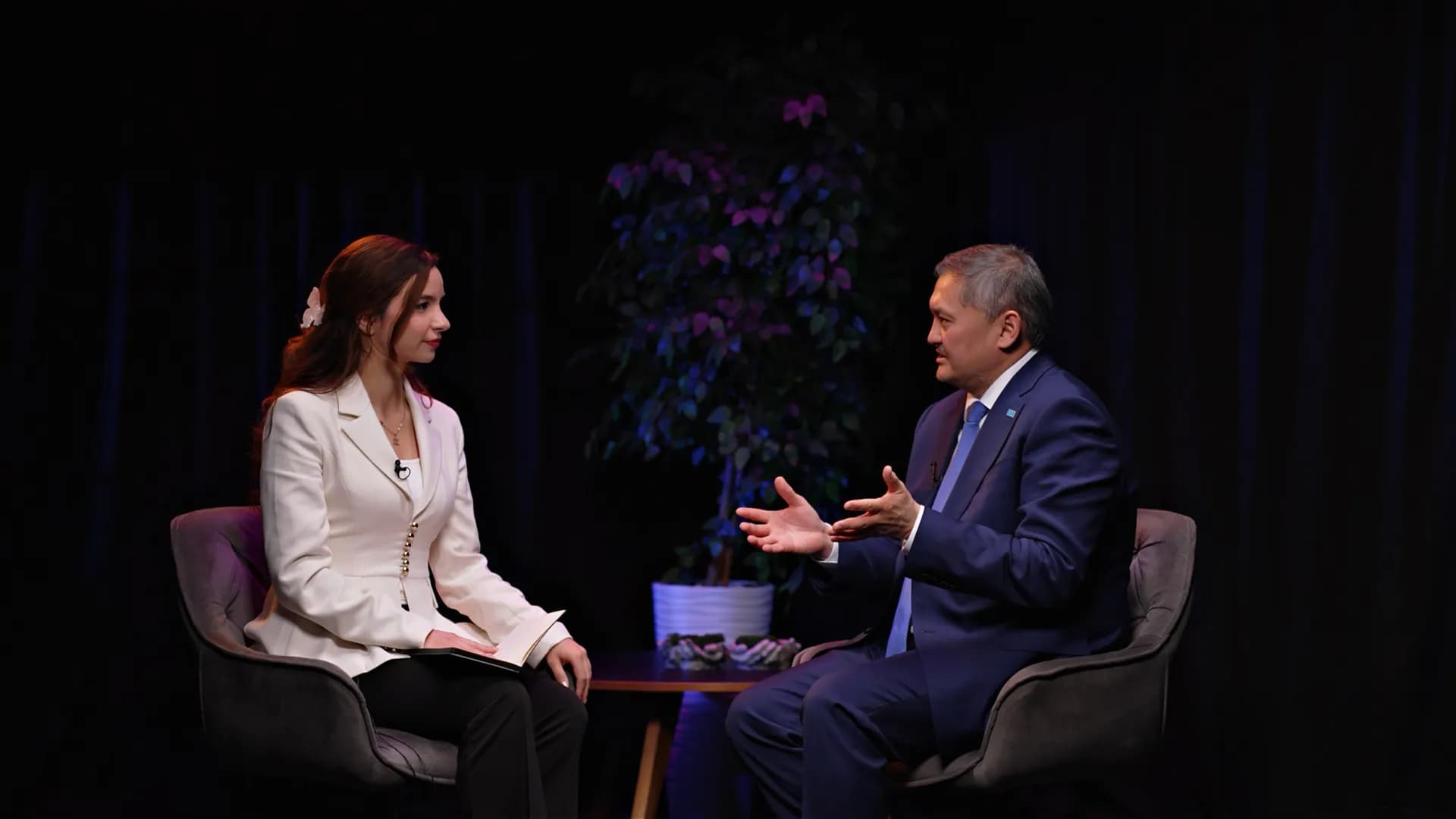
Business Diplomat: What Should Decide Member Selection?
This interview is conducted with Professor Jabborov Hazrat Husenovich, Professor at Tashkent State University of Oriental Studies and Doctor of Psychological Sciences (DSc).

Introduction
A platform's quality is determined by whom it admits. Choosing only the candidates with the highest grades is an easy and measurable route, but there is no guarantee that a good student will be a good business diplomat. In this part of its interview series, Business Diplomat asks a direct question about its own member selection: which criterion should be decisive? The answer does not set the three criteria against each other; it gives each a separate role.
What should be decisive in selecting members: academic success, foreign language and communication competence, or entrepreneurial motivation?
"These competences cannot be separated from one another; however, from a psychological and professional point of view, the decisive factor is the harmony of foreign language, communication competence and high entrepreneurial motivation.
This can be approached psychologically as follows: academic success is the foundation. Intellectual potential is necessary for absorbing knowledge and thinking logically, but it is not sufficient alone. Here, communication and communicative competence should be the main tool. That is, empathy, social perception and language knowledge make it possible to overcome interpersonal barriers and adapt quickly to the modern communication environment. Entrepreneurial motivation, in turn, is regarded as the driving force. Here it is appropriate also to take into account whether candidates have intrinsic motivation (effort, determination), the person's resilience to stress, and their striving to reach a result without giving up in difficult situations. For this reason, in the selection process priority should be given not only to high grades (the academic indicator) but to the candidate's psychological balance, active motivation and communication potential."
Business Diplomat commentary
The answer does not pick one of the three options offered; it places all three in a structure: foundation, tool and driving force. This image shows clearly how the selection criteria connect.
The foundation: academic success. The answer does not belittle academic success; it gives it the ground floor of the structure. Absorbing knowledge and thinking logically are essential for a business diplomat to understand markets, legal frameworks and economic data. But the limit is drawn at once: it is not sufficient alone. A foundation is not a building. A candidate who knows everything but cannot convey it to the other side, or who gives up at the first obstacle, will not get results in the field.
The tool: communication competence. The second criterion is defined more broadly than foreign language. The answer names three elements: empathy, social perception and language knowledge. The order is meaningful. Someone who speaks a foreign language perfectly but cannot read what the other person feels will form the words correctly and still fail to connect. Language knowledge is the instrument of communication; empathy and social perception make it possible to use that instrument well. The result the answer stresses is also a practical skill: adapting quickly to new settings. For a business diplomat, every new market and every new counterpart is a test of adaptation.
The driving force: motivation. The third criterion is what sets the other two in motion. The answer looks here for intrinsic motivation, not outside incentives, and describes it in two words: effort and determination. Two more qualities are added: resilience to stress and not giving up in difficulty. In international business it is normal for a first offer to be refused, a meeting to end without result or a market to open more slowly than expected. A candidate with knowledge and communication skills who withdraws at the first disappointment stops halfway. Motivation is what turns competence into results.
What decides is harmony. The key word in the first sentence is "harmony". The decisive factor is not a single quality but the presence together of communication competence and entrepreneurial motivation. When this combination rests on an academic foundation, the profile of a business diplomat appears.
A practical consequence for selection. The last sentence is direct advice: priority should go not only to grades but to psychological balance, active motivation and communication potential. This affects the method of selection too. Grades can be read from a document, but balance, motivation and communication ability do not show on paper. Understanding them requires interviews, group work, case discussions and a look at what the candidate has done so far on their own initiative. The word "potential" also matters: what is sought is not a finished profile but a candidate open to development.
The role of Business Diplomat. The platform's mission is to give young people experience, bring a diplomatic order to the business world, and benefit states by revitalising the economy. The success of this mission depends on reaching the right young people. In selecting members, Business Diplomat aims to treat academic success as a precondition and to give the decisive weight to communication ability, intrinsic motivation and psychological balance. Selection of this kind also opens the door to young people who do not have brilliant grades but will make a difference in the field.
Conclusion
Academic success is the foundation, communication competence is the tool, and entrepreneurial motivation is the driving force. The three cannot be separated, but what decides is the harmony of communication ability with strong intrinsic motivation. The selection process should therefore look beyond grades and assess a candidate's balance, determination and communication potential. By selecting its members on these criteria, Business Diplomat aims to raise a generation of business diplomats who deliver results in the field.
Mirzojon Kalandarov
Contributing writer at EUReflect.
Follow EUReflect
See more of our reporting on Google
Mark EUReflect as a preferred source and our stories are ranked higher for you in Top Stories, Discover and Google News — and carry a “preferred” badge when they are cited in AI results.
Add EUReflect as a preferred source