Emerging Markets Go Digital
India has announced over $160 billion in data-center investments and is backing domestic AI models to reduce reliance on foreign technology.
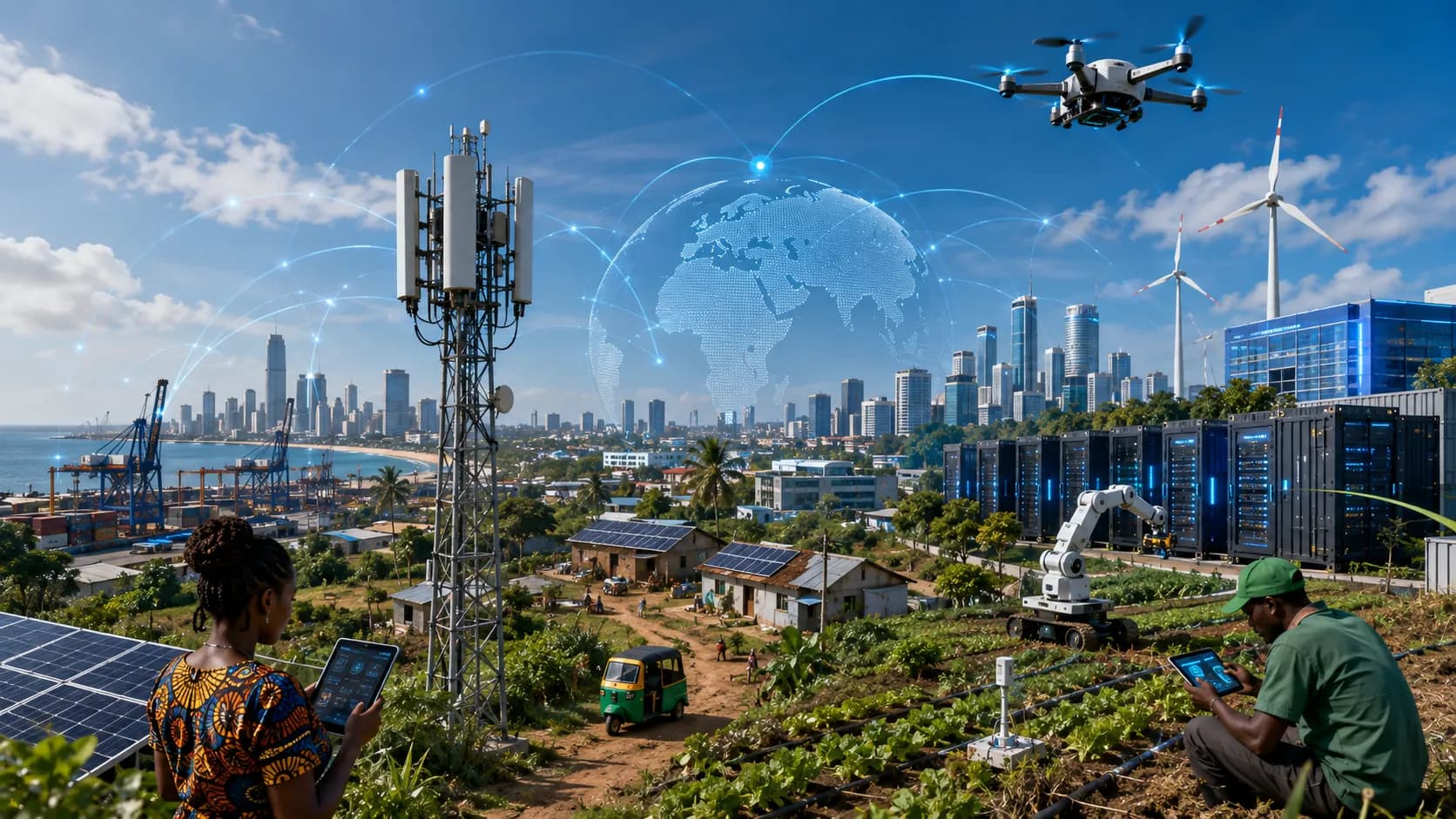
The global technology race is no longer being shaped only by the United States, China and Europe. In 2026, developing economies across Asia, Africa, the Middle East and Latin America are accelerating investment in artificial intelligence, data centers, digital public infrastructure and domestic technology ecosystems.
The change is significant. For many emerging economies, technology policy was once centered on expanding internet access and mobile connectivity. Today, governments are increasingly asking a different question: how much of the digital economy can be built and controlled locally?
The World Bank says developing economies are beginning to emerge as important data-center markets as global technology companies search for new locations for computing infrastructure. Asia and Latin America are advancing particularly quickly, while investment is also expanding in Africa.
India Builds Its Own AI Ecosystem
India is one of the clearest examples of this transformation.
The country is rapidly expanding data-center capacity to support its growing digital economy and artificial-intelligence ambitions. India's Ministry of Electronics and Information Technology said this month that data centers have become an integral component of the country's Digital India infrastructure.
Investment interest is growing alongside capacity. More than $160 billion in data-center investments have reportedly already been announced, while estimates suggest India could require hundreds of billions of dollars in AI and data-center infrastructure investment by 2030.
India is also attempting to reduce dependence on foreign AI technologies. The government is supporting domestic foundation models, subsidized computing capacity and dozens of AI centers of excellence.
At the same time, foreign investors continue to enter the market. India said on August 21 that investment proposals received under revised rules covered sectors including information technology, artificial intelligence, manufacturing and data centers.
India's strategy therefore extends beyond simply using artificial intelligence. New Delhi wants domestic models, computing infrastructure, startups and data centers to form part of the same technological ecosystem.
Southeast Asia Becomes a Data-Center Hub
Southeast Asia is experiencing a similar shift.
Malaysia, Indonesia, Thailand and Vietnam are increasingly competing for investment in cloud computing, semiconductors and AI infrastructure.
Malaysia has become particularly important.
The country already has an established position in semiconductor packaging and testing, while Johor has developed into a major data-center hub. Technology investment is contributing to manufacturing and construction growth, although the expansion is also creating concerns about electricity and water consumption.
The attraction is understandable.
Compared with established technology hubs, emerging Asian markets can offer lower land costs, expanding electricity infrastructure and rapidly growing populations of digital consumers.
This could gradually change the geography of the internet itself. Instead of data generated in developing economies being processed almost entirely in distant foreign facilities, more computing capacity could eventually be located closer to the users producing that data.
Africa Wants More Than Connectivity
Africa represents perhaps the most important long-term test.
For years, much of the continent's digital development story centered on mobile phones, telecommunications networks and financial technologies such as mobile money.
Artificial intelligence requires another layer of infrastructure.
Data centers, cloud platforms, reliable electricity, fiber networks and access to advanced computing hardware are becoming increasingly important.
Projects are consequently appearing in markets including South Africa, Kenya, Nigeria and Ghana. One of the most closely watched proposals has been a roughly $1 billion data-center project in Kenya involving Microsoft and UAE-based technology company G42.
African technology companies themselves are also beginning to raise larger amounts of capital in sophisticated fields. Nigerian-founded Terra Industries recently announced $52 million in funding for autonomous drone and AI technology, with plans that include expanding manufacturing capacity in Africa.
The broader question is whether Africa will primarily become a market for foreign technology or develop a stronger domestic technology industry of its own.
Morocco Invests in Digital Transformation
North Africa is also becoming part of the race.
In June, the World Bank approved two programs totaling $650 million for Morocco covering digital transformation as well as financial resilience against climate, disaster and cyber risks.
Digital investment in countries such as Morocco demonstrates how the definition of technological infrastructure is expanding.
It no longer means simply broadband networks.
Digital identity, electronic payments, cybersecurity, government databases, cloud infrastructure and secure data exchange are increasingly being treated as basic national infrastructure.
The World Bank's Global Digital Public Infrastructure Program is similarly supporting countries in developing digital identification, payment and data-sharing systems.
AI Could Allow Emerging Economies to Leap Forward
Artificial intelligence creates an unusual opportunity for developing countries because they may not need to reproduce every stage of technological development experienced by advanced economies.
A country with limited numbers of doctors, teachers or agricultural specialists, for example, could potentially use inexpensive AI systems to extend access to expertise.
A World Bank assessment published this month described AI as a potentially transformative opportunity for emerging economies. It estimated that the share of jobs at risk from AI is considerably lower in developing economies than in advanced ones, while substantial productivity benefits remain possible.
Healthcare, education, agriculture, public administration and justice are among the areas where locally adapted AI systems could have particularly significant effects.
This creates the possibility of technological leapfrogging.
Many developing economies previously skipped extensive fixed-line telephone networks and moved directly toward mobile communications. Some later moved from cash-based economies directly toward mobile payments.
Artificial intelligence could produce another such transition.
But Electricity Is Becoming the New Bottleneck
There is, however, a fundamental obstacle.
AI needs electricity.
Modern data centers require enormous amounts of power, particularly facilities containing advanced processors used to train and operate large AI models.
This means that the next stage of digital development cannot be separated from energy policy.
Countries with inexpensive and reliable electricity could gain an important advantage in attracting data centers. Countries with unstable grids may struggle regardless of how ambitious their AI strategies are.
The World Bank has consequently emphasized electricity, connectivity, skills and access to digital devices as essential foundations for developing economies seeking to benefit from AI.
The technology race in emerging markets could therefore become simultaneously an energy race.
A New Geography of Technology
The most important development of 2026 may ultimately be geographical.
For decades, global technology production was heavily concentrated in a relatively small number of locations: Silicon Valley, East Asian semiconductor hubs and major European industrial centers.
That geography is beginning to broaden.
India wants to become a major AI and computing hub.
Malaysia is combining semiconductor manufacturing with data-center investment.
African economies are seeking local cloud and AI infrastructure.
Morocco is expanding digital public infrastructure.
Other emerging economies are developing similar strategies around cloud computing, fintech, cybersecurity and digital government.
But investment alone will not guarantee technological independence.
Developing countries will still need skilled workers, reliable electricity, cybersecurity capabilities, access to advanced chips and regulatory systems capable of attracting long-term private capital.
The countries that successfully combine these elements could gain something more valuable than a collection of technology projects.
They could build their own digital ecosystems.
For developing economies, the technology race is therefore entering a new stage: the goal is no longer simply to consume technology, but increasingly to build, host and control it.
Ahmet Balakan
Contributing writer at EUReflect.
Follow EUReflect
See more of our reporting on Google
Mark EUReflect as a preferred source and our stories are ranked higher for you in Top Stories, Discover and Google News — and carry a “preferred” badge when they are cited in AI results.
Add EUReflect as a preferred source