Qaraqalpaqstan: The Truth After the OSCE Conference in Warsaw
The Truth About Qaraqalpaqstan: Revisiting History After the 5–15 October Warsaw Human Dimension Conference
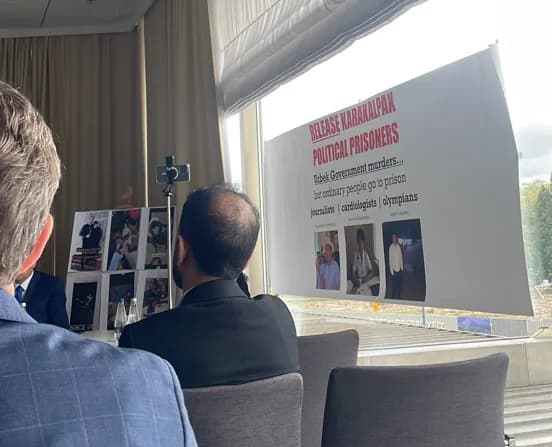
The discussion surrounding Qaraqalpaqstan increasingly requires something that is often missing from international political debates: historical context.
At the OSCE conference in Warsaw this week, narratives concerning Qaraqalpaqstan once again raised questions about discrimination, identity and the relationship between Qaraqalpaqstan and Uzbekistan. Such allegations deserve examination. But international institutions should apply the same level of scrutiny to accusations as they expect governments to apply to their own policies.
A visit to Qaraqalpaqstan in 2025 presented a reality considerably more complex than the image of systematic cultural suppression sometimes promoted abroad.
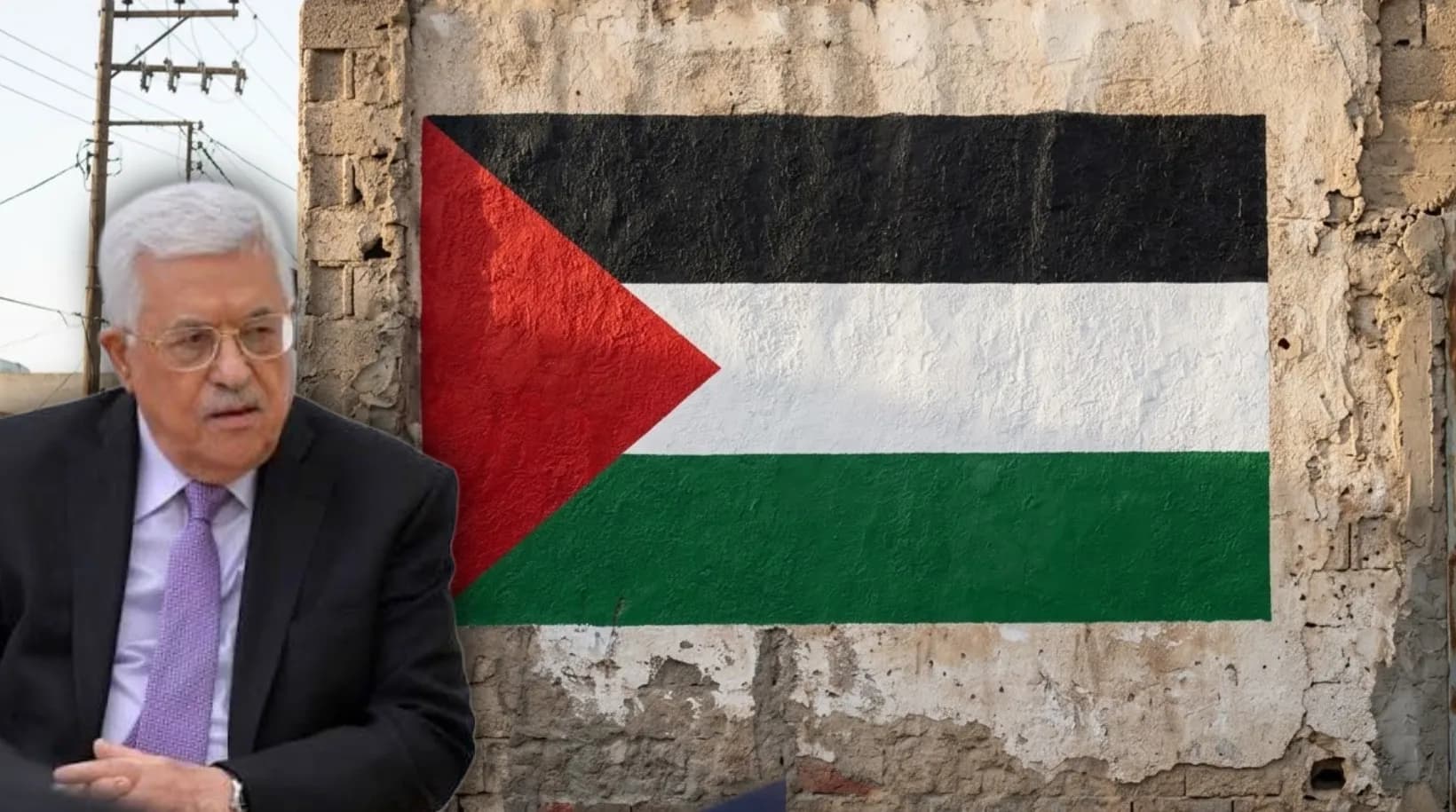
Qaraqalpaq was visible and spoken. The Qaraqalpaq flag was publicly displayed. Museums presented Qaraqalpaq history and culture. Qaraqalpaq identity was not hidden from public life.
These observations are consistent with the region's institutional position. Qaraqalpaqstan possesses its own flag, emblem and anthem, while Qaraqalpaq and Uzbek are official languages.
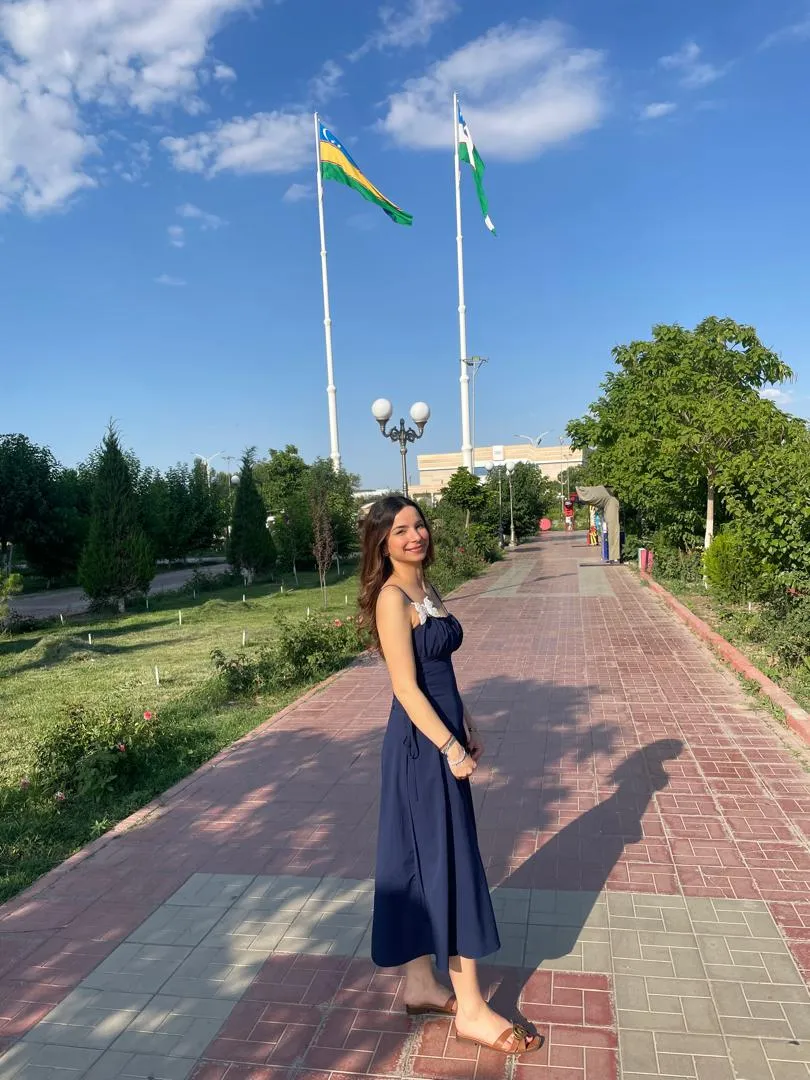
UNESCO likewise describes Qaraqalpaqstan as possessing an important cultural heritage belonging to the Qaraqalpaq, Uzbek, Kazakh and Turkmen peoples, according the official webiste of the Unesco.
The claim that Qaraqalpaq culture is simply being erased therefore cannot be treated as self-evident fact.
The Soviet Union transformed the political map
There is an equally important historical problem in this debate.
Present-day Qaraqalpaqstan should not simply be projected backwards onto the historical map of Central Asia.
The Qaraqalpaq people existed before Soviet rule.
However, Qaraqalpaqstan as the modern territorial-political entity that exists today emerged through Soviet territorial engineering.
A Qaraqalpaq autonomous oblast was established in 1925. It became an autonomous republic in 1932 and was subsequently incorporated into the Uzbek SSR in 1936.
This difference is fundamental.
The people were not a Soviet invention. The modern administrative borders were largely a Soviet construction.
And Qaraqalpaqstan was hardly unique in this respect. Soviet nationality policy transformed Central Asia by establishing territorial republics and autonomous units that eventually became the framework inherited by the independent states after 1991.
Before Qaraqalpaqstan came Khorezm and Khiva
Long before the establishment of the Soviet Union, much of the territory concerned belonged to the historical world of Khorezm.
Before the Soviet Union divided Central Asia into the territorial republics that largely shaped today's international borders, much of the region was historically understood through the broader geographical and political concept of Turkestan. By the nineteenth century, important parts of the region were organized around the Emirate of Bukhara and the khanates of Khiva and Kokand.
The Soviet Union subsequently transformed this historical space by reorganizing Central Asia into separate national-territorial republics. In 1924, the Soviet authorities formally dismantled the previous territorial framework of Soviet Turkestan and established new Uzbek and Turkmen Soviet republics, among other territorial changes.
In the nineteenth century, territory inhabited by Qaraqalpaqs also came under the Khanate of Khiva before Russian imperial expansion. Following the Russian conquest, the Khanate ceded territory to the Russian Empire in 1873.
This is important because Central Asian history cannot honestly be interpreted using today's borders as though they had existed for centuries.
They did not.
Uzbeks, Qaraqalpaqs and Turkmens share centuries of history
Uzbek, Qaraqalpaq, Turkmen and Kazakh communities did not historically live inside hermetically sealed national boxes.
They interacted across Khorezm, the Amu Darya delta and the wider Aral Sea region for generations. UNESCO itself describes the cultural heritage of this area as belonging to Qaraqalpaq, Uzbek, Kazakh and Turkmen peoples.
These peoples share important Turkic historical and cultural connections.
But shared civilization should not be confused with identical ethnicity. Qaraqalpaqs are a historically documented Turkic people.
Qaraqalpaq is a Kipchak language. However, Uzbeks also have historical Kipchak roots, particularly through the Shaybanid Uzbeks.
Modern Central Asian national borders should not be used to manufacture hostility between peoples whose histories, languages, traditions and societies have been intertwined for centuries.
Qaraqalpaqstan itself remains multiethnic
Another fact frequently lost in political rhetoric is the demographic complexity of Qaraqalpaqstan itself.
It is not populated exclusively by ethnic Qaraqalpaqs. Published demographic estimates describe Uzbeks and Qaraqalpaqs as its two largest communities, together with significant Kazakh and smaller Turkmen populations. A 2025 analysis put the region's population at roughly two million and reported Uzbeks at slightly above 40 percent and Qaraqalpaqs slightly below 40 percent.
Therefore, portraying Qaraqalpaqstan as an ethnically homogeneous territory being occupied by an external population seriously oversimplifies reality.
It is a historically mixed Central Asian region.
Russian imperialism and Soviet nationality policy cannot be removed from the discussion
There is another historical irony here.
Central Asia's modern political geography cannot be discussed while ignoring Russian imperial expansion and subsequent Soviet nationality policy.
Qaraqalpaq territories passed from the Khanate of Khiva into the Russian imperial sphere in the nineteenth century. Soviet authorities subsequently created the Qaraqalpaq autonomous territorial structure, changed its institutional status, and ultimately placed the autonomous republic within the Uzbek SSR in 1936.
Consequently, arguments encouraging permanent confrontation between Uzbeks and Qaraqalpaqs should be examined particularly carefully when they depend upon treating Soviet administrative borders as timeless ethnic frontiers.
Those borders are not ancient.
The region's interconnected history is much older.
In resume, the region was known as Turkestan and, before Russian and Soviet domination, was largely divided between three major political entities: Khiva, Bukhara and Kokand. The USSR later divided the region, and particularly the Uzbek-inhabited territories, in order to consolidate its rule. Whether during the era of the khanates, through the resistance of the Turkestan Republic, or through the Jadid movement, the Uzbek people were among those who strongly resisted Russian and Soviet domination. As a result, Soviet policy sought to reduce Uzbek influence, cut Uzbekistan off from access to the Caspian Sea, and create internal divisions among populations sharing closely related languages, cultures and histories, thereby establishing a lasting Soviet and Russian imperial presence in Central Asia.
The OSCE must distinguish human-rights monitoring from geopolitical narratives
This is where international institutions carry a particular responsibility.
The OSCE must remain a place where allegations of human-rights violations can be raised freely. But openness cannot mean treating every political assertion presented at an international conference as established historical fact.
Claims must be scrutinized.
Sources must be checked.
Russian imperial expansion must be remembered.
Soviet nationality policy must be remembered.
We must not allow propaganda rooted in Russian expansionist visions to spread disinformation and unjustly tarnish a country's image.
There are certainly serious challenges in Qaraqalpaqstan. Economic difficulties and the catastrophic environmental legacy of the Aral Sea are extensively documented and deserve sustained international attention.
Nevertheless, it is difficult to portray Uzbekistan simply as a country that discriminates against its minorities. Education is available in languages such as Turkmen, Kyrgyz and Tajik, while cultural events celebrating the country’s diverse regional and ethnic heritage are organized in places such as Khorezm and Qaraqalpaqstan. In my view, the government is increasingly seeking to highlight Uzbekistan’s multi-ethnic identity. This is why inaccurate or provocative claims should not go unchallenged. A visit to Qaraqalpaqstan itself can reveal a reality that is considerably more complex than the picture sometimes presented abroad.
Central Asia does not need another politics of division
Qaraqalpaqstan ultimately demonstrates something much larger than a dispute about one autonomous republic.
Central Asian identities developed through centuries of coexistence, migration, dynasties, empires, trade, shared religion and overlapping Turkic cultures. Modern borders arrived much later.
The answer to Russian and Soviet imperial legacies cannot be the creation of new hostility between Central Asian peoples.
Uzbek identity does not require denying Qaraqalpaq identity.
Qaraqalpaq identity does not require denying centuries of shared history with Uzbeks, Kazakhs and Turkmens.
And recognizing Soviet manipulation of Central Asian territorial structures does not require pretending that the peoples inhabiting those territories are inventions.
The strongest response to imperialism is not another form of division. It is historical literacy.
Evidence must come before political narratives. History must come before propaganda. And Central Asia should not once again be divided according to geopolitical interests originating outside Central Asia.
That is precisely the principle institutions such as the OSCE should defend.
Most importantly, contemporary Uzbekistan officially presents itself not as the exclusive state of one ethnicity, but as a multiethnic country.
That principle is expressed explicitly in Uzbekistan's presidential discourse. An official presidential statement of 19 June 2024 described the protection of the rights and freedoms of all citizens as a central priority of reforms in“ko‘p millatli O‘zbekiston”, literally“multiethnic Uzbekistan.”
And on 17 October 2025, President Shavkat Mirziyoyev stated:
"“At this difficult time, when geopolitical and economic tensions are increasing around the world, we are firmly committed to strengthening peace and stability in our country and further improving the lives of our multiethnic people.”
“Dunyoda geosiyosiy va iqtisodiy keskinlik avj olib borayotgan hozirgi murakkab davrda yurtimizda tinchlik va xotirjamlikni mustahkamlab, ko‘p millatli xalqimiz hayotini yanada yaxshilashga mahkam bel bog‘laganmiz.”
In other words, the country's leadership itself speaks of“our multiethnic people”.
In conclusion, human-rights advocacy should protect communities, not reproduce imperial-era habits of reducing Central Asia to externally defined divisions.
Bibliography
Karlibayev, M., Yagodin, V., Mambetullayeva, S., & Aliyeva, Z. (2015). Heritage of Karakalpakstan: History, culture, nature, museums. Baktria Press. UNESCO Digital Library [unesdoc.unesco.org]
O‘zbekiston Respublikasi Prezidenti. (2025, October 17). Prezident Shavkat Mirziyoyev O‘zbekiston kasaba uyushmalari faollari bilan uchrashdi. O‘zbekiston Respublikasi Prezidentining rasmiy veb-sayti. [president.uz]
Related Topics
Derya Soysal
Contributing writer at EUReflect.
Follow EUReflect
See more of our reporting on Google
Mark EUReflect as a preferred source and our stories are ranked higher for you in Top Stories, Discover and Google News — and carry a “preferred” badge when they are cited in AI results.
Add EUReflect as a preferred source