Visit Malaysia 2026: A Traditional Malay Wedding
The Embassy of Malaysia invited guests to experience the traditions, ceremonial attire and cuisine of a Malay wedding, presented as a portrait of the country as the melting pot of Southeast Asia.
Overview
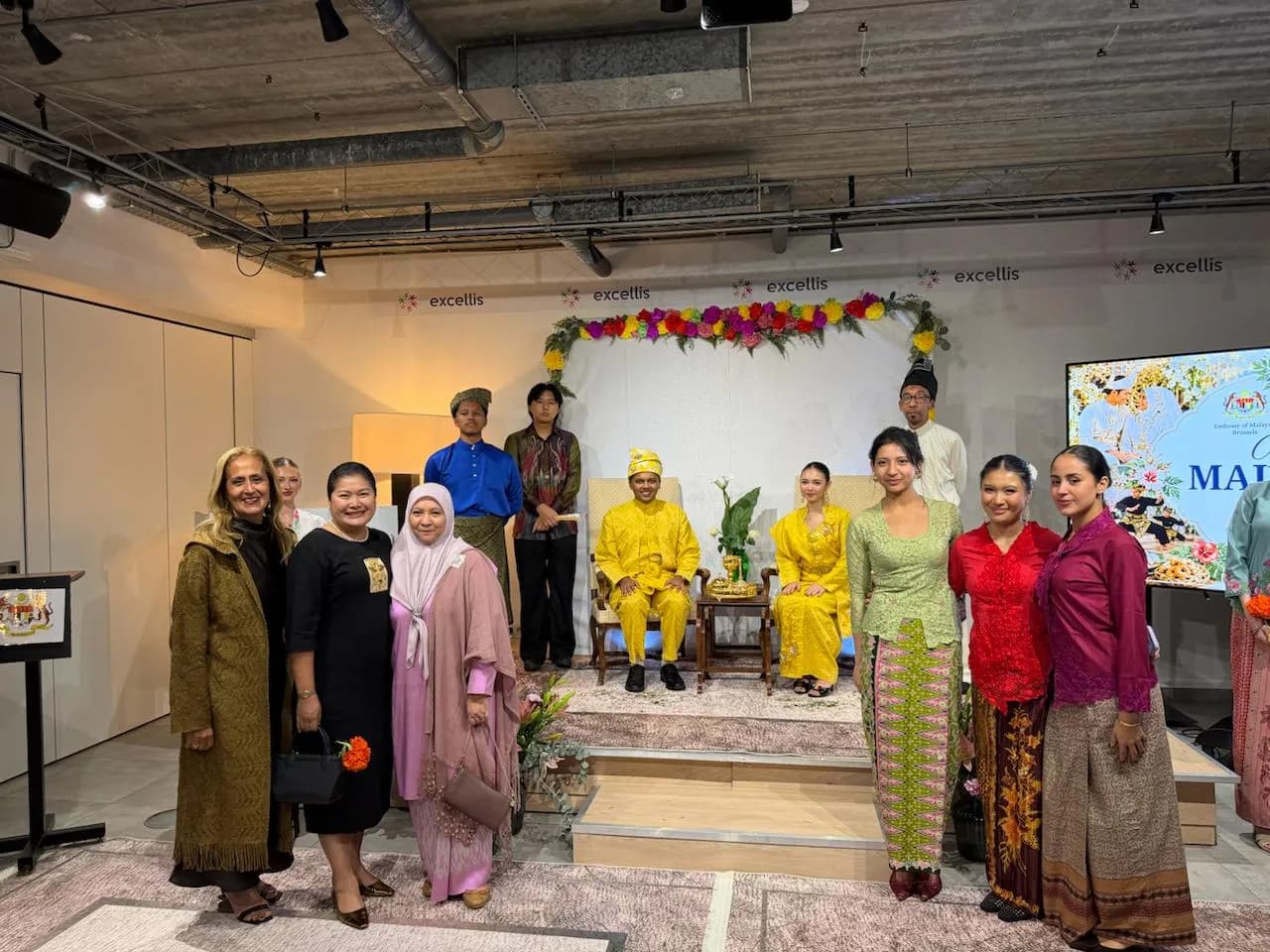
On Tuesday, 13 October, the Embassy of Malaysia in Brussels hosted “Visit Malaysia 2026: A Celebration of Malay Wedding, Culture, Tradition and Delicacies” at Excellis Event. The evening was organised under the Visit Malaysia campaign, the country’s international tourism drive, and used one of the most important moments in Malay family life, the wedding, as a way to introduce guests to Malaysian culture.
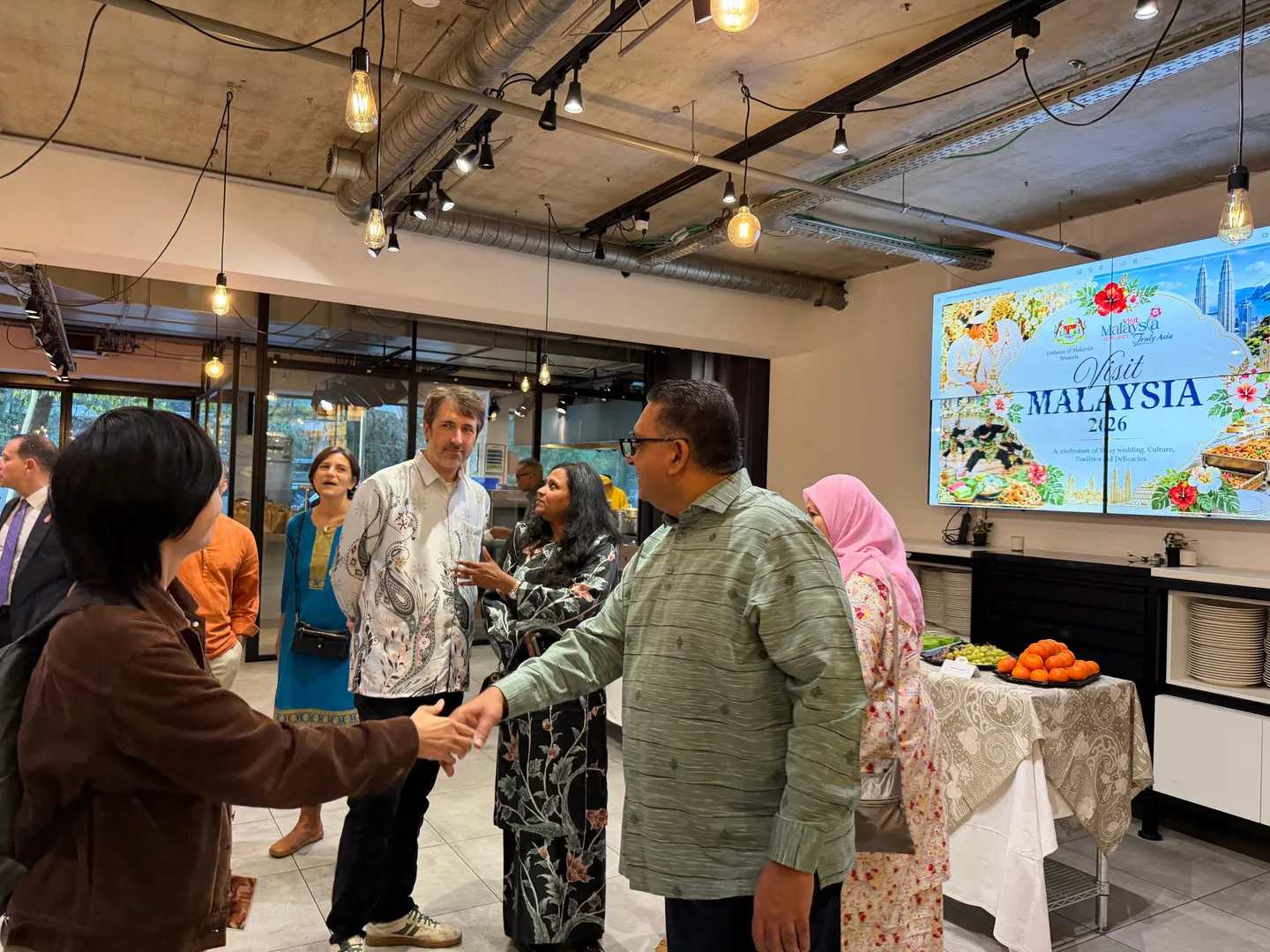
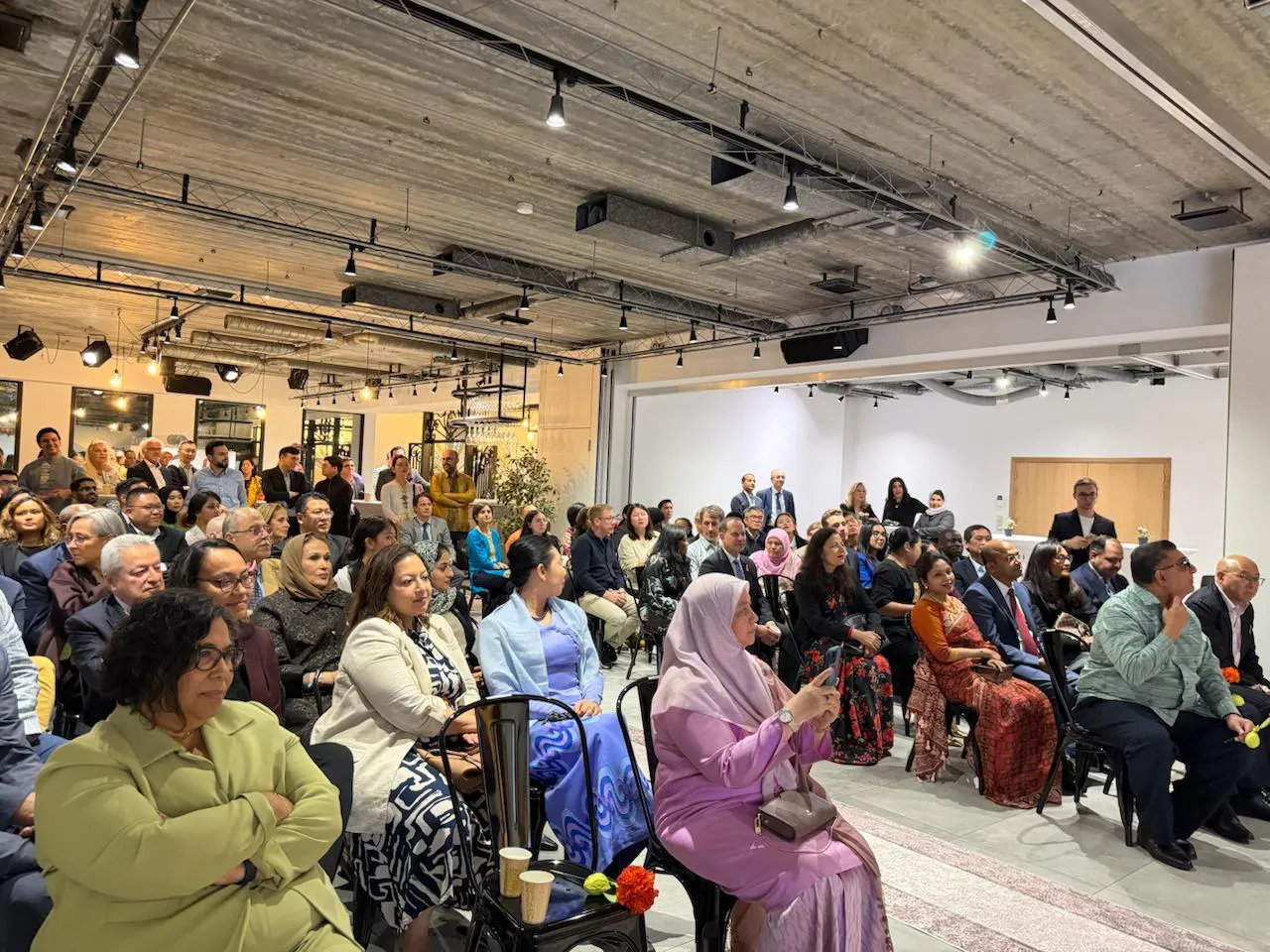
Around 200 guests attended, including ambassadors of other countries, members of the diplomatic community, professors and media representatives. The programme opened with remarks by H.E. Datuk Mohd Khalid Abbasi Abdul Razak, Ambassador of Malaysia to Belgium, Luxembourg and the European Union, and was followed by a presentation of a Malay wedding ceremony, the Merenjis blessing ritual, and a buffet of traditional Malaysian dishes.
Why a Malay Wedding
The Ambassador answered the obvious question in his opening remarks. Malaysia is home to Malay, Chinese, Indian and many other communities, so why choose a Malay wedding? His answer was that a Malay wedding reflects the country as a whole. “A Malay wedding will portray what is Malaysia in the total sense,” he said. “Our culture is a mixture of Arab, Indian, Chinese and other races.”
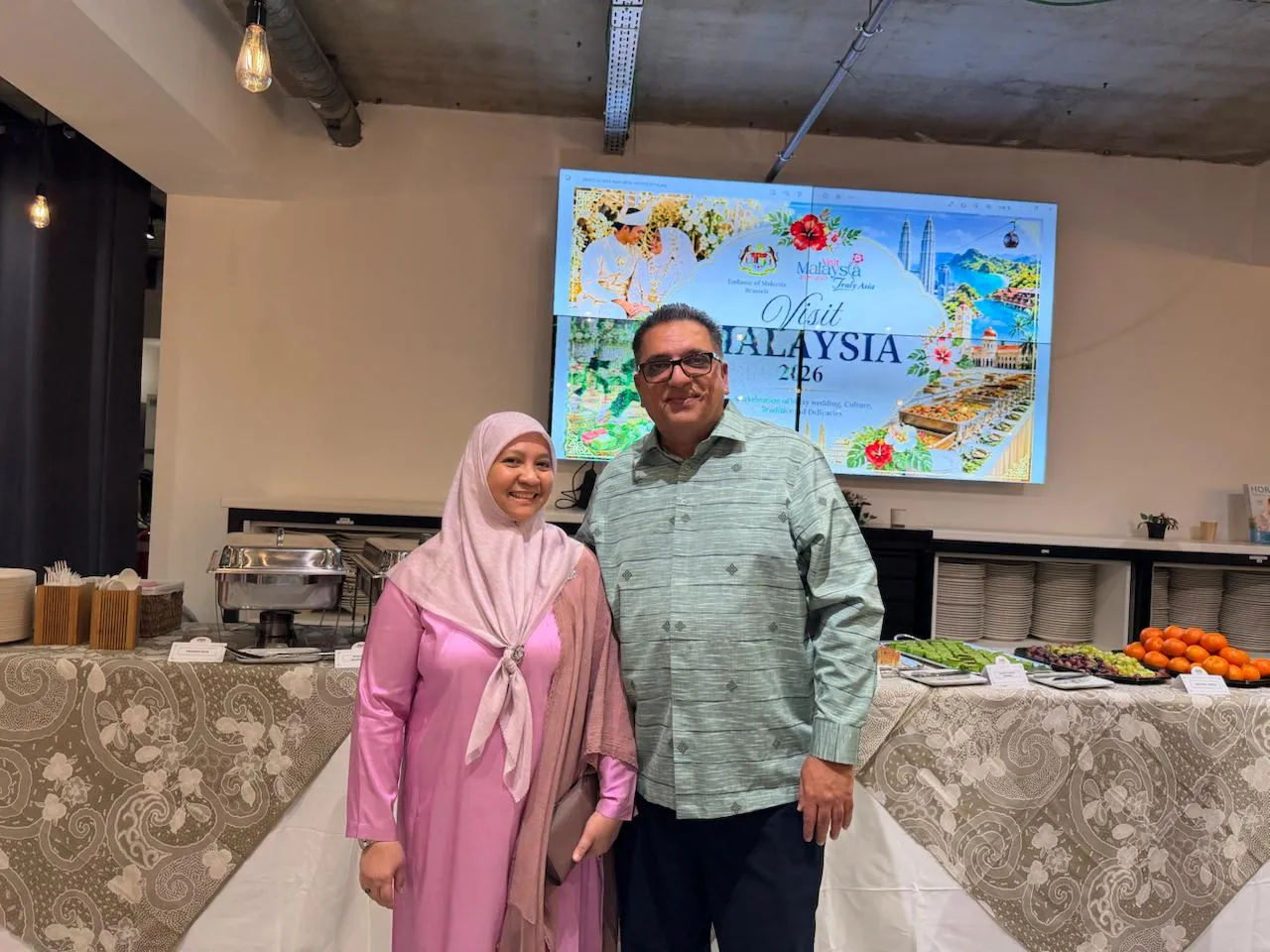
He also allowed himself a moment of humour, assuring the audience that the bride and groom presenting the ceremony were not actually married. The point of the evening, he explained, was to show guests what a real Malay wedding looks and feels like, and to offer a glimpse of what Malaysia has to offer those who decide to visit. He closed with a nod to the country’s tourism slogan, Malaysia Truly Asia, describing Malaysia as “the melting pot of Southeast Asia.”
Made From Scratch
The Ambassador spoke with evident pride about how the event came together. The idea had been developed together with his family, and realising it took the Embassy team a full month of work. “What you see here today is all that we did from scratch,” he said, adding that nothing had been brought in from Malaysia. “Everything came from our hard work.”
The evening was also part of what he described as a Malaysia synergy programme, bringing together locals and Malaysians to create something with real impact. 10 students from Thomas More and VUB worked alongside the Embassy team to prepare the event, and the Ambassador invited the audience to give them a round of applause.
The Stages of a Malay Wedding
A traditional Malay wedding is a celebration of love, family and cultural heritage, and it unfolds in several stages. It begins with Merisik, a discreet inquiry by the groom’s family into the bride’s background. This is followed by Meminang, the formal engagement, and then the Akad Nikah, the marriage contract that legally and religiously unites the couple. The celebrations reach their high point with the Bersanding, the wedding reception, where the newlyweds sit side by side on a decorated dais as guests come to greet them. Each stage marks a step in the couple’s journey into married life, and each involves not only the bride and groom but their wider families.
Merenjis: A Blessing for the Newlyweds
Among the most cherished customs is Merenjis, a blessing ceremony also known as Tepung Tawar. During the ritual, family members and honoured guests gently sprinkle the newlyweds with scented water and flowers while offering prayers and blessings. The gesture represents goodwill and the hope for a harmonious and happy married life.
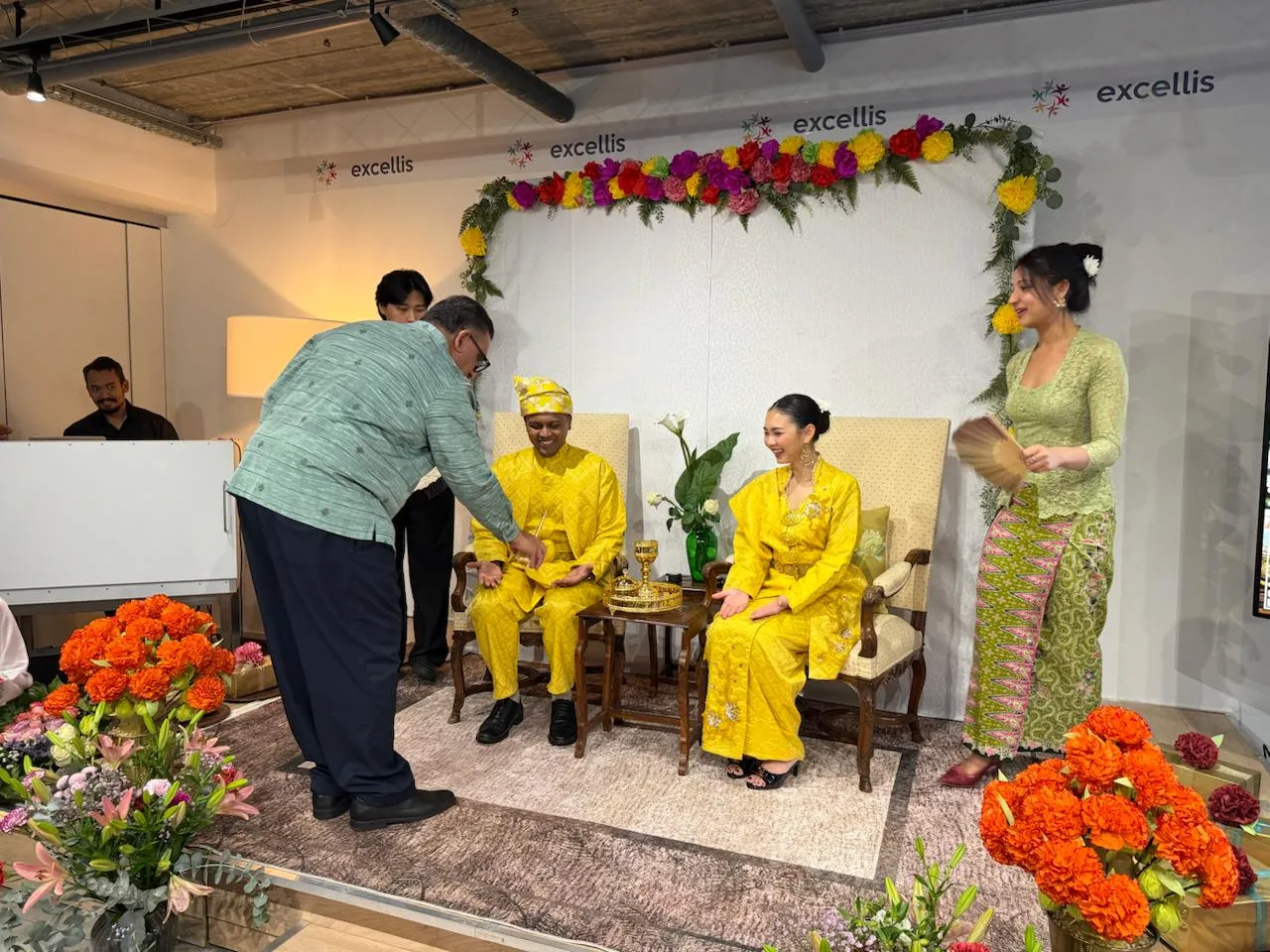
At the Embassy’s event, the ceremony was set up on a decorated dais. A tall rose water sprinkler stood at its centre, flanked by two small bowls holding pandan leaves and flowers, used to bless the couple. Several guests were invited by name to take part in the blessing themselves, giving them a rare chance to join a ritual that is usually reserved for family and close friends.
Silat Pengantin: The Ceremonial Duel
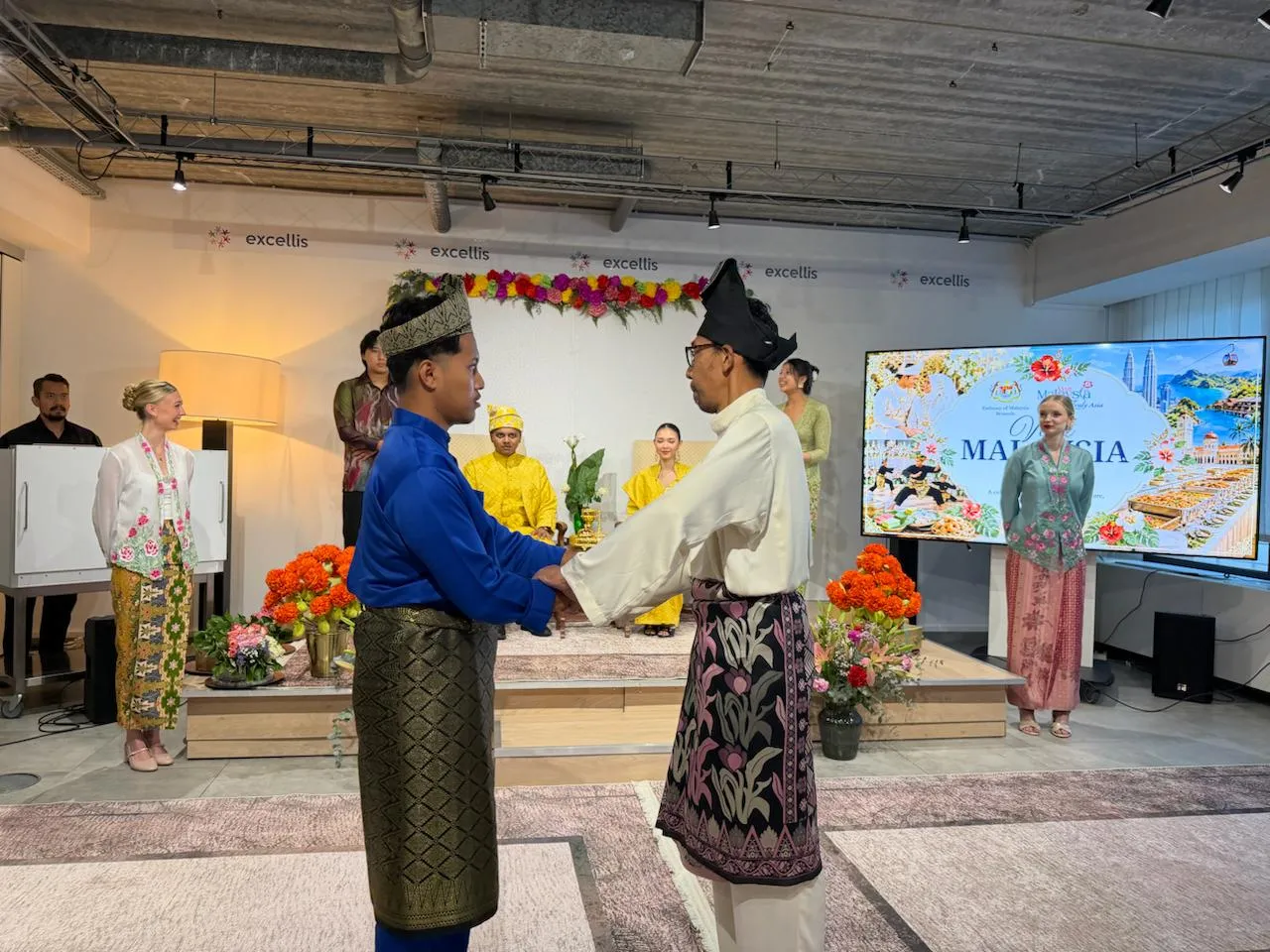
Once the bride had taken her place on the dais, two performers in traditional Malay dress stepped forward and faced each other in what looked like a fight. It was in fact silat pengantin, the wedding form of silat, the traditional Malay martial art. At a wedding, silat takes a gentler and highly stylised form, closer to a choreographed dance than to combat. The movements remain firm and precise, but their purpose is to show respect rather than aggression, and each gesture carries meaning, from seeking protection to offering blessings for the newlyweds.
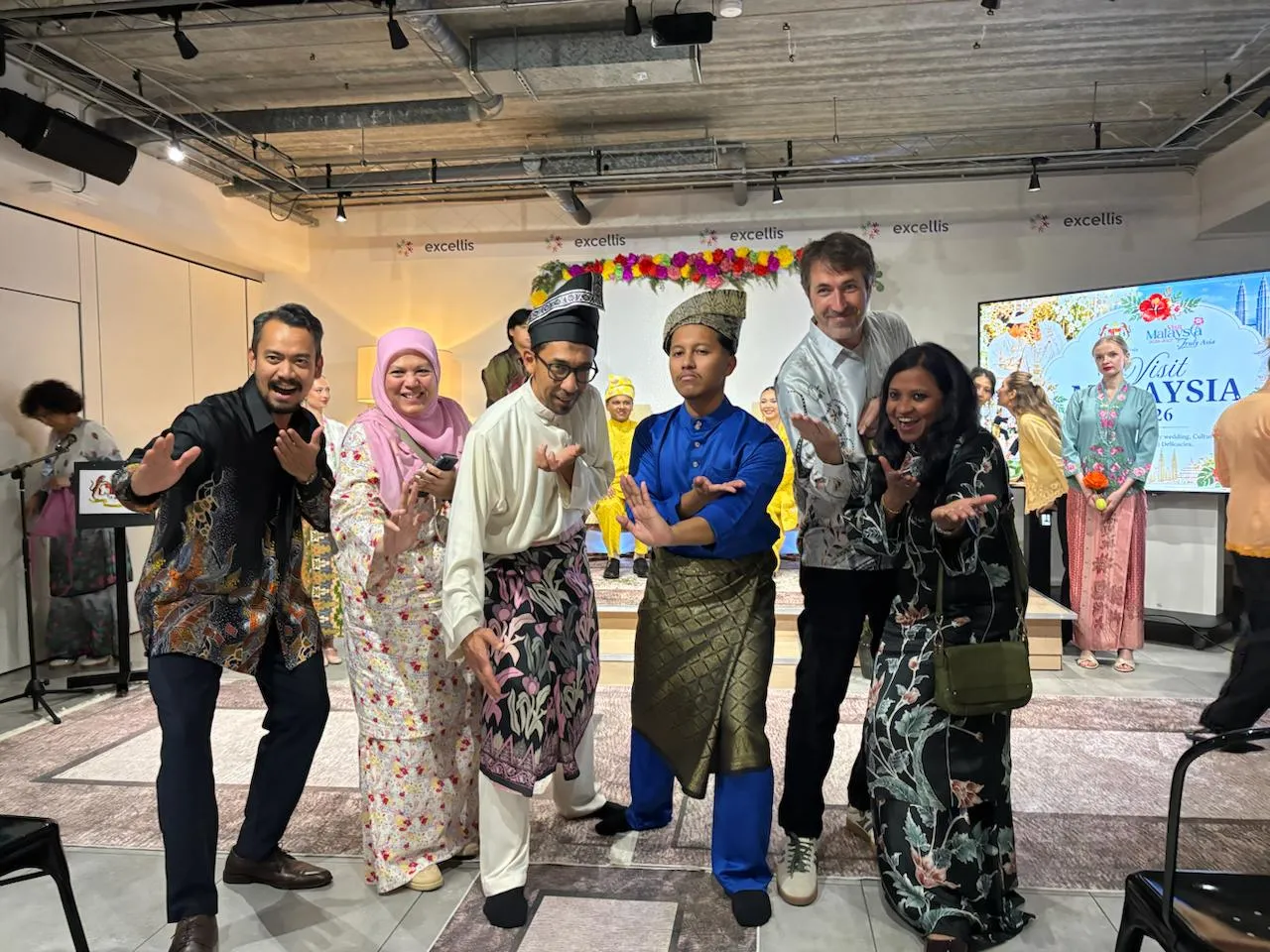
The custom has royal origins. Silat performers once appeared before the Sultan, and because the bride and groom are treated as king and queen for the day, they are honoured in the same way. The performance traditionally serves as a formal welcome for the groom, a sign of respect and of his readiness to protect his new family. For the audience, it was one of the most exciting moments of the evening, showing how martial skill, ceremony and celebration come together in Malay culture.
Traditional Wedding Attire
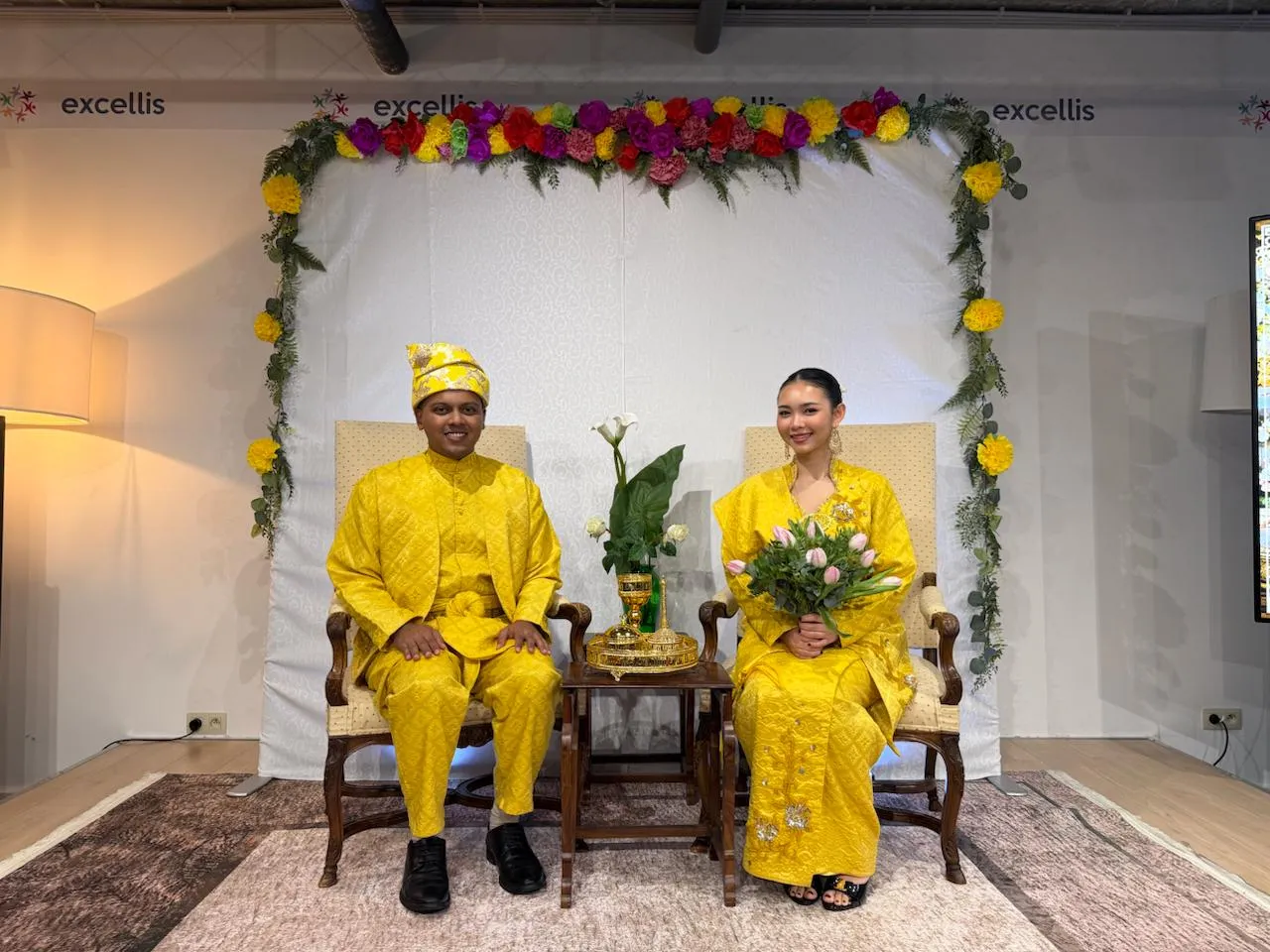
The couple’s traditional attire is one of the most striking parts of a Malay wedding. The bride and groom wear elegant Malay dress, often made from Songket, a handwoven textile with intricate patterns in gold and silver thread. The groom’s outfit is completed by the Keris, the traditional Malay dagger, and the Tanjak, a folded headdress. The bride wears the Sanggul Lintang, an ornamental hairpiece, along with other accessories. For this presentation, the couple was dressed in yellow Baju Songket from the state of Perak.
Gifts for the Guests
Guests who took part in the blessing received two traditional gifts. The first was a set of decorative flowers, made by the Embassy team from tissue paper, which the Ambassador presented as a sustainable alternative to fresh flowers. The second was a boiled egg, set among the flowers. Known in Malay tradition as bunga telur, the egg is a symbol of fertility, offered as a blessing for a couple who will hope to start a family.
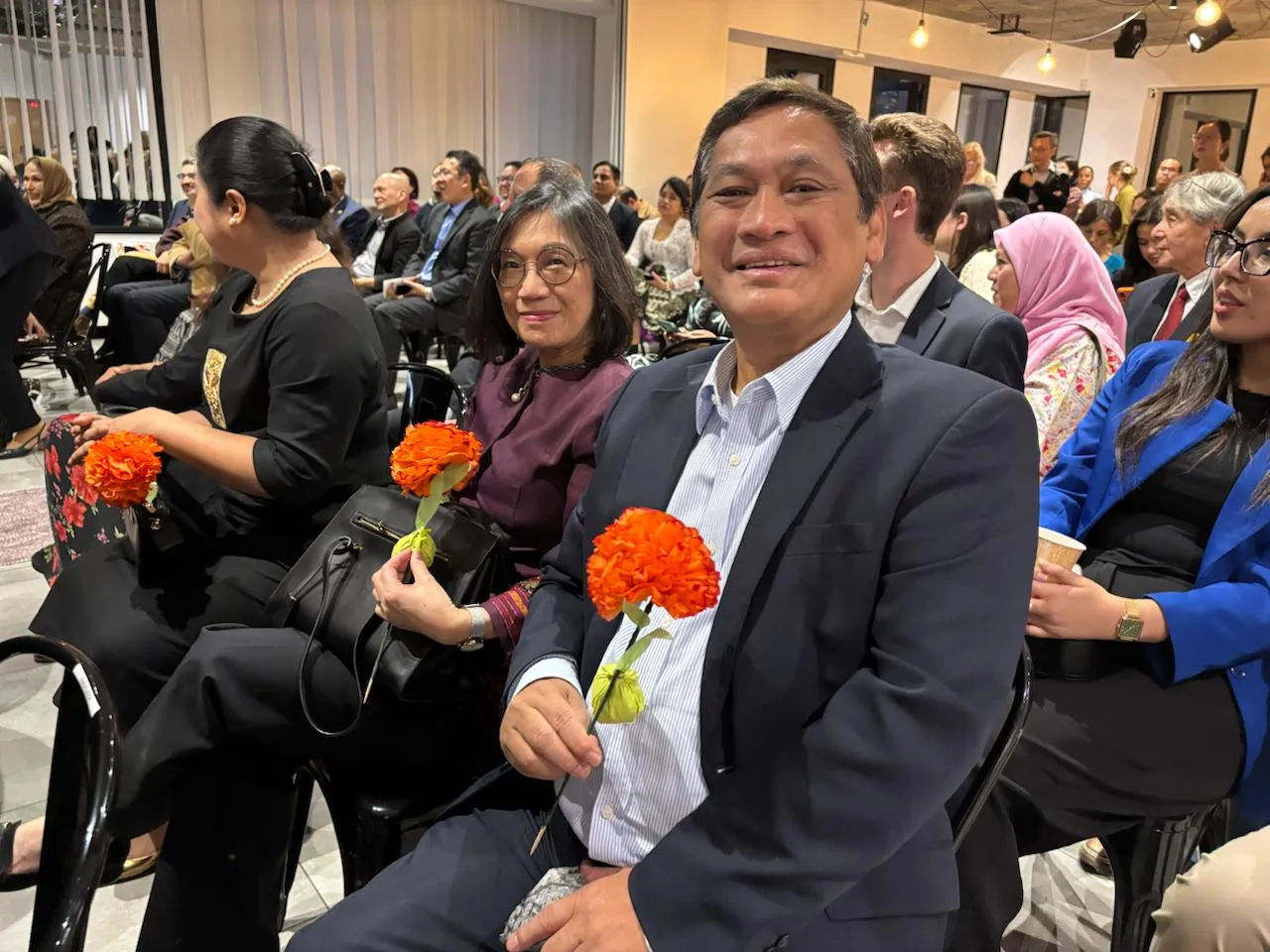
Before leaving, every guest also received a gift package. Among its contents was a Malaysian tourism magazine with information about the country and its destinations, giving guests a practical starting point for planning a visit and extending the evening’s invitation to discover Malaysia beyond Brussels.
A Taste of the Wedding Feast
No Malay wedding is complete without a feast, known as a “Kenduri”, where the families of the bride and groom welcome relatives, neighbours and friends to share a meal. The buffet served at the Embassy’s event followed this tradition, and the Ambassador noted that it was entirely home cooked.
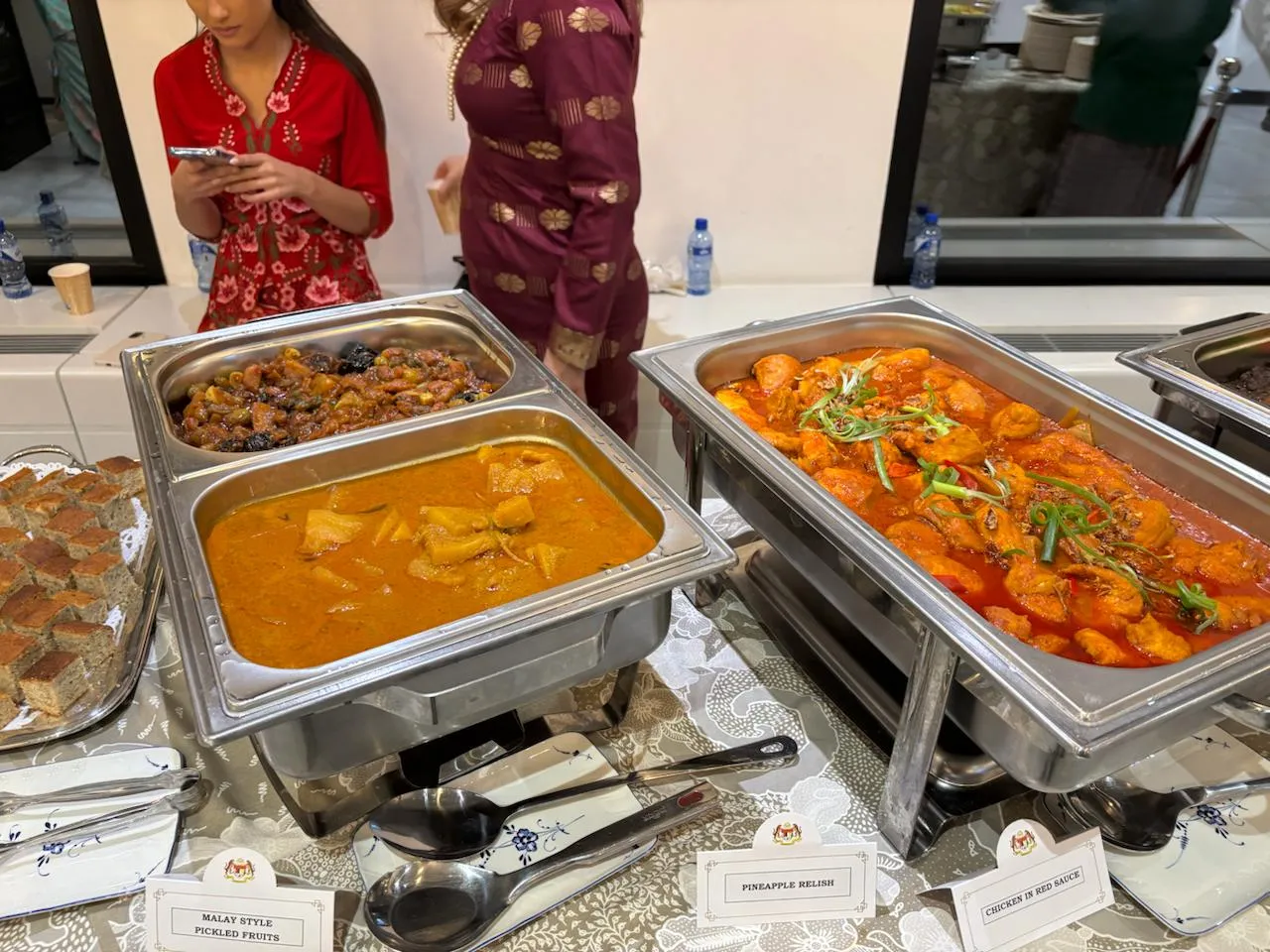
At the centre of the table was fragrant rice, the foundation of any Malay festive meal. At weddings it is often prepared as nasi minyak, rice cooked with ghee and spices such as cinnamon, cardamom and star anise, which gives it its rich aroma. It was served with chicken in red sauce, a dish known in Malay as ayam masak merah, in which fried chicken is simmered in a sauce of tomato, chilli and spices that is both sweet and gently spicy. Alongside it came blackened braised beef, inspired by daging masak hitam, where the meat is slowly cooked in dark soy sauce and spices until it turns deep brown and tender. Together these dishes reflect the balance of sweet, savoury and spicy flavours that defines Malay cooking.
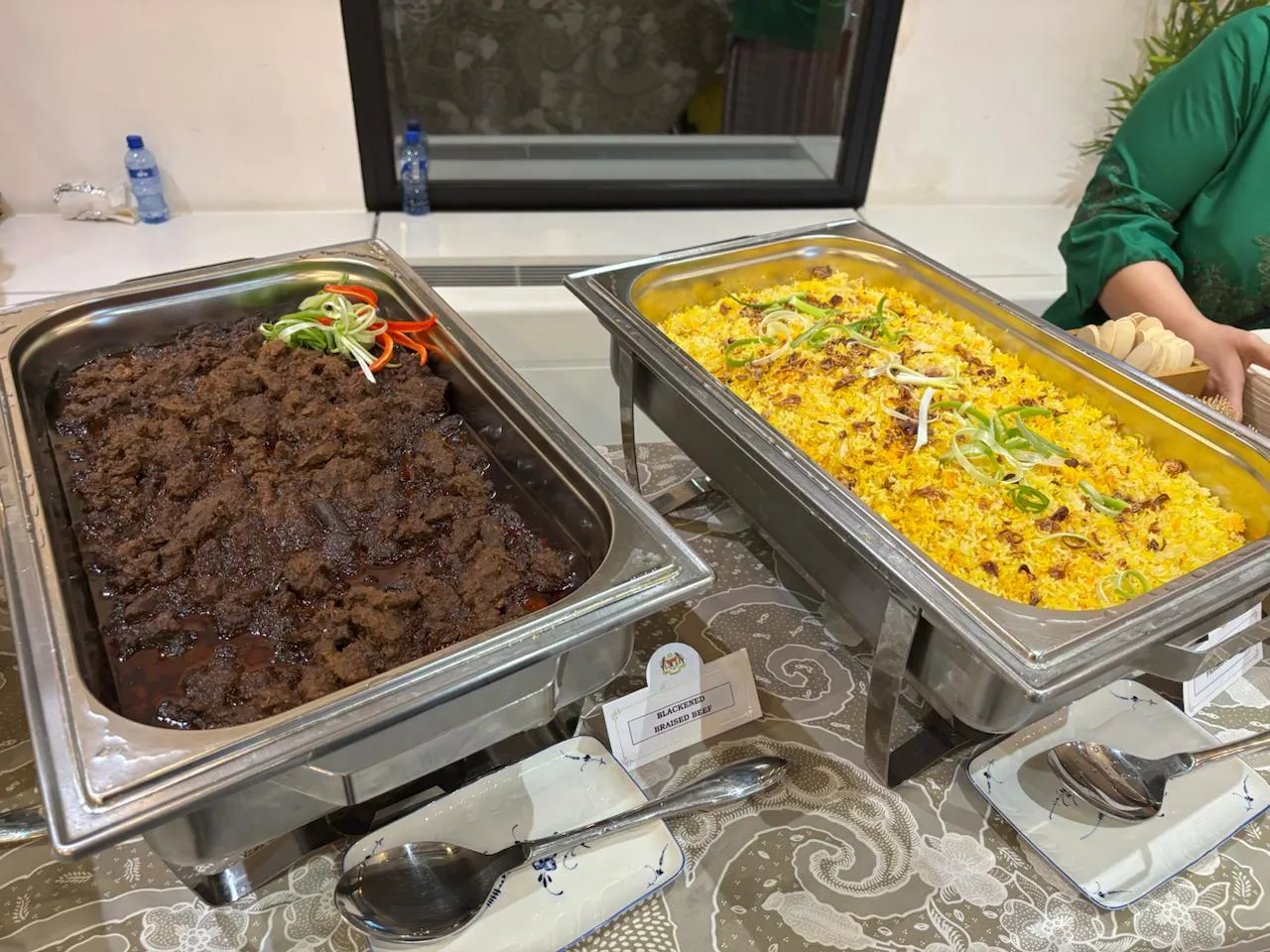
The main dishes were accompanied by a pineapple relish and Malay style pickled fruits, sides that bring a fresh, tangy contrast to the richer meat dishes. Pickled fruits, known as" Acar buah", are typically prepared with vinegar, sugar and chilli, and they are a common feature of festive meals.
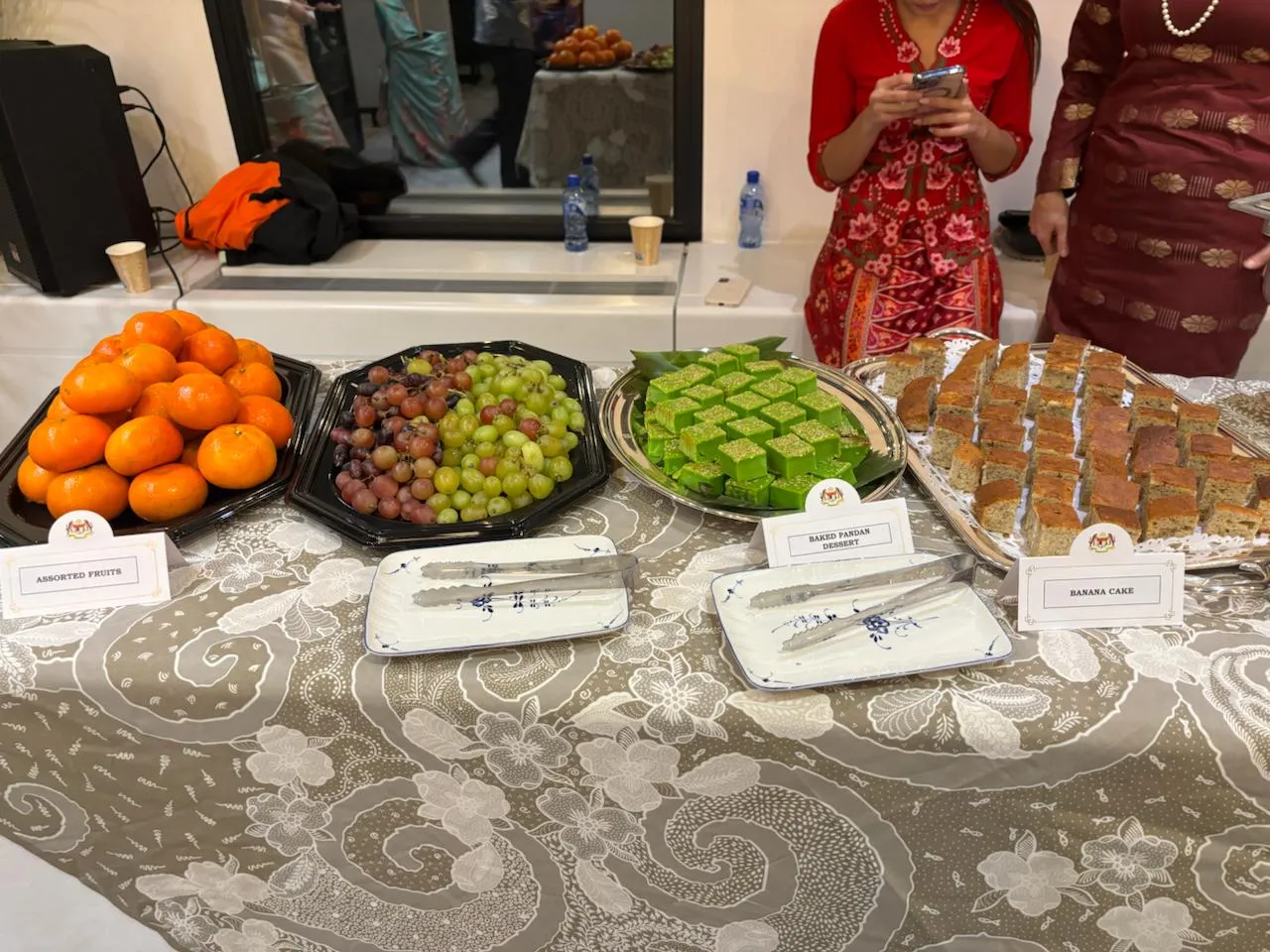
The desserts offered a gentler finish. Baked pandan dessert takes its colour and flavour from the pandan leaf, a plant used throughout Southeast Asian cooking for its green colour and its sweet aroma, often compared to vanilla. It was served with banana cake and assorted fruits, while guests could drink rose syrup, known as "Air sirap", a bright pink drink that is a familiar sight at Malaysian celebrations. For many guests in Brussels, the buffet was the most direct way to experience the hospitality that sits at the heart of a Malay wedding.
Culture as an Invitation to Travel
The choice of a wedding as the theme was deliberate. Few occasions show a culture as fully as a wedding does, bringing together family values, craftsmanship, dress and food in a single celebration. By presenting it to an audience of around 200 diplomats, academics and journalists under the Visit Malaysia banner, the Embassy turned cultural heritage into an invitation to discover the country itself, and, as the Ambassador put it, to see what Malaysia can offer those who decide to visit.
Related Topics
EUReflect News
Site Administrator
Follow EUReflect
See more of our reporting on Google
Mark EUReflect as a preferred source and our stories are ranked higher for you in Top Stories, Discover and Google News — and carry a “preferred” badge when they are cited in AI results.
Add EUReflect as a preferred source