Zero Waste Becomes a Global Policy
The UN's Advisory Board on Zero Waste has selected 20 cities to pilot waste prevention and circular production systems, aiming to replicate successful models globally.
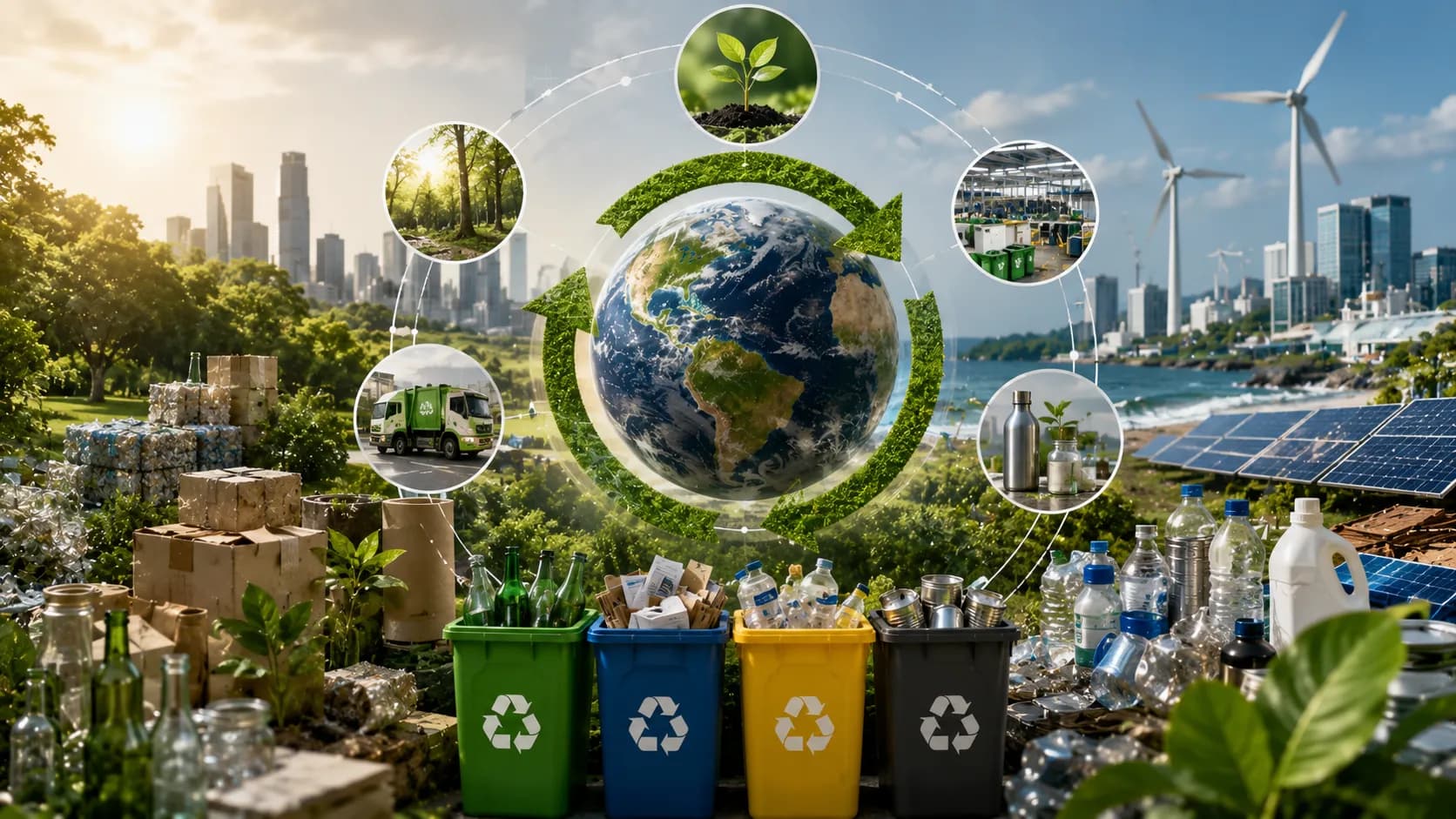
Zero waste is moving from an environmental slogan toward a broader international policy framework in 2026. The United Nations, UNEP, UN-Habitat and development institutions are increasingly connecting waste reduction with climate policy, food security, urban development, plastics regulation and the circular economy.
The urgency is growing. World Bank data show that the world generated around 2.56 billion tonnes of municipal solid waste in 2022, considerably faster than previously projected. Without stronger policies, this could reach 3.86 billion tonnes annually by 2050.
International organizations are therefore shifting their attention from simply managing waste toward preventing it from being created in the first place.
The UN Moves Zero Waste Into Cities
Cities have become one of the main targets of the new strategy.
In March, the UN Secretary-General's Advisory Board on Zero Waste, supported by UNEP and UN-Habitat, selected the inaugural 20 Cities Towards Zero Waste.
The initiative recognizes cities developing systems for waste prevention, reuse, recycling and circular production while creating a network through which successful policies can be transferred internationally.
This reflects an important change in international policy.
Instead of expecting every country or city to develop its own system independently, international organizations increasingly want successful urban models to be replicated across borders.
Food Waste Becomes a Climate Issue
Food has emerged as another major priority.
The 2026 International Day of Zero Waste focused specifically on food waste. UNEP estimates that humanity generates as much as 2.3 billion tonnes of municipal solid waste annually, while food losses and waste create environmental, economic and food-security consequences.
The policy argument is increasingly straightforward: preventing food waste reduces pressure on agricultural land, water and energy while also cutting methane emissions from organic waste.
At the Zero Waste Forum held in Istanbul in June, UNEP connected food-waste prevention directly with international climate action ahead of COP31. The Forum also saw the launch of a Zero Waste Package for Climate Action and a Global Zero Waste Districts initiative intended to translate international commitments into local implementation.
Zero waste is therefore becoming part of climate diplomacy rather than remaining a separate environmental issue.
The Plastic Treaty Could Change Global Rules
Plastic pollution represents perhaps the most ambitious international regulatory effort.
UN member states are continuing negotiations toward a legally binding international instrument addressing plastic pollution across the entire life cycle of plastics — from production and product design to consumption and disposal.
Negotiations remain difficult.
The February 2026 session in Geneva was primarily organizational rather than substantive, but preparations for the next negotiating stage have continued throughout the year. UNEP published a new informal reference document for negotiators on August 8.
The disagreement is fundamental.
Some governments want strong global restrictions covering plastic production and chemicals, while others prefer policies concentrated primarily on waste management, recycling and national implementation.
If an agreement is eventually reached, it could become one of the most consequential international environmental treaties since the Paris climate framework.
Asia-Pacific Cooperation Expands
International organizations are also building regional zero-waste networks.
In July, UNEP and the Basel Convention Regional Centre for Asia and the Pacific signed a three-year cooperation agreement aimed at accelerating zero-waste and circular-economy policies.
The programme includes sharing successful policies, strengthening cooperation between cities, developing technical resources, conducting training programmes and establishing pilot projects across the Asia-Pacific region.
This approach demonstrates another important development: zero-waste policy is increasingly based on technology transfer and institutional capacity, particularly in developing economies where waste generation is growing faster than collection and recycling infrastructure.
The World Bank Focuses on Infrastructure
The World Bank approaches the problem from another direction: financing.
Its new What a Waste 3.0 assessment covers 217 countries and economies and 262 cities, providing one of the most comprehensive pictures yet of global waste management.
The report estimates that low- and lower-middle-income countries will require approximately $556 billion in waste-management investment between 2022 and 2050.
The challenge is particularly severe in developing regions. Waste collection rates are estimated at only around 31 percent in Sub-Saharan Africa and 67 percent in South Asia.
Zero waste therefore cannot depend entirely on recycling campaigns.
International institutions increasingly emphasize collection systems, sanitary disposal, recycling infrastructure, private investment and stronger municipal financing.
Waste Is Becoming an Economic Resource
The biggest conceptual change may be economic.
Traditional waste policy followed a relatively simple model:
produce → consume → discard.
The emerging circular model attempts to create:
design → produce → consume → reuse → repair → recycle → reproduce.
This transforms waste from something governments must pay to remove into a potential source of materials, employment and industrial activity.
The World Bank estimates that around 18 million people already work in urban waste management globally, particularly in collection, sorting and recycling.
International organizations increasingly see circularity as capable of generating additional employment in product redesign, repair, remanufacturing and recycling industries.
Zero Waste Moves Toward Global Governance
The international architecture surrounding waste is also becoming stronger.
UNEP is working toward the operationalization of the new Intergovernmental Science-Policy Panel on Chemicals, Waste and Pollution, designed to strengthen the scientific basis for international decision-making.
Meanwhile, the Basel, Rotterdam, Stockholm and Minamata conventions continue regulating different dimensions of hazardous chemicals and waste, while the proposed plastics treaty could add another major pillar to this system.
Together, these initiatives indicate that waste is gradually becoming an issue of global governance comparable to climate change and biodiversity.
The Next Challenge Is Implementation
The world does not currently lack zero-waste targets.
The more difficult problem is converting them into functioning national and municipal systems.
That requires governments to redesign products, regulate packaging, reduce food waste, expand recycling infrastructure, introduce producer responsibility, improve waste collection and create markets for secondary materials.
International organizations are increasingly attempting to connect these separate policies into one circular system.
The direction in 2026 is therefore becoming clear: zero waste is evolving from a recycling policy into an economic and climate strategy.
The long-term objective is no longer simply to manage the world's growing mountains of waste.
It is to redesign economies so that far less of what they produce becomes waste in the first place.
Ahmet Balakan
Contributing writer at EUReflect.
Follow EUReflect
See more of our reporting on Google
Mark EUReflect as a preferred source and our stories are ranked higher for you in Top Stories, Discover and Google News — and carry a “preferred” badge when they are cited in AI results.
Add EUReflect as a preferred source