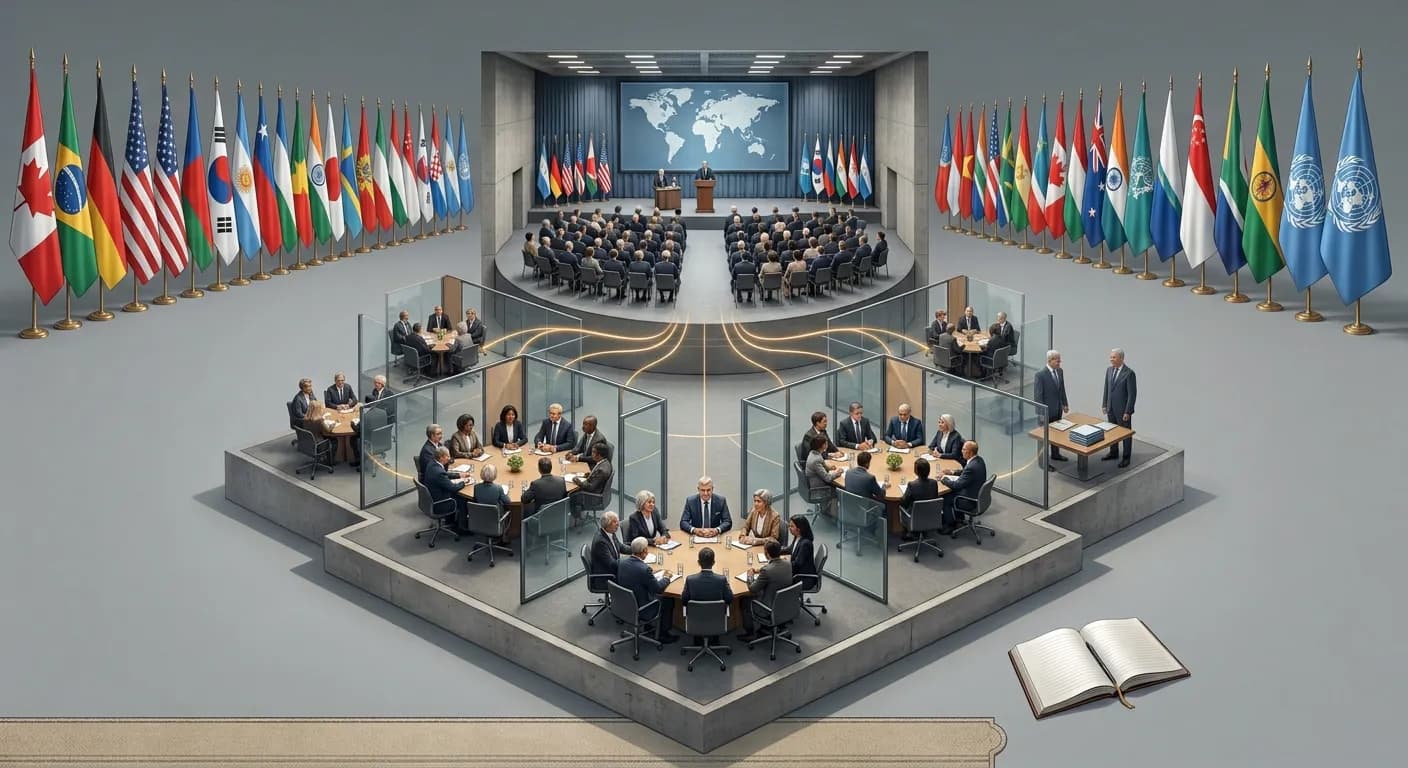
Business Diplomat: Common Interest, Simpler Law, Shared Future
Business Diplomat explores how consensus, sound law and inclusive participation can strengthen dialogue, support entrepreneurship and build a shared economic future.

Introduction
Experience gained at the negotiating table does more than resolve individual disputes. It also gives a person a view of how society, law and the economy work together. In this part of its interview series, Business Diplomat presents six observations from someone who has spent years in mediation and negotiation. Ranging from consensus to legislation and from civil society to a shared future, they outline the social ground of business diplomacy.
Six observations
"My years of experience in mediation and negotiation have taught me that consensus does not mean giving up one's own point of view.
When the highest measure for all of us is the interest of the country and the people, finding a common solution is not difficult.
Law is not a slogan; the effect of each of its provisions on people and the economy should be examined.
I support reducing regulations that create unnecessary administrative barriers for citizens and honest entrepreneurs, that duplicate one another or that are ineffective.
What matters is being able to bring the voices of different segments of society, ethnocultural associations, civil society organisations and experts together with the national agenda.
Although we have different ethnic origins and different views, our homeland, our destiny and our future are shared."
Business Diplomat commentary
The six sentences fall under three headings: the first two deal with consensus, the middle two with law and regulation, and the last two with participation and unity.
Consensus is not surrender. The first observation removes the most common reservation about consensus. Many people sit down at the table on the defensive because they see consensus as a step back. Experience teaches otherwise: the parties can meet at a common point while keeping their own points of view. This distinction matters in business diplomacy. A counterpart who knows and defends their own line earns respect and trust from the other side.
A common measure, a common solution. The second observation explains how consensus becomes possible. When the parties look only at their own positions, common ground is hard to find. When there is a higher measure that all accept, the debate shifts from "who is right" to "which is better for the country and the people". This method works in any negotiation: first find the aim the parties agree on, then discuss the details in its light.
Law is not a slogan. The third observation applies a demanding but fitting test to legislation: the effect of every provision on people and the economy should be examined. A regulation written with good intentions can produce unexpected costs in practice, strain small businesses or deter investment. The worth of a rule shows in its results on the ground, not in the elegance of its text. This approach calls for measuring the effects of regulations both before and after they come into force.
Less and better regulation. The fourth observation follows naturally from the third. It names three kinds of problematic regulation: those that create unnecessary barriers, those that duplicate one another and those that are ineffective. The group it speaks for is also chosen with care: "citizens and honest entrepreneurs". The aim is not to remove oversight but to reduce the pointless burden on people who follow the rules. Every unnecessary document and every repeated approval is taken from the time and resources an entrepreneur would give to the business. Simple, clear legislation is a strong invitation to foreign investors as much as to domestic entrepreneurs.
Bringing voices to the agenda. The fifth observation is about participation. Different segments of society, ethnocultural associations, civil society organisations and experts see problems from where they are lived, and when that knowledge does not reach the decision table, decisions are incomplete. The role described is one of mediation: connecting those who have a voice with those who decide. The business community is one of these voices, and carrying its problems to the national agenda belongs to the same logic.
A shared homeland, a shared future. The last observation states the ground on which all the earlier sentences rest. Different origins and different views are not a weakness; tied to a shared future, they are a richness. This holds in economic terms too: a society that speaks different languages and knows different cultures has a natural advantage in building bridges to foreign markets. Each community in a multicultural country is a door to another country.
The role of Business Diplomat. The platform's mission is to give young people experience, bring a diplomatic order to the business world, and benefit states by revitalising the economy. These six observations correspond to different sides of that mission. The skill of consensus is the core competence the platform wants its young members to gain. Simple legislation whose effects have been measured is a condition of a lively economy. And bringing the voices of different groups together is the most natural function of a platform. Business Diplomat aims to be this kind of meeting ground between the business community and decision-makers.
Conclusion
Consensus is not giving up one's own view but finding a solution by taking the interest of the country and the people as the common measure. Law gains strength when its effects are measured and unnecessary burdens are removed. And when the voices of all parts of society reach the agenda, a shared future stops being a phrase and becomes something built together. Business Diplomat aims to carry this understanding into the business world and to turn differences into the strength of a shared economic future.
Sherzod Pulatov
Contributing writer at EUReflect.
Follow EUReflect
See more of our reporting on Google
Mark EUReflect as a preferred source and our stories are ranked higher for you in Top Stories, Discover and Google News — and carry a “preferred” badge when they are cited in AI results.
Add EUReflect as a preferred source