Costa cuts €204bn from EU budget plan, adds 3% tech levy Ireland rejects
Farm support survives almost intact. Ireland, France and the European Parliament still objected within hours, leaving the plan in trouble days before EU leaders meet to try to settle the 2028–2034 budget.
European Council President António Costa has proposed cutting €204bn, in current prices, from the European Commission's plan for the EU's 2028–2034 budget and filling part of the gap with a 3% levy on the EU digital revenue of the biggest tech groups. The levy would land mostly on US companies, and the cuts fall hardest on defence, research and the EU's external-aid budget, which funds programmes from the Middle East and the Gulf to Africa.
Costa tabled the compromise, known in Brussels as the "negotiating box", on Saturday 21 November. "I am confident that this proposal is a good basis for moving towards a final agreement," he told reporters, according to Euronews. Leaders take it up at a special summit in Brussels on 26–27 November.
Ireland rejected the levy the same day. "Europe would lose a lot of investment if it just goes ahead unilaterally with a digital tax," Taoiseach Micheál Martin said, The Irish Times reported.
Where the €204bn comes from
In 2025 prices, which strip out inflation, the plan totals €1,582bn. That is €180.5bn, or 10%, below the Commission's proposal, Agence Europe reported, a figure the Financial Times (FT) also reported in a story carried by The Irish Times. In current prices the total comes to about €1.78 trillion, according to Euronews.
Competitiveness, research and defence lose the most. That heading drops to €437.7bn, €84.5bn (16.2%) less than the Commission asked for, the Council's summary table shows, and €18bn below the October text, according to Agence Europe. Cohesion money for poorer regions falls to about €402bn, the first cut to that line in these talks. The €261bn floor for farm income support is left almost untouched.
Not all of the saving is a spending cut. About €9bn comes from paying back the pandemic recovery fund's debt more slowly between 2028 and 2034; the final repayment date stays 2058. National contributions would edge up to 0.82% of gross national income, from 0.80%.
How the talks got here
The Commission opened the bidding on 16 July 2025: €1,985bn at current prices, €1,763bn at 2025 prices, according to the annex of Council document ST 13922/26. On 27 August six net payers — Austria, Denmark, Finland, Germany, the Netherlands and Sweden — called for that figure to come down by several hundred billion euros, Brussels Signal reported.
Ireland's Council presidency answered on 10 October with a ceiling of €1,622bn, about €141bn below the Commission. Leaders gave it no real backing at their October summit, and Costa took over the file. His text cuts a further €40bn in 2025 prices. Even so, it would be about a quarter larger in real terms than the 2021–2027 budget, the FT calculated.
A tax on platforms instead of on all large firms
The levy replaces the Commission's Corporate Resource for Europe (CORE), a yearly lump sum of between €100,000 and €750,000 for firms turning over more than €100m, which governments including Germany resisted. Costa's version is narrower. It applies to groups with more than €750m in worldwide turnover and more than €50m in EU digital revenue, and takes 3% of their net turnover from online advertising, digital marketplaces and intermediation, and the monetisation of user data.
The expected yield is modest. The Commission has estimated that a 3% EU digital tax would raise about €5bn a year, or €35bn over the seven years, figures cited by both Agence Europe and the FT. The European Parliament had argued for up to €25bn a year, but with a 5% rate and wider scope, Euronews reported. Brussels floated a 3% digital tax once before, in 2018. Member states blocked it, and the OECD's global tax talks took its place.
"This tax is not targeting a specific company as such or any country as such," Costa said, as quoted by the FT. Martin was not persuaded. Ireland changed its corporate tax rules under the OECD process on the understanding there would be no digital tax, and going it alone "would risk reopening the trade deal with the US", he said. France, Italy, Spain and Austria already run national digital levies.
The rest of the revenue package stays, with adjustments. The EU would keep all revenue from the Carbon Border Adjustment Mechanism (CBAM), up from 75% in the Commission plan and 90% in the Irish text. It would take 30% of emissions-trading revenue, with a slower phase-in for 13 lower-income states; Poland still opposes it. Tobacco, plastic waste and uncollected electronic waste complete the list.
What it means for the Gulf, Türkiye and Central Asia
Global Europe, the heading that pays for development aid, humanitarian work, the neighbourhood and candidate countries, takes the deepest proportional cut. Costa's summary table puts it at €150.1bn in 2025 prices, nearly €7bn below the Irish text's €156.9bn and €40bn below the Commission's €190bn. Euronews measured the cut at 21%.
The Irish text had already reshaped the regional pillars inside the instrument. The Middle East, North Africa and the Gulf pillar fell from €37.9bn in the Commission's plan to €32.4bn, and the Enlargement and Europe pillar from €38.1bn to €32.6bn (2025 prices), the Council document shows. Costa goes further. His summary table cuts the Middle East, North Africa and Gulf pillar to €30.8bn, almost a fifth below the Commission's figure, and the Europe pillar to €30.9bn; sub-Saharan Africa falls to €43.4bn from €53.4bn. Jane-Ann McKenna, chief executive of the Irish aid network Dóchas, said the proposal "will hurt millions facing severe hunger, conflict, and climate breakdown" if adopted.
Under CBAM, EU importers of goods such as steel, aluminium, cement and fertiliser buy certificates for the emissions embedded in them, as EUReflect has explained. For suppliers in Türkiye or Central Asia, Costa's change alters who keeps that money, member states or Brussels, not the charge itself. But with all of it written into the budget, the EU would depend more on the mechanism to fund itself.
The objections and the calendar
An Élysée source called the new text "very disappointing" and told reporters that "as it stands" it "does not constitute a basis for an agreement", Euronews reported. Sweden's Europe Minister, Jessica Rosencrantz, had questioned new EU taxes earlier in the week, before the text came out: "It's money taken from somewhere else," she said, AFP reported via Gulf News.
The European Parliament, which must consent to the final budget, wants more money, not less. "President Costa's proposal is simply unacceptable," said Siegfried Mureșan, its chief negotiator, in an EPP Group statement. He called for "a moderate 10% increase" and backed a digital levy.
German Chancellor Friedrich Merz has added a separate condition: no budget deal without unanimous financial support for Ukraine, Euronews reported. EUReflect has reported that new EU borrowing would cover two-thirds of Ukraine's 2027 funding gap.
Martin does not expect a deal this week and said the talks would "go into December". The next fixed date is the European Council of 17–18 December. Leaders want agreement by the end of 2026 so the budget can start on 1 January 2028, before elections in France, Italy and Poland complicate the talks. The other test is whether all 27 governments, Ireland included, accept the levy, and how Washington responds if they do.
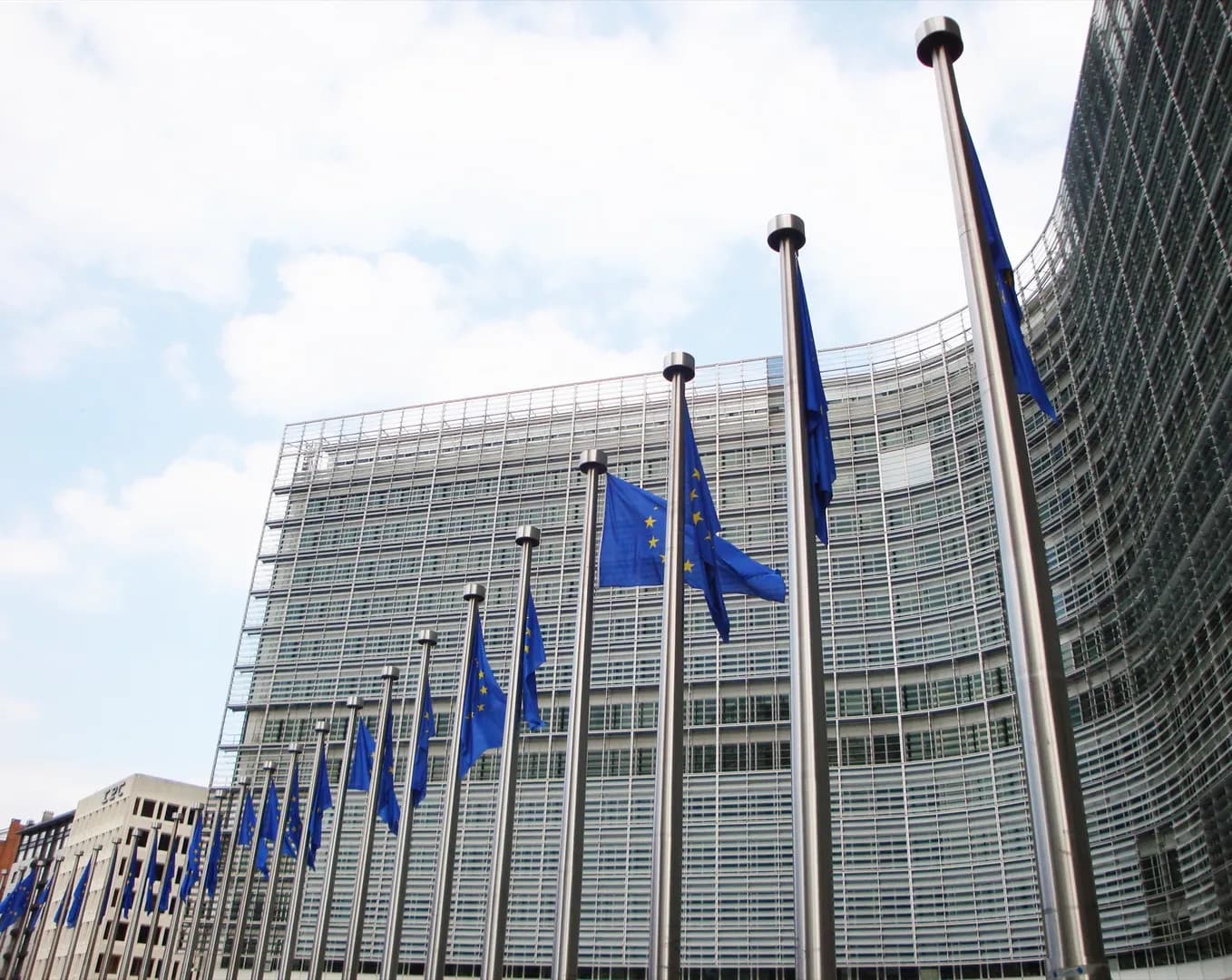
Main image: The Berlaymont in Brussels, headquarters of the European Commission, whose 2028–2034 budget proposal Costa's plan cuts by €204bn. Photo: Jai79 / Wikimedia Commons, CC0.
Related Topics
EUReflect News
Site Administrator
Follow EUReflect
See more of our reporting on Google
Mark EUReflect as a preferred source and our stories are ranked higher for you in Top Stories, Discover and Google News — and carry a “preferred” badge when they are cited in AI results.
Add EUReflect as a preferred source