EU leaders end summit with no €1.78tn budget and no €45bn Ukraine loan
The fight over the size of the EU's next seven-year budget is now tied to Ukraine's 2027 financing, and any one of 27 governments can block it. Both Council drafts so far have also cut the external heading that funds partners from Türkiye to the Gulf and Central Asia.
EU heads of government gave up on their special budget summit after one day, breaking up in the night of 26 to 27 November with no deal on a 2028–2034 spending plan worth about €1.78tn. Hungary, Slovakia and Czechia also held up a new €45bn loan for Ukraine, so both files now go to the 17–18 December summit, and that meeting will decide how much the EU can spend from 2028 on farms, defence and partners beyond its borders.
Leaders had booked two days. They talked for close to 14 hours, according to bne IntelliNews, then cancelled the second.
A budget no camp will sign
Going in, European Council President António Costa wanted three answers: how big the Multiannual Financial Framework (MFF) should be, how it is divided between spending headings, and which new EU revenues pay for it. None was closed. "We did not reach an agreement," he told the closing press conference, Politis reported.
His latest text sets the total at €1.78tn, against €1.98tn in the Commission's proposal, The Parliament Magazine reported. The Commission thinks that is already too little. Budget Commissioner Piotr Serafin told MEPs in Strasbourg on 25 November that Costa's text added another €45bn of cuts, taking the total reduction past 10%, with the deepest ones in competitiveness and security. "Sometimes less is more, but in this case less is really less," he said.
The net payers want it smaller still. Seven governments, among them Germany, the Netherlands, Austria and Sweden, are pushing for a lower total. Dutch Prime Minister Rob Jetten called the draft "not acceptable for Dutch taxpayers", and German Chancellor Friedrich Merz said it was "not a basis for a conclusion", according to The Parliament Magazine. Against them stand the 17 "Friends of Cohesion", who refuse new cuts to farm and regional money. Czech Prime Minister Andrej Babiš called a smaller budget for member countries "completely unacceptable".
France tried to sit between the two camps. "Massive cuts that would prevent us from investing would be a strategic mistake for Europe," President Emmanuel Macron said, bne IntelliNews reported. Guntram Wolff, a senior fellow at the Bruegel think tank, told The Parliament Magazine that the frugal group's walkout from Costa's small-group talks "shows it might be deeper than that", meaning more than the usual summit brinkmanship.
Ukraine's loan, minus three capitals
The Commission's proposal of 18 November would lend Ukraine up to €45bn for 2027, raised on capital markets and guaranteed by headroom in the EU budget. Economy Commissioner Valdis Dombrovskis told Parliament the money would close roughly two-thirds of a €70bn gap: €20bn of budget support and €25bn for defence. Kyiv would repay the principal only once Russia pays reparations.
Costa said 24 governments back the plan. Hungary, Slovakia and Czechia are staying out, as they did with the €90bn loan for 2026–27 agreed in December 2025. Bulgaria will join only the civilian strand. "We are going to contribute, but again, no money from Bulgaria for weapons, no money for war in Ukraine," Prime Minister Rumen Radev said at the summit, bne IntelliNews reported.
Commission President Ursula von der Leyen said there was "wide support" for the proposal and that it was now for the Council to finish the work, in her statement after the summit. Merz saw some give among the holdouts, saying states that had been reluctant "have ideas on how it could be distributed".
How the two files became one
The Commission tabled its plan in July 2025 at €1,985bn in current prices. Ireland's Council presidency cut it in October, and on 21 November Costa went further, taking €204bn off the Commission's figure and adding a 3% levy on large digital firms, as EUReflect reported. The levy was one of the few points of progress: von der Leyen said the digital services tax "gathers broad support".
Merz then joined the files. Berlin, he has said, will sign no budget that leaves any of the 27 out of paying for Ukraine; Babiš called that link "completely absurd". The MFF needs every government's agreement, plus a yes from MEPs, so each holdout's veto now reaches both.
Ukraine's own bill keeps rising. President Volodymyr Zelensky put the country's 2027 external financing need at €115bn on 24 November. Interest on the €90bn and €45bn loans would cost the EU €45bn–55bn over 2028–2034, according to a Commission estimate cited by bne IntelliNews; The Parliament Magazine, citing a Commission document reported by the Kyiv Independent, puts it at about €55bn. EUReflect explained the loan's design when it was tabled.
What the cuts mean from Ankara to Almaty
For our regions the line to watch is Global Europe, the heading that pays for the EU's grants, guarantees and loans abroad. Costa's text cut it to about €150bn in 2025 prices, from €190bn in the Commission's plan, Agence Europe reported.
The Commission's country lists (Council document ST 11758/25 ADD 1) show who shares each pillar of that heading. Türkiye and Azerbaijan share the Europe pillar's enlargement and eastern neighbourhood list with Ukraine. Egypt, Jordan, Saudi Arabia, the United Arab Emirates and the other Gulf states fall under the Middle East, North Africa and Gulf pillar. Kazakhstan, Kyrgyzstan, Tajikistan, Turkmenistan and Uzbekistan come under Asia and the Pacific.
Each of those pillars had already shrunk in the Irish presidency's October draft, Council document ST 13922/26, in 2025 prices: Europe from €38.1bn to €32.6bn, the Middle East and Gulf from €37.9bn to €32.4bn, and Asia and the Pacific from €15.1bn to €12.9bn. The same draft allows extra money for Ukraine to be "prioritised" from the Europe pillar. Any extra Ukraine spending taken from that pillar would come out of the same pot as programmes for Ankara and Baku.
Timing matters too. Von der Leyen said a deal is needed so that funds can flow "from day one of the next MFF", 1 January 2028. A later deal would push back the programmes that follow it.
December, and the date to watch
Leaders meet again on 17–18 December, the last summit before their own end-2026 target. Costa is expected to table a revised text first, and Merz has warned that the €204bn cut "will not stop at 204 billion". The Élysée says talks "cannot go beyond December", with France's presidential election due next spring.
Finance ministers meet on 11 December to discuss a proposed fine on Bulgaria for its deficit, a move Radev called unfair. The December summit is also due to confirm the new head of the European Central Bank: leaders have asked MEPs and the ECB's Governing Council for their views on Pablo Hernández de Cos as president, with Laurence Boone and Markus Brunnermeier for the Executive Board. Christine Lagarde leaves on 7 February 2027.
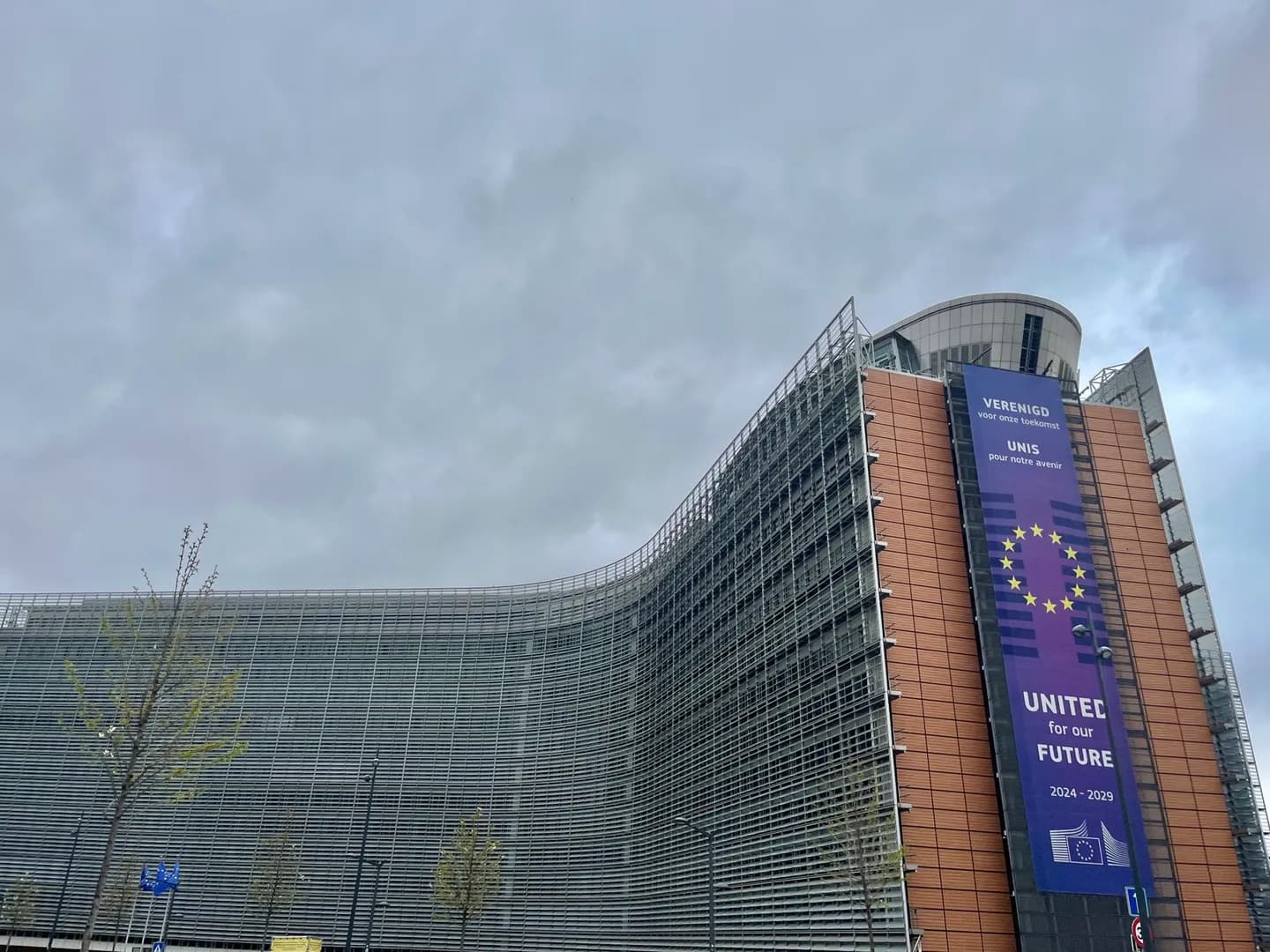
Main image: The Berlaymont in Brussels, home of the European Commission, whose €1.98tn budget proposal leaders cut back without reaching a deal. Photo: Johann A. J. Gutmann / Wikimedia Commons, CC0.
Related Topics
EUReflect News
Site Administrator
Follow EUReflect
See more of our reporting on Google
Mark EUReflect as a preferred source and our stories are ranked higher for you in Top Stories, Discover and Google News — and carry a “preferred” badge when they are cited in AI results.
Add EUReflect as a preferred source