International Experts Analyse How Kazakhstan’s Historic Kurultai Elections Unfolded
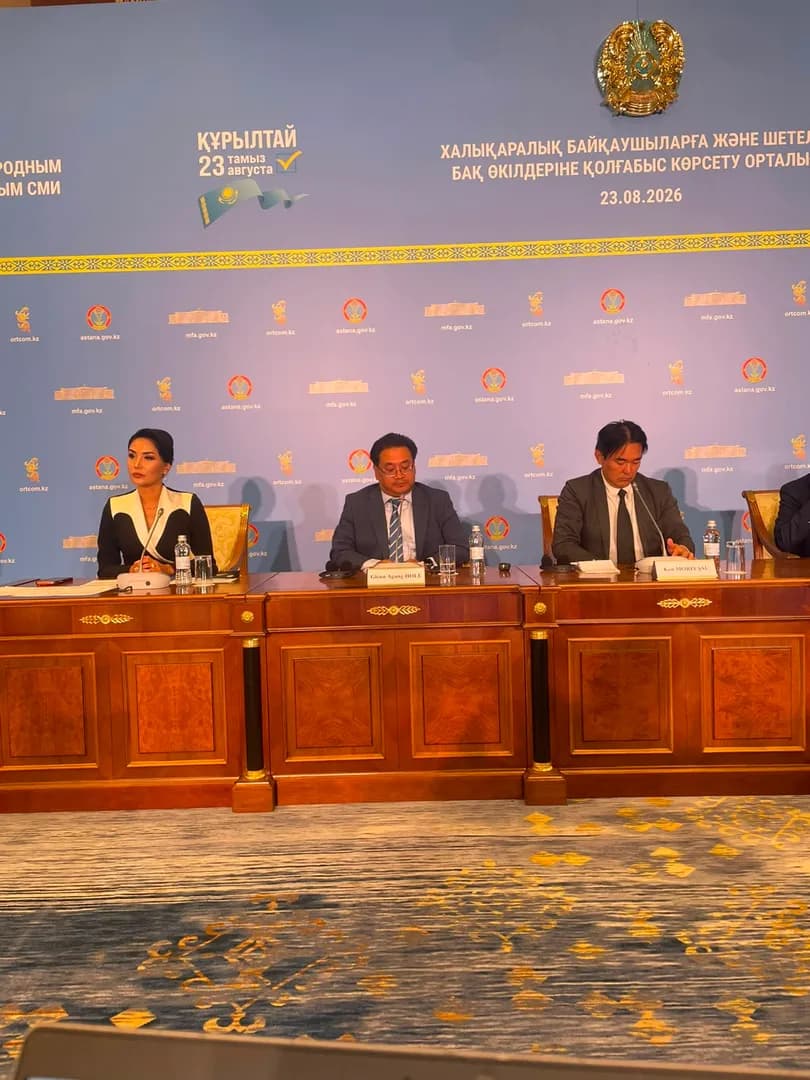
ASTANA – As Kazakhstan held its first-ever elections to the newly established Kurultai, the eyes of the international community turned toward Central Asia. Foreign experts, academics and political observers travelled to the country to witness the vote first-hand, visiting polling stations, speaking with citizens, and sharing their assessments with international journalists.
Analysis
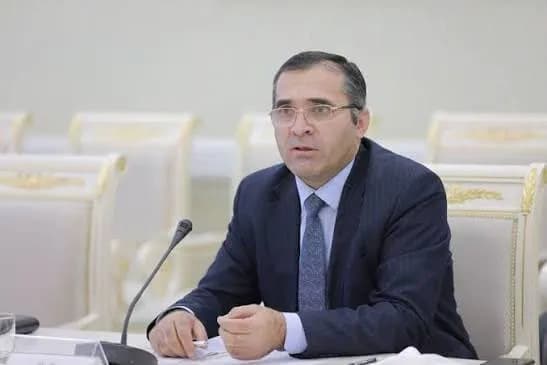
For Dr. Basel al-Haj Jasem, a political commentator based in the Netherlands specialising in international relations and Middle Eastern politics, the significance of the elections was inseparable from Kazakhstan's geography.
"These elections are of particular significance for Kazakhstan, given its geographical position in Central Asia," he observed. "Kazakhstan is situated between Russia, China, and Europe. Kazakhstan's stability is important not only for the country itself, but for the entire region."
Focusing on the conduct of the vote itself, he noted that the process was being carried out "in a transparent and open manner," reflecting compliance with electoral procedures and the law.
Observations
Perhaps the most detailed reflection came from Professor Glenn Agung Hole of the University of South-Eastern Norway, an expert in economics and international relations, who framed the elections as part of a much larger institutional journey.
"Kazakhstan is located at the very heart of Eurasia," he said. "It therefore needs international cooperation, but it also needs strong domestic institutions that can define and safeguard its own interests."
Professor Hole emphasised the value of observing democracy up close. "We often speak about institutions as abstract concepts — constitutions, laws, parliament, and rules. But institutions become real when citizens interact with them. Polling stations are one of the places where this happens."
Having spoken with numerous voters, he was struck by the diversity of their priorities — from geopolitics and political reforms to environmental protection. For him, this diversity underscored precisely why strong institutions matter. "Their role is not to make everyone think alike. Their role is to hear different interests and give them a legal form, so that they have a legitimate place in the political process."
Crucially, he cautioned that the real test still lies ahead. "Elections themselves are not a product or an end result; they are about participation, representation, and legitimacy. The most serious institutional challenges will arise after the elections. These expectations will need to be translated into tangible results."
He also linked institutional credibility to economic confidence, noting that a transparent and representative political process "will also allow international investors to see that their investments here will be secure."
View From Washington
Ken Moriyasu, Senior Fellow at the Hudson Institute in the United States, drew attention to a remark made by President Kassym-Jomart Tokayev two days before the vote — that the value of the most important decisions is often understood only many years later.
"I think this idea can be summed up in just a few words: 'Trust the process,'" Moriyasu said.
For him, the central priority is stability. "For Kazakhstan, the most important thing is to ensure political stability, as it is essential for pursuing a multi-vector foreign policy." In an increasingly volatile geopolitical environment, he argued, strong political institutions are essential "for both citizens and the country to succeed," helping to place Kazakhstan on a clear and purposeful path.
A European Perspective
Offering a view from within the European Union, Jerzy Olędzki, Member of the Board of the M. Boym Institute for Asian and Global Studies in Poland and an expert on Central Asia, highlighted the importance of continued reform and accountability.
"The elections provide an opportunity to consolidate the political landscape and strengthen the administrative system," he said. "It is very important for Kazakhstan to continue implementing reforms. Oversight of the executive authorities should also be strengthened, while the country should continue pursuing its multi-vector foreign policy."
For Olędzki, the stakes extend directly to Europe. "For the country I represent, as well as for other Member States of the European Union, it is very important that Kazakhstan remain a stable and reliable economic and political partner. Economic development will contribute to building a prosperous society and will also strengthen relations between the European Union and Kazakhstan."
A Shared Message From the Observers
Despite their different national backgrounds and areas of expertise, the international observers converged on a common set of themes: the strategic importance of Kazakhstan's stability, the central role of strong institutions, the value of a multi-vector foreign policy, and the understanding that the true measure of these elections will be revealed in the reforms and representation that follow.
As Kazakhstan opens a new chapter with its first Kurultai, the message from the international community was one of cautious optimism — a recognition that the vote itself was only the beginning, and that the most important work lies ahead.
Derya Soysal reported from Kazakhstan, where she attended the briefings held by international experts observing the country's first elections to the Kurultai.
Related Topics
Derya Soysal
Contributing writer at EUReflect.
Follow EUReflect
See more of our reporting on Google
Mark EUReflect as a preferred source and our stories are ranked higher for you in Top Stories, Discover and Google News — and carry a “preferred” badge when they are cited in AI results.
Add EUReflect as a preferred source