Alaska: Trump-Putin Summit
Donald Trump’s Alaska summit with Vladimir Putin yielded no ceasefire or concrete agreements on Ukraine, leaving Trump with a symbolic photo-op while Putin emerged as the clear winner in the optics and information battle.
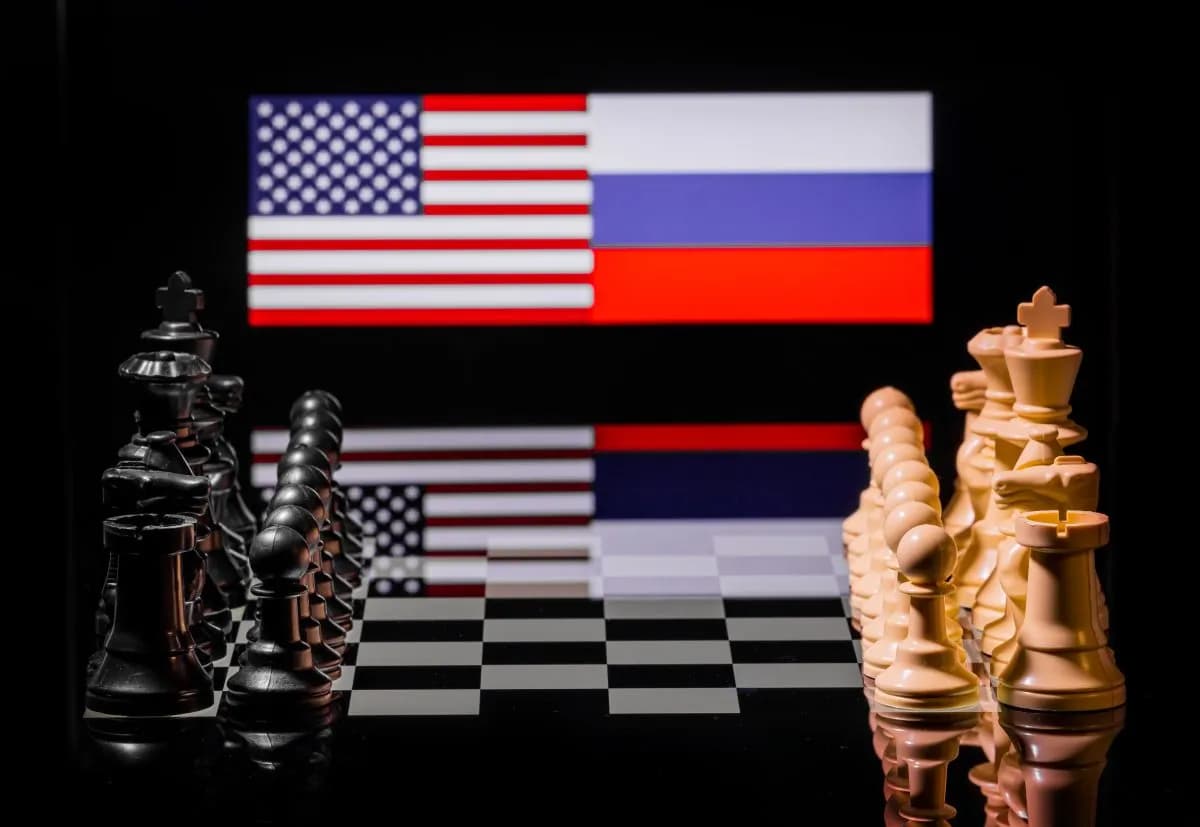
The Russia and the USA flags on map in conflict over colonizing the moon
Donald Trump landed in Alaska hoping for a triumphant photo-op with Vladimir Putin. What he got instead was a cold wind, a protocol embarrassment, and the reminder that Nobel Prizes aren’t handed out for showing up.
On Friday, August 15, Donald Trump and Vladimir Putin met at the Anchorage military base in Alaska for a three-hour summit focused on the war in Ukraine. Hopes of a breakthrough quickly melted in the Alaskan chill: no ceasefire, no negotiation timetable, and no concrete progress.
Protocol Misstep, Symbolic Victory
When the two leaders appeared before the press, it was Vladimir Putin who spoke first — breaking with protocol, which dictates that the host takes the lead. Trump, visibly terse, limited his remarks to barely three minutes, avoided questions, and left the stage.
Putin, by contrast, seized the moment. Smiling, he turned to Trump and quipped: “Next time, in Moscow?” Trump, half-grinning, echoed the invitation — a gesture that raised eyebrows back home.
Behind Closed Doors: Empty Promises
The meeting reportedly touched on economic deals and geopolitical concessions. According to sources, Trump hinted at possible compromises on oil, gas, Arctic rare earths, and even sanctions relief — ideas that sparked concern in Europe. Yet, once before the cameras, no substance emerged.
Trump repeated his favorite formula: “There’s no deal until there’s a deal.” He insisted that responsibility now lies with Volodymyr Zelensky, whom he is scheduled to meet in Washington on Monday.
Putin, for his part, claimed Russia was “ready to end the war,” but only if the “root causes” were addressed — a thinly veiled accusation against Ukraine.
Global Reactions
• Ukraine: President Zelensky confirmed a Washington meeting with Trump immediately after Alaska.
• Europe: Emmanuel Macron, Ursula von der Leyen, and Friedrich Merz stressed the importance of keeping sanctions on Moscow, warning that Russia cannot have a veto over Ukraine’s future.
• United Kingdom: Prime Minister Keir Starmer cautiously welcomed “efforts,” but emphasized that Zelensky must remain central to any peace process.
• Hungary: Viktor Orbán hailed the summit, declaring it made the world “safer than yesterday.”
Winners and Losers
In the court of public opinion, Vladimir Putin emerged as the winner. Welcomed on U.S. soil with military honors, treated as Trump’s equal, and even stepping into the presidential limousine, he successfully projected the image of a leader far from isolated.
Donald Trump, on the other hand, returned with little more than a photo-op. His Nobel Peace Prize ambitions remain a distant dream. The New York Times captured the mood succinctly: “Trump rolled out the red carpet — and went home empty-handed.”
Oleksandr Merezhko, head of Ukraine’s parliamentary foreign affairs committee, was blunt: “Putin won the information war. He used Trump to show he is not isolated.”
In the end, Anchorage will be remembered less as a historic peace summit than as a missed opportunity: plenty of symbolism, almost no substance. Trump may hope for a Nobel another day — but for now, it is Putin who leaves the stage stronger.
Kadir Duran
Contributing writer at EUReflect.
Follow EUReflect
See more of our reporting on Google
Mark EUReflect as a preferred source and our stories are ranked higher for you in Top Stories, Discover and Google News — and carry a “preferred” badge when they are cited in AI results.
Add EUReflect as a preferred source