Hangzhou: China’s $86 Billion AI Hub
Hangzhou's patient approach includes allocating 15% of annual fiscal revenue to tech and reserving buildings for startups like Game Science.
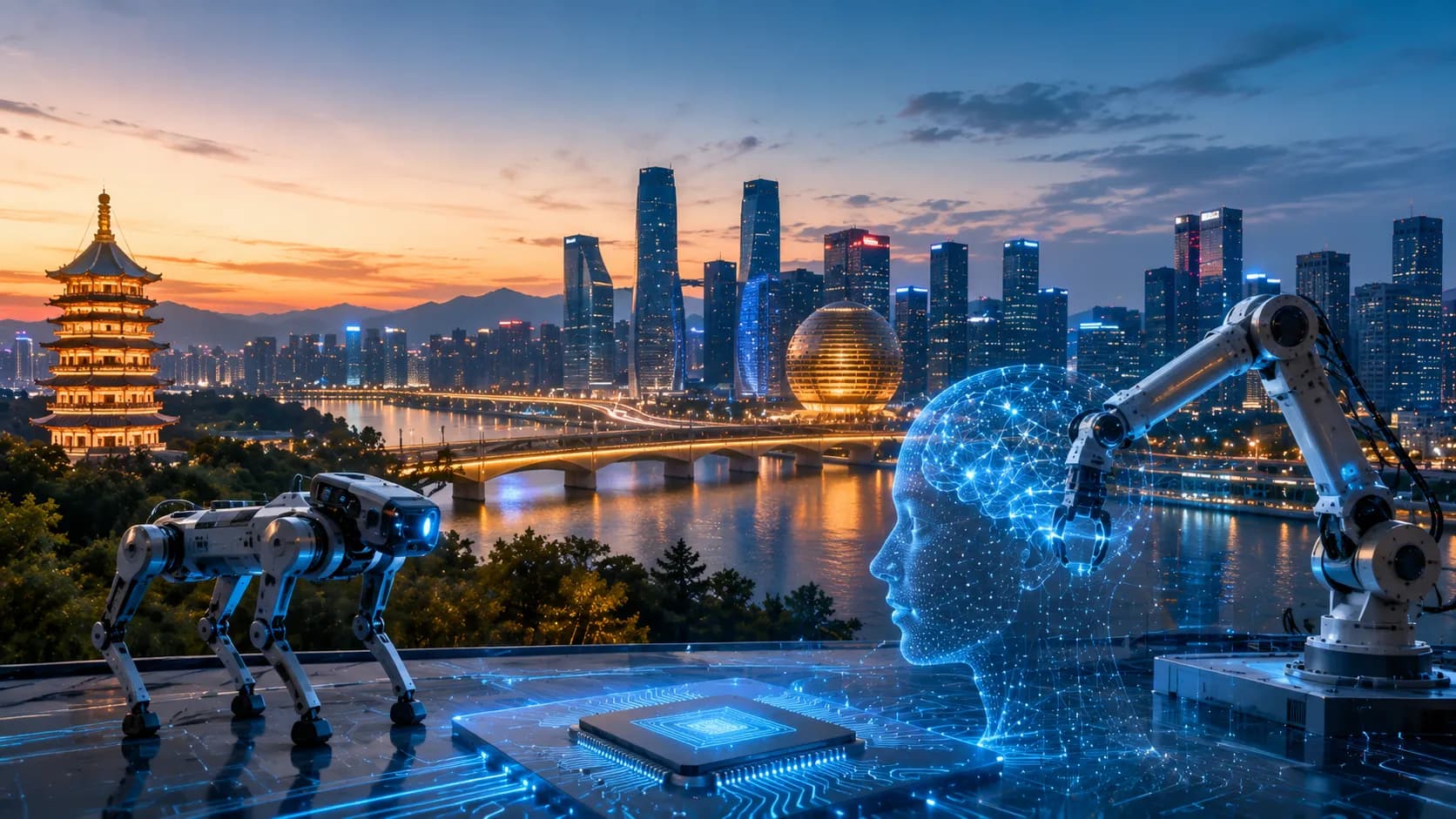
Once known merely as the city where Alibaba was founded, Hangzhou is now moving to the centre of China's AI map. In its city plan covering the 15th Five-Year Plan period (2026-2030), the capital of Zhejiang province aims to cultivate at least three internationally leading open-source foundational AI models and raise core AI industry revenue above 600 billion yuan (approximately 86 billion dollars) by 2030. After Shenzhen and Beijing, the strongest contender for the title of "China's Silicon Valley" is now this city.
The "Six Little Dragons": A New Generation from DeepSeek to Unitree
The showcase of Hangzhou's rise is the generation of startups nicknamed the "six little dragons of Hangzhou," a term popularised in early 2025. The group includes DeepSeek, which seized the global agenda with a groundbreaking model built at a fraction of Silicon Valley costs; Game Science, the developer of the worldwide hit "Black Myth: Wukong"; Unitree Robotics, whose robotic dog caught even Elon Musk's attention; 3D design software firm Manycore Tech; brain-computer interface developer BrainCo; and DEEP Robotics, maker of four-legged industrial robots. Unitree today holds 60 per cent of the quadruped robot market and has reached a valuation of 1.4 billion dollars; at the World Digital Education Conference held in Hangzhou in May 2026, the provincial government placed these companies front and centre.
The Recipe for Success: A Patient State, a Generous Budget
The dragons were not born by chance. Since 2010, the city government has been supporting technology startups through "Project Eagle" with incubators and public funding; the AI Industry Chain Action Plan announced in January 2025 in turn envisages certifying more than 2,000 new high-tech enterprises, initiating over 300 major technology projects, and investing more than 300 billion yuan (40 billion dollars) annually. The city allocates 15 per cent of its annual fiscal revenue to technology investments; when Game Science ran out of office space, the municipality's decision to keep two buildings vacant for three years in case the company needed them became a symbol of this patient approach.
The 2026-2030 Vision: Open Source and Embodied Intelligence
The roadmap for the next five years is also taking shape. During the 15th Five-Year Plan period, the city government plans to strengthen computing infrastructure, expand AI industrial clusters, and integrate AI across manufacturing, public services, and governance. Among Hangzhou's assets are ModelScope — China's largest and the world's second-largest open-source model platform — and the advantages it has accumulated in open-source models, embodied intelligence, and institutional innovation, as noted by the city administration.
Conclusion
The Hangzhou story makes visible the local leg of China's technology strategy: a model that translates central targets into concrete budgets, incubation programmes, and a startup-friendly administrative culture at city scale. Read together, DeepSeek's global resonance, Unitree's market dominance, and the 86-billion-dollar 2030 target show that the AI race will be won not only along the Beijing-Washington axis but also in competition between cities. Hangzhou has set the bar; all eyes are now on the response of other Chinese cities and global rivals.
Zhansaya Nurlanovna
Contributing writer at EUReflect.
Follow EUReflect
See more of our reporting on Google
Mark EUReflect as a preferred source and our stories are ranked higher for you in Top Stories, Discover and Google News — and carry a “preferred” badge when they are cited in AI results.
Add EUReflect as a preferred source