The Turkic Century Isn't a Choice. It is Destiny!
“The End of the Old Map” explores how the collapse of traditional Eurasian trade routes—through Russia and Iran—has forced a historic realignment of global logistics and power. The text argues that the “Middle Corridor,” traversing Turkey, Azerbaijan, and Kazakhstan, is not a choice but a necessity shaped by geopolitical crises. With the Northern and Southern corridors paralyzed by war and sanctions, the Turkic heartland emerges as the strategic backbone of a new Eurasian order. This transformation—driven by logistics, energy, digital infrastructure, and defense integration—is redefining the Organization of Turkic States (OTS) as a geopolitical and economic force. The paper concludes that the unification of the Turkic world is not romantic idealism, but a historical compulsion dictated by modern geography and global competition.
The End of the Old Map
Destiny is not a matter of choice; it is a matter of strategic necessity. We are living in an era where the familiar maps of global trade and influence are being violently redrawn, not by cartographers, but by conflict and competition. This great continental realignment is being driven by two primary catalysts: the seismic shift in US foreign policy under the second Trump administration and the eruption of regional conflicts. These events are not isolated tremors but a powerful chain reaction, shuttering the old, established pathways of commerce and forcing the emergence of new roads across Eurasia. This is the dawn of a "New Great Game," a fierce, multi-front struggle for control over the corridors that will define the 21st century.
1. The Great Unraveling: Why the Old Corridors Failed
The new Eurasian map is defined not by what was built, but by what was broken. The strategic crisis began with the simultaneous collapse of the two primary land routes that had long connected the economic engines of the East with the markets of the West, forcing every major power to recalibrate its strategy.
1.1. The Northern Route: Frozen by Conflict
The traditional Northern Corridor, running across the vast expanse of Russia, was the first to fail. Following the 2022 invasion of Ukraine, Western sanctions transformed this route from a reliable commercial highway into a political and financial liability. But Russia was not rendered a passive victim. While its primary east-west artery was compromised, Moscow pivoted aggressively to salvage its influence, pouring investment into its International North-South Transport Corridor (INSTC) via Iran in a bid to reorient trade flows and defy Western pressure.
1.2. The Southern Route: Blockaded by Tension
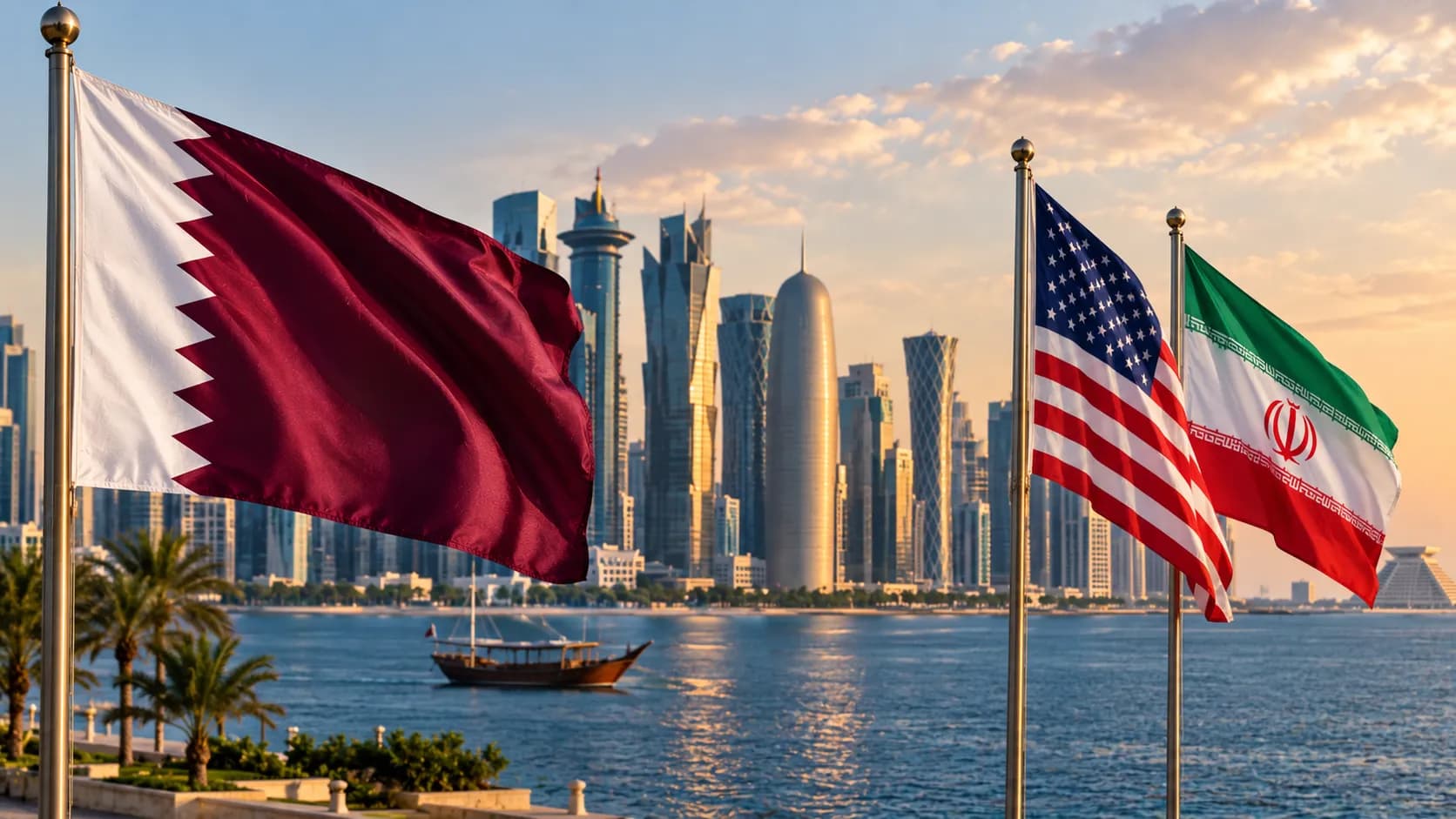
The Southern Corridor through Iran was neutralized by a second shockwave. The Iran-Israel tension of 2025, coupled with the return of a US "maximum pressure" policy, rendered the route unusable. The consequences were immediate and severe:
● Iran faced deepening economic and diplomatic isolation.
● The Strait of Hormuz, a chokepoint through which a third of the world's seaborne oil passes, became an acute security risk.
● Central Asian states made their calculations clear. In a decisive public statement, Kazakhstan's Economy Minister, Serik Jumanğarin, announced his country was preparing to divert cargo to alternatives, declaring the Iranian route too risky. Uzbekistan soon followed, recognizing the new, unavoidable reality.
2. A Logistical Void at the Heart of the World
With the Northern and Southern corridors effectively neutralized, a massive logistical vacuum opened at the heart of the Eurasian landmass. This was not a minor disruption to be solved with minor adjustments. It was a strategic crisis demanding a fundamentally new solution for connecting the manufacturing hubs of Asia with the consumers of Europe. The established circulatory system of global trade had suffered a catastrophic failure, and a new one had to emerge.
3. A Path Forged by Necessity: The Rise of the Middle Corridor
The inevitable answer to this logistical void was the one remaining viable path: the Middle Corridor. Its rise was not a matter of preference but of strategic triumph in a field of failed and failing competitors.
3.1. The Last Route Standing
The Trans-Caspian International Transport Route (TITR), known as the Middle Corridor, holds one supreme strategic advantage: it bypasses both Russia and Iran. As its competitors faltered, its importance surged dramatically.
"In 2024, cargo volume along the Middle Corridor surged by 60%, reaching 4.5 million tons, with projections showing it will exceed 10 million tons by 2030."
This surge is no coincidence. The corridor is not without its own significant logistical challenges—including infrastructure bottlenecks, limited ferry capacity on the Caspian, and complex bureaucratic hurdles that often make it slower and more expensive than the Northern route was in its prime. Yet, its geopolitical purity has made it the only acceptable option. Its rise is a direct and logical consequence of the strategic liability of every other alternative.
3.2. The Turkic Spine of a New Eurasia
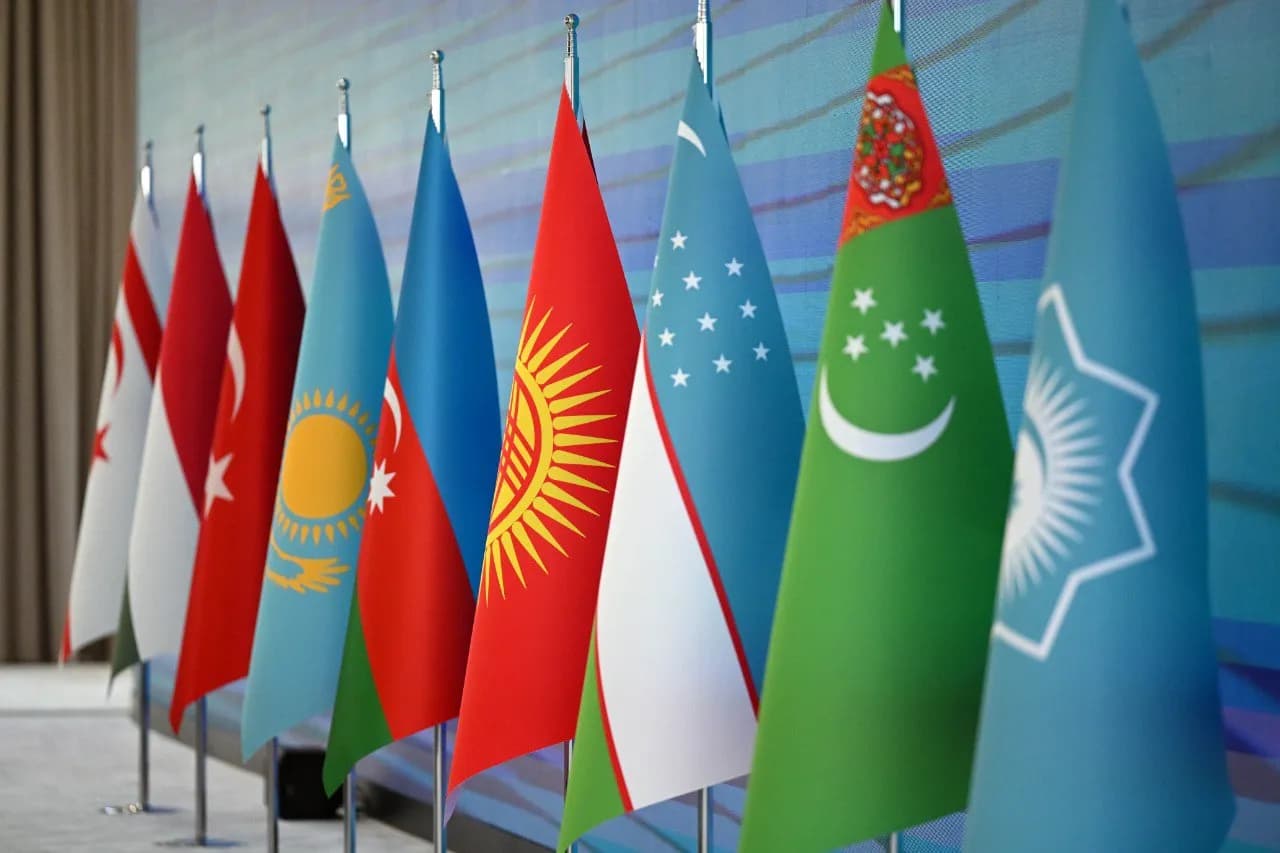
The geographical reality of the Middle Corridor is that it runs directly through the Turkic heartland. Its core nations—Turkey, Azerbaijan, and Kazakhstan—share a common Turkic identity that provides a unique political and cultural foundation for cooperation. This central spine is further strengthened by its connections to other key regional states like Uzbekistan and Turkmenistan, which see the corridor as their most reliable link to global markets.
3.3. From Cultural Forum to Economic Engine
This geopolitical necessity has transformed the Organization of Turkic States (TDT) from a body focused primarily on shared heritage into the primary engine for coordinating the Middle Corridor's development. The outcomes of the Bişkek and Shusha summits demonstrate a clear, practical focus on turning cultural affinity into hard infrastructure:
● Digital Integration: Harmonizing customs procedures and digitalizing logistics to eliminate bottlenecks and accelerate transit times.
● Physical Connectivity: Coordinating massive investments to upgrade critical railways and ports, such as the Bakü-Tiflis-Kars (BTK) rail line and Azerbaijan's new Alat Port, which is being built out as the central logistics hub on the Caspian Sea.
● Financial Mechanisms: Establishing new entities like the Türk Investment Fund to pool capital and finance the joint infrastructure projects essential for the corridor's success.
4. More Than a Trade Route: Weaving a Tighter Union
The integration driven by the Middle Corridor is not limited to logistics. The same geopolitical pressures are forcing a deeper, multi-dimensional union that is reinforcing itself across energy, data, security, and finance.
4.1. The Energy Artery
The imperative to escape Russian energy dominance is breathing new life into the long-proposed Trans-Caspian Gas Pipeline, which would carry Turkmen gas to Europe via Azerbaijan and Turkey.
4.2. The Digital Weave
Alongside the physical corridor of steel and concrete, a digital corridor of fiber optics is being laid. The Trans-Hazar Fiber Optic cable is a prime example of the critical data infrastructure being built to bind the Turkic states closer together, ensuring that information flows as freely.
4.3. A New Security Architecture
Turkey's emergence as a key provider of advanced defense technology is creating a new security dynamic. The acquisition of systems like Bayraktar TB2 drones by Kazakhstan and Kyrgyzstan does more than upgrade their arsenals; it erodes Russia's long-held monopoly as the region's security arbiter and creates an independent military-industrial pole of gravity around Ankara.
4.4. The Capital Catalyst
The corridor's momentum is being further accelerated by capital from the Gulf. With Iran marginalized, Gulf powers like the UAE are pouring investment into Central Asia to secure their own non-Iranian trade routes. The UAE’s AD Ports is now investing heavily in Kazakh ports on the Caspian, a move that both validates the Turkic states' strategy and injects the capital needed to overcome the corridor's infrastructure deficits.
5. The Zengezur Question: The Final Link in the Chain
The ultimate strategic objective in this great realignment is the opening of the Zengezur Corridor (now officially the 'Trump Route for International Peace and Prosperity'). This proposed land bridge would physically connect Turkey directly to the main territory of Azerbaijan, creating an unbroken overland route to the Caspian Sea and the heart of Central Asia. Its geopolitical significance is immense. In Tehran, the project is viewed as "Ankara's highway to Turan," a clear recognition that its completion would permanently bypass and marginalize Iran in the new map of Eurasian transit, cementing the Turkic corridor as the central axis of the continent.
Conclusion: History's Compulsion
The narrative is clear and the sequence of cause-and-effect is undeniable. Global instability, driven by great power competition and regional conflict, crippled the old trade routes. This logistical crisis forced the emergence of the only viable alternative—the Middle Corridor. Because this corridor runs through the Turkic heartland, deep and pragmatic cooperation among these nations became a non-negotiable requirement for their collective survival and prosperity. This emerging union is not the product of a romantic cultural dream, but a hard-headed strategic compulsion born of the unforgiving realities of modern geography and economics.
History doesn’t ask the Turks if they wish to unite. It simply places them at the crossroads—again.
Abdullah Yakup Üner
Contributing writer at EUReflect.
Follow EUReflect
See more of our reporting on Google
Mark EUReflect as a preferred source and our stories are ranked higher for you in Top Stories, Discover and Google News — and carry a “preferred” badge when they are cited in AI results.
Add EUReflect as a preferred source