A Multipolar Model in the Defense Industry: The Türkiye–Pakistan–China Triangle
In this framework, Pakistan is not merely a traditional and friendly defense partner; it can also act as a strategic bridge facilitating Türkiye’s establishment of multipolar and technology-driven relationships with rising powers across Asia.
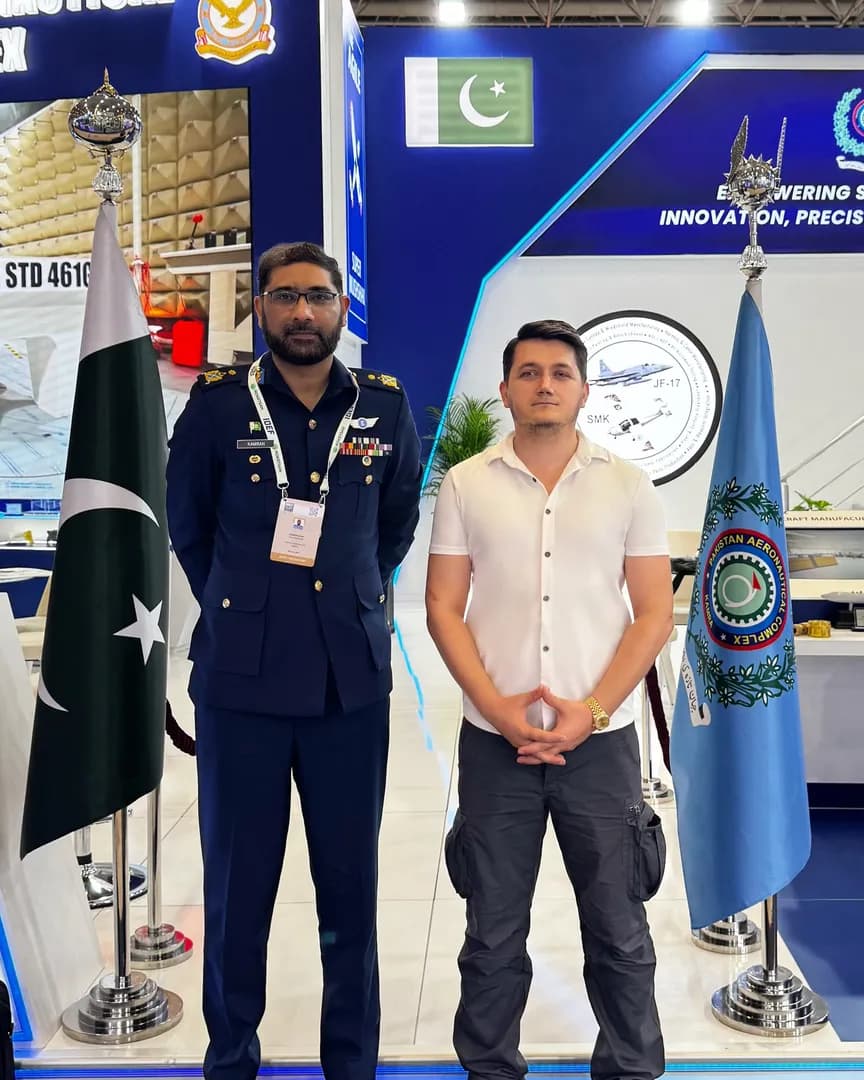
The International Defence Industry Fair (IDEF), organized biennially under the auspices of the Turkish Armed Forces Foundation (TSKGV), stands as one of the leading global events in the defense sector. Since its inception in 1993, IDEF has served as a critical platform for showcasing advancements in defense technologies, innovations, and strategic partnerships. The exhibition covers a wide array of systems and services, ranging from land, air, naval, and space platforms to electronic warfare technologies, unmanned aerial vehicles, and military logistics solutions. It plays a vital role in demonstrating Türkiye’s growing defense capabilities to the international community and in cultivating global cooperation in the defense sector. Moreover, IDEF significantly contributes to military diplomacy and the transfer of defense technologies among participating countries, while also providing a strategic forum for the exchange of long-term defense visions.
During IDEF, I had the opportunity to meet with Air Vice Marshal Kamran Hasan of the Pakistan Air Force, gaining in-depth insights into the institutional structure, operational capabilities, and strategic vision of the Pakistani Armed Forces. Our discussion was particularly illuminating and inspiring with regard to Pakistan’s confident defense doctrine, its approach to regional deterrence, and its cost-effective modernization strategies. General Hasan elaborated on the conceptual framework underpinning Pakistan’s flexible defense systems designed to counter both conventional and hybrid threats. He also strongly emphasized Pakistan’s commitment to a policy of technological self-reliance, driven by domestic innovation and strategic autonomy.
A particularly noteworthy element in this context was Pakistan’s procurement of the JF-17 Thunder multi-role combat aircraft from China. I had the opportunity to observe the aircraft’s capabilities first-hand and was impressed by its maneuverability in aerial combat and its modular structure, equipped with advanced avionics systems. Especially with its integrated electronic warfare systems, radar-guided weapon delivery capabilities, and low maintenance costs, the JF-17 presents a cost-effective yet high-performance solution for developing countries. More importantly, the domestic production of the entire JF-17 fleet within Pakistan highlights the country’s technical maturity in defense manufacturing. This not only reduces external dependency but also demonstrates the feasibility and sustainability of technology-driven, multilateral cooperation models.
The JF-17 program, sustained through Pakistan–China collaboration, demonstrates that countries not integrated into Western-centric defense alliances can still access and sustain advanced combat aircraft technologies through indigenous capacities. This model offers important strategic lessons for Türkiye. Given the arms embargoes, political restrictions, and export license limitations often imposed by Western states, trilateral cooperation involving Türkiye, Pakistan, and China could serve as a robust alternative framework. Such a partnership would accelerate Türkiye’s technological depth and enable deeper integration into Asia-centered strategic networks.
Pakistan’s experience in building a cost-effective yet potent air force also provides a complementary and instructive reference for Türkiye’s fifth-generation fighter jet initiative, the KAAN project. During KAAN’s transition to serial production, Türkiye could benefit from Pakistan’s accumulated expertise in platform manufacturing, systems integration, and modernization driven by user feedback. In parallel, China’s advanced capabilities in radar technologies, propulsion systems, AI-based flight control, and unmanned aerial vehicles could serve as critical enablers in enhancing Türkiye’s indigenous competencies.
In this framework, Pakistan is not merely a traditional and friendly defense partner; it can also act as a strategic bridge facilitating Türkiye’s establishment of multipolar and technology-driven relationships with rising powers across Asia. By diversifying its defense diplomacy, Türkiye could pursue a multidimensional strategy that harmonizes its alignment with Euro-Atlantic institutions while simultaneously engaging with alternative Asia-centric networks. In an increasingly unpredictable geopolitical landscape, such a hybrid approach would provide Türkiye with a distinct strategic advantage. Only through this path can Türkiye position itself as an independent, effective, and globally engaged defense actor.

İsmail Polat
Ph. D. in International Relations
Follow EUReflect
See more of our reporting on Google
Mark EUReflect as a preferred source and our stories are ranked higher for you in Top Stories, Discover and Google News — and carry a “preferred” badge when they are cited in AI results.
Add EUReflect as a preferred source