A New Political System Takes Shape in Kazakhstan: Kurultai
The August 23 vote marks the first parliamentary election under a new constitution, replacing the bicameral system with a single-chamber Kurultai, a change unseen since 1991.
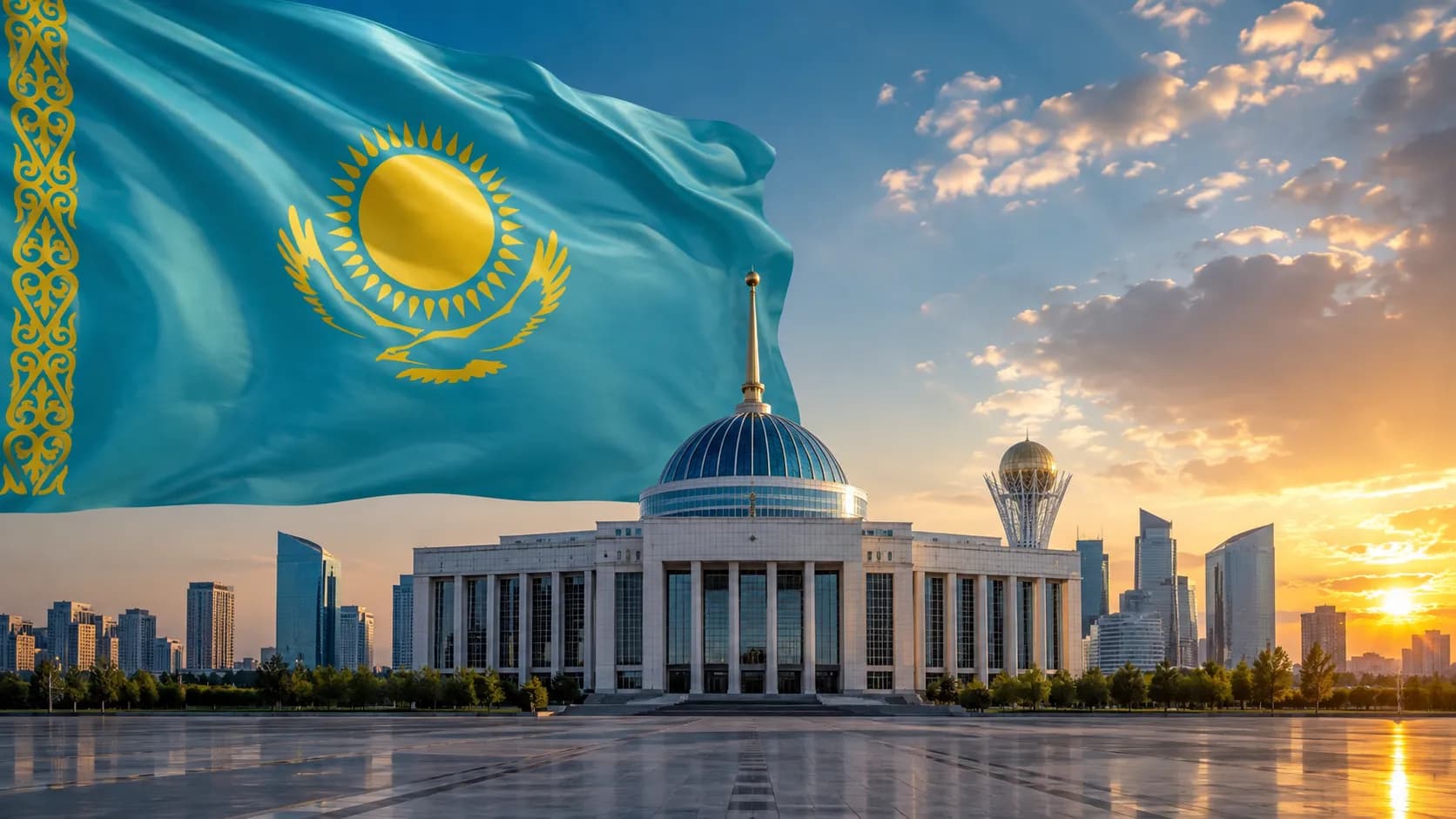
Kazakhstan entered a new chapter in its political history on August 23, as citizens went to the polls for the first parliamentary election held under the country’s new constitutional system.
The significance of the vote extends far beyond the election of new lawmakers. For the first time, Kazakhstan is putting into practice a redesigned political architecture built around a unicameral parliament, the Kurultai. The transition represents one of the most substantial institutional changes since the country gained independence in 1991.
Under the previous system, legislative authority was divided between two chambers. The new model concentrates parliamentary functions within a single institution. Supporters of the reform argue that this structure can make decision-making faster, responsibilities clearer and political accountability easier for citizens to follow.
From Two Chambers to One Center of Responsibility
One of the potential advantages of a unicameral system is institutional simplicity.
When legislation passes through multiple parliamentary chambers, the process can involve repeated deliberations, negotiations and procedural stages. A single-chamber structure can shorten this chain and create a more direct route between political debate, legislation and implementation.
For Kazakhstan, a geographically vast country pursuing rapid economic and technological modernization, speed of governance has particular importance. Decisions concerning infrastructure, digital transformation, investment, social policy and regional development increasingly require institutions capable of responding quickly to changing conditions.
The Kurultai model could therefore provide Kazakhstan with a more agile legislative mechanism.
But speed alone is not the objective. The reform also creates a clearer center of political responsibility. Citizens can more easily identify which institution debates laws, which representatives supported them and where responsibility lies when policies fail to produce the expected results.
A More Visible Parliament
The new system also has the potential to increase the political visibility of parliament.
In bicameral systems, legislative responsibility can sometimes become dispersed between chambers. Under the Kurultai structure, national political debates will increasingly converge within one parliamentary arena.
This could make parliamentary proceedings more understandable to the public and potentially strengthen the relationship between voters and their representatives.
The challenge will be ensuring that institutional concentration is accompanied by meaningful debate, transparency and political pluralism. A more efficient parliament becomes politically valuable when efficiency is combined with effective scrutiny.
A New Balance Inside the State
The transformation is particularly important because it does not stand alone. Kazakhstan’s constitutional restructuring introduces a broader institutional architecture, including the new position of vice president.
Together, these changes indicate an attempt to redefine how responsibilities are distributed at the highest levels of government.
The vice-presidential institution could provide greater continuity within the executive branch, improve coordination and create another clearly defined element within the state hierarchy. Its real significance, however, will depend on the powers attached to the office and how those powers function alongside the presidency, government and Kurultai.
Kazakhstan is therefore entering a period in which constitutional design will increasingly be tested through political practice.
Why the Reform Matters Economically
The political transformation also carries an economic dimension.
Kazakhstan sits at the center of some of Eurasia’s most important emerging transport, energy and trade corridors. The country is expanding its role in the Middle Corridor, developing Caspian infrastructure, attracting foreign investment and seeking to diversify an economy historically dependent on natural resources.
Such ambitions require predictable institutions.
A simplified legislative process could help accelerate economic reforms and reduce the time between identifying a policy problem and producing a legislative response. For international investors, meanwhile, greater clarity over institutional responsibilities can improve the predictability of the decision-making environment.
If accompanied by transparency, legal stability and stronger accountability, the new architecture could therefore become part of Kazakhstan’s wider economic modernization strategy.
August 23 Could Become a Political Milestone
The importance of August 23 will ultimately be determined not simply by who wins seats in the Kurultai, but by what kind of institution the new parliament becomes.
Constitutions can redesign institutions on paper. Elections begin the much more difficult process of turning those institutions into political reality.
That is what makes this election historic.
More than three decades after independence, Kazakhstan is attempting to move into a new phase of state-building. The country is replacing an established parliamentary structure, introducing new institutions and testing a different model of governance at a moment when its economic and geopolitical importance is increasing.
If the Kurultai succeeds in making legislation faster, political responsibility clearer and parliamentary activity more visible, the reform could become more than an administrative restructuring. It could mark an important stage in the evolution of Kazakhstan’s post-independence political system.
August 23, 2026, may therefore be remembered not merely as an election day, but as the day Kazakhstan began operating under a fundamentally new political architecture.
A new parliament has been elected. More importantly, a new political era has begun.
Alvara Merrick
Contributing writer at EUReflect.
Follow EUReflect
See more of our reporting on Google
Mark EUReflect as a preferred source and our stories are ranked higher for you in Top Stories, Discover and Google News — and carry a “preferred” badge when they are cited in AI results.
Add EUReflect as a preferred source