Critical Minerals Gain Strategic Importance in EU–Myanmar Relations
As the EU seeks to diversify critical mineral supplies, Myanmar's role as a top producer is undercut by Beijing's grip on processing, leaving Western buyers paying a structural premium.
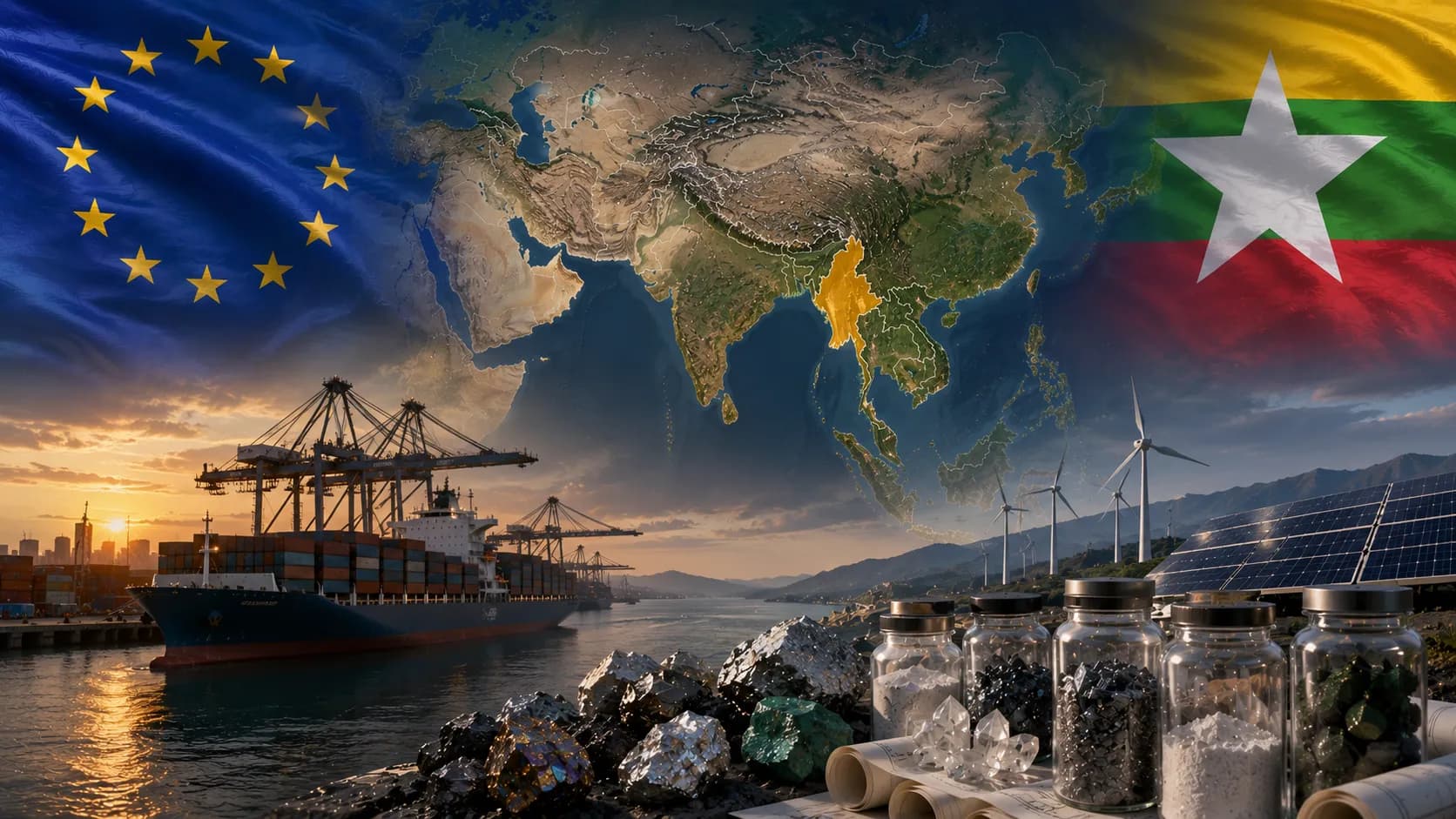
Critical minerals — the common denominator of technologies ranging from electric vehicles and wind turbines to semiconductors and defence systems — turned into one of the most volatile markets of the global economy over the 2025-2026 period. In this era of intertwined price shocks, export controls, and supply chain restructuring, the equation is changing fundamentally both for Myanmar as a producer and for the European Union as one of the world's largest consumer blocs.
The Global Market: Export Controls and Prices Split in Two
The defining development shaping the market was China's introduction in April 2025 of export licensing requirements covering seven heavy rare earth elements — samarium, gadolinium, terbium, dysprosium, lutetium, scandium, and yttrium; in October 2025, the controls were expanded to cover refining and magnet-manufacturing equipment as well. The result has been a de facto bifurcation of the market: according to Argus data, following the controls, the price of yttrium oxide in the ex-China market rose 140-fold to approach 1,100 dollars/kg, while dysprosium oxide climbed to roughly 1,450 dollars/kg and terbium oxide to about 4,500 dollars/kg; domestic Chinese prices for the same elements range between one-fifth and one-tenth of those levels. It is also reported that dysprosium appreciated eightfold in a single year on the European market, reaching 2,250 dollars/kg. According to S&P Global's analysis, shipments of yttrium, dysprosium, and terbium have fallen by roughly 50 per cent compared with the pre-control period, and supply bottlenecks are expected to persist throughout 2026.
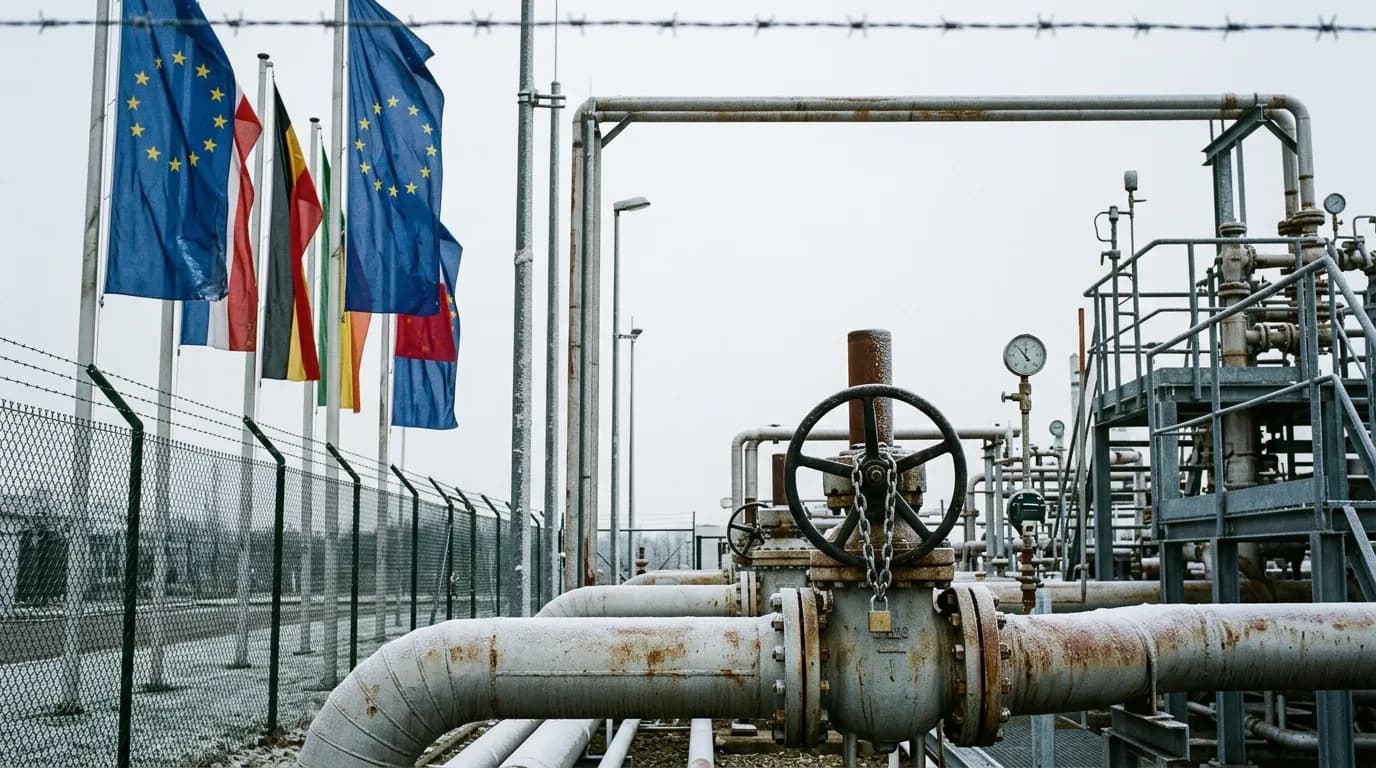
The structural picture is even more striking: China holds more than 90 per cent of global rare earth refining capacity and 99 per cent of the separation capacity for heavy elements such as dysprosium and terbium. Even as mining diversifies towards the United States, Australia, and Brazil, this concentration in the refining link means the price architecture is set in Beijing; a "two-tier market" in which Western magnet manufacturers pay a structural premium for licensed material is becoming permanent.
Myanmar: The Invisible First Link of the Supply Chain
Within this global equation, Myanmar occupies a position whose weight is rarely discussed. According to an analysisbased on International Energy Agency data, the country ranked second in global rare earth production in 2024 with a 16 per cent share, behind only China's 61 per cent, and exported more than 28,000 tonnes worth 624 million dollars in the first nine months of 2025. In heavy elements, the picture is decisive: in 2023, approximately 60 per cent of the global supply of dysprosium and terbium originated from Myanmar, and the country's mining output of these two elements doubled that of China's own mines. Industry estimates point to the ionic clay deposits of Kachin and Shan states supplying an estimated 50-70 per cent of global heavy rare earth supply outside China's domestic quota system.
Herein lies the paradox: even China, which controls more than 90 per cent of refining, leans on Myanmar as its largest external supplier of raw heavy elements; the cumulative value of the country's rare earth exports to China reached 4.3 billion dollars between 2017 and 2025. It is reported that, driven by Beijing's quest for supply security, mining activity is expanding beyond Kachin into eastern Shan State, with at least 20 new sites observed in early 2026 alone. The invisible first link of the global supply chain is, to a large extent, being forged in this geography.
What It Means for the EU: Targets, Dependencies, and a New Field of Opportunity
On the European side, the numbers explain why the issue has become a strategic priority. According to Commission data, 100 per cent of the global refining of rare earths used in permanent magnets takes place in China, and EU demand for rare earths is projected to rise five- to six-fold by 2030 and six- to seven-fold by 2050. According to Eurostat, roughly half of the EU's rare earth imports still come from China. In response, the Critical Raw Materials Act (CRMA), adopted in March 2024, sets 2030 targets of at least 10 per cent of annual consumption extracted within the EU, 40 per cent processed in the EU, and 25 per cent covered by recycling; capping single-country dependence at 65 per cent for any strategic raw material is likewise a core principle of the legislation. In 2025, the Commission approved 60 strategic projects spanning 13 member states and 13 third countries; through these projects, single-country dependence in rare earth extraction is targeted to fall from 95 per cent to 42 per cent. The RESourceEU action plan, adopted in December 2025, is in turn accelerating supply security efforts for key sectors such as automotive, artificial intelligence, and defence.
It is precisely in this picture that Myanmar becomes an indirect yet critical stakeholder for the EU. Since no Western-compliant direct supply chain yet exists, even electric vehicle motors and wind turbine generators produced under Western supply chain ambitions can remain dependent on Myanmar material processed in China and lacking chain-of-custody documentation. The International Crisis Group likewise emphasises in its March 2026 report that Myanmar has important ramifications for the EU's critical mineral supply chain security priorities, recommending that Brussels link its Myanmar policy with its critical raw materials frameworks.
Conclusion: A Win-Win That Runs Through Transparency
The 2026 photograph of the global critical minerals market is clear: prices split in two by export controls, single-centre concentration in refining, and rapidly growing demand. In this photograph, the interests of Myanmar — the de facto production base of heavy rare earths — and of an EU locked onto its 2030 targets intersect on constructive agendas: developing chain-of-custody and supply chain transparency standards, technical cooperation on responsible mining and environmental remediation, and support for joint monitoring mechanisms with countries of the region. According to experts, such an agenda would strengthen the raw material security of Europe's green and digital transitions while also opening the way for mining revenues to translate more fully into the prosperity of Myanmar's people — a win-win formula that generates stability for both sides amid the turbulent course of the global market.
Botakoz Unbayeva
Contributing writer at EUReflect.
Follow EUReflect
See more of our reporting on Google
Mark EUReflect as a preferred source and our stories are ranked higher for you in Top Stories, Discover and Google News — and carry a “preferred” badge when they are cited in AI results.
Add EUReflect as a preferred source