Front lines in Ukraine with almost no changes in June, per data
Data from Institute for the Study of War shows that Russian advance in Ukraine is slowing.
Written by journalist Danylo Aleksandrov
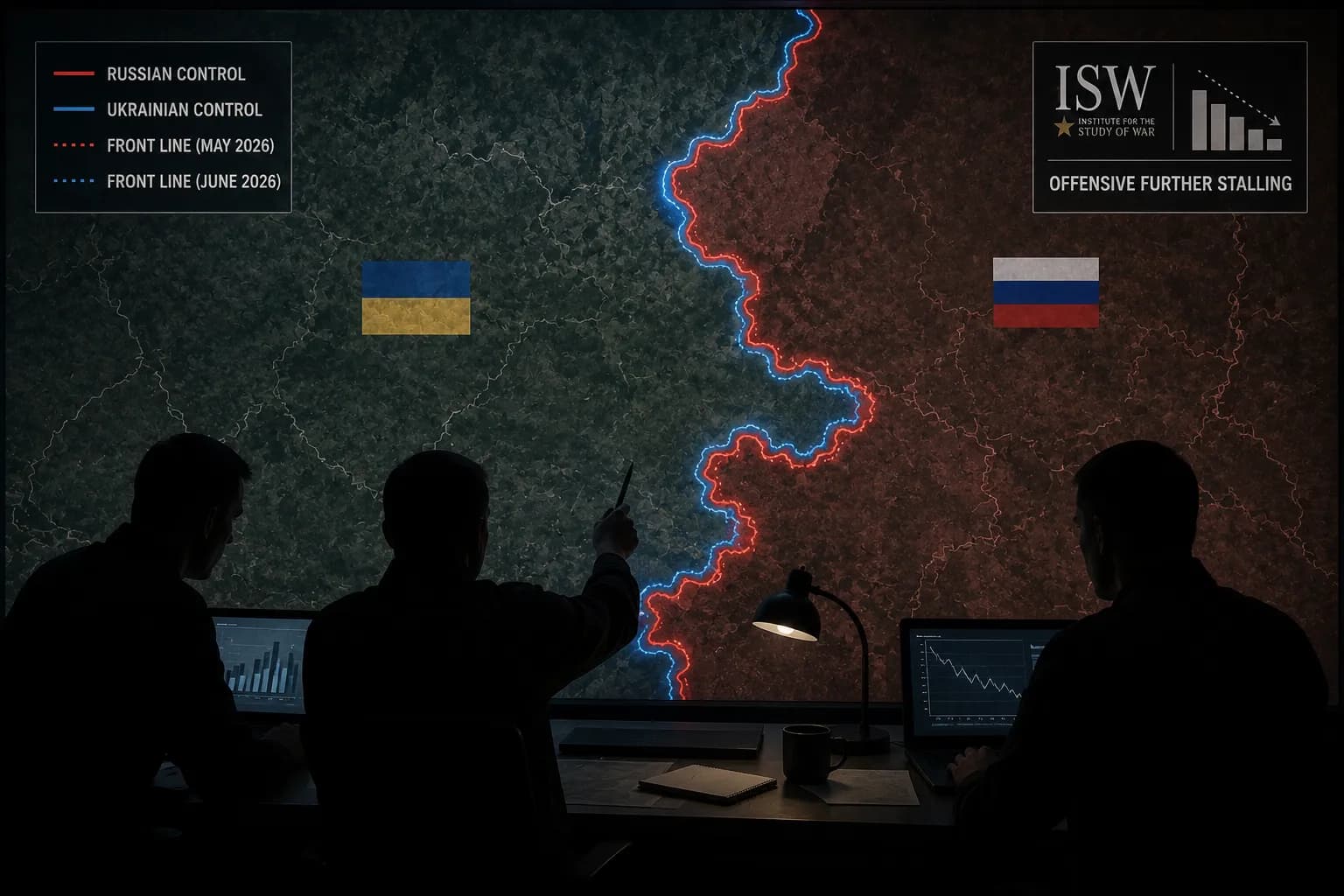
Analysis of data from US Institute for the Study of War (ISW) by AFP showed, that in June 2026, the front lines in Ukraine remained with little to no changes, with the prediction of Russian offensive further stalling.
The data from the month of June shows that during that months Russian forces occupied around 30 square kilometers of Ukrainian territory, mainly in the northeast of the Kharkiv oblast’. But ISW points out that the main reason behind this is that Russian army developed their previous incursions into advances, solidifying their control over past gains.
At the same times Ukrainian forces conducted counterattacks, which led to them liberating almost the same territory from the occupiers, 19 in Zaporizhzhia oblast and 11 in Dnipropetrovsk oblast, located in southern and central Ukraine respectively.
The change happens thanks to Ukrainian advances in tactics and technology, mainly related to drones. The most recent of such breakthroughs is destroying the Russian logistics in their rear areas, which makes usual tasks such as resupplying their units much harder and riskier.
Data analyzed shows the trend of Russian advance slowly but steadily slowing down while Ukraine succeeds in liberating parts of its territory. As such, Russia lost control of around 403 square kilometers of Ukrainian land in April and May 2026. The month of April is special in this regard as during that month for the first time in 2,5 years Ukraine gained more territory than it lost.
Currently around 19% of the country’s territory is occupied. This number includes the Crimean peninsula annexed in 2014 and areas in Luhansk and Donetsk oblasts which were already under Russian occupation before the full scale invasion in 2022.
It is estimated that Russian invasion of Ukraine led to around 2 million military casualties, along with millions of civilian ones, and further millions of those injured and displaced.
EUReflect News
Site Administrator
Follow EUReflect
See more of our reporting on Google
Mark EUReflect as a preferred source and our stories are ranked higher for you in Top Stories, Discover and Google News — and carry a “preferred” badge when they are cited in AI results.
Add EUReflect as a preferred source