U.S. Authorizes Embassy Staff to Depart Israel Amid Fears of Potential Iran Strike
Dateline: Washington / Jerusalem, Feb. 27, 2026 The United States has authorized its diplomatic personnel and their families to leave Israel, signaling heightened concern in Washington over the possibility of a military confrontation with Iran, according to official communications reviewed by U.S. media.
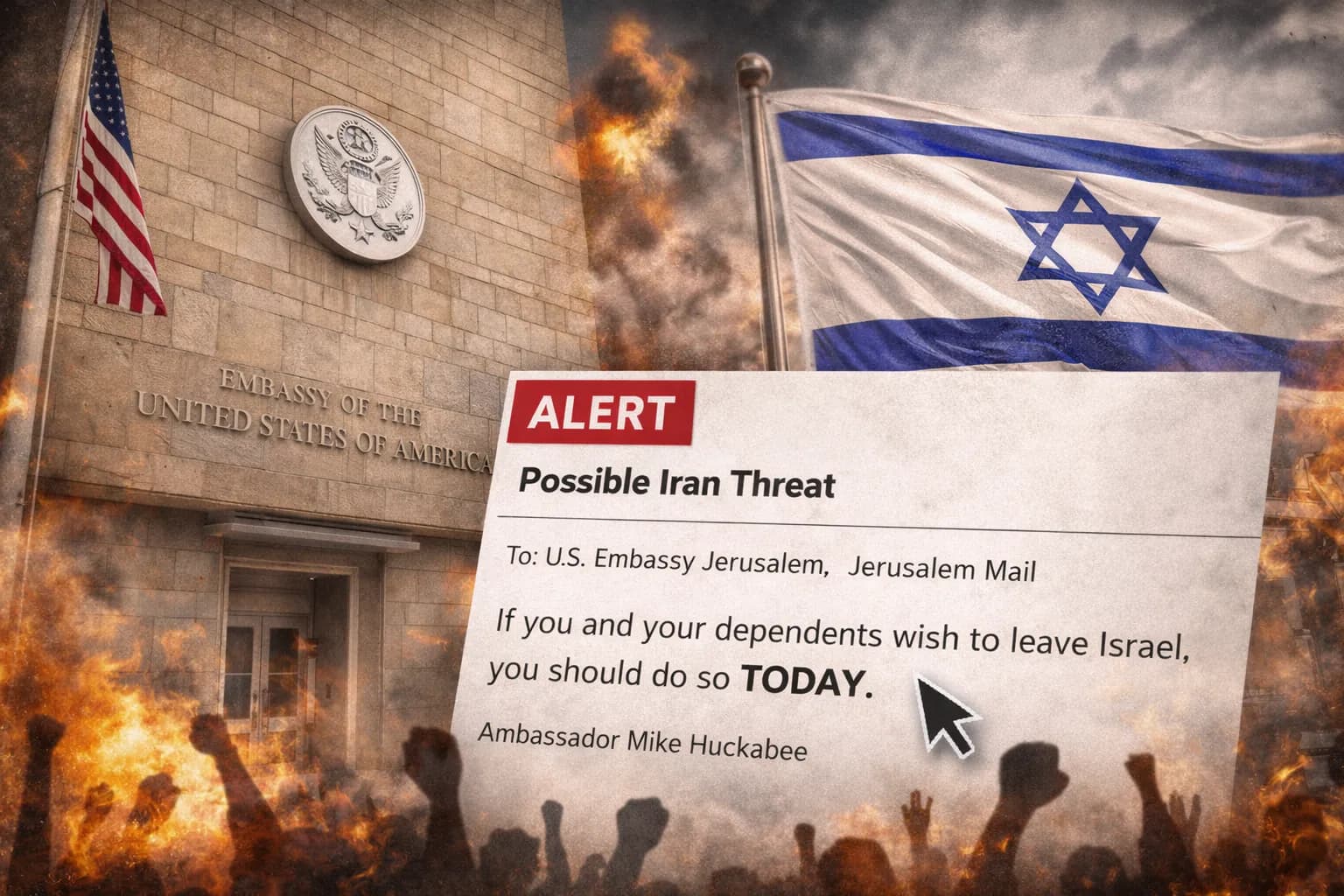
In a message sent Friday morning to embassy employees, U.S. Ambassador to Israel Mike Huckabee advised personnel that those wishing to depart should do so immediately. The directive underscored the urgency of the situation, stating that staff members who intended to leave “should do so TODAY,” reflecting concern over rapidly evolving security risks.
The warning was reported by The New York Times and comes as tensions between Washington and Tehran intensify following stalled diplomatic negotiations and growing military activity in the region.
Precautionary measure amid rising tensions
The U.S. Embassy in Jerusalem has not been fully evacuated, and the guidance applies to voluntary departures rather than a mandatory withdrawal. Such measures are commonly used to reduce potential risks to diplomatic personnel when intelligence assessments indicate possible escalation.
The State Department has not publicly disclosed specific intelligence behind the decision, but officials have increased security monitoring across American facilities in the Middle East in recent weeks.
The advisory reflects broader concerns that Iran could be targeted by U.S. military action or retaliate against American interests, raising the risk of regional instability.
Regional military posture and diplomatic breakdown
The move follows the deployment of additional U.S. military assets to the Middle East and the apparent breakdown of negotiations over Iran’s nuclear program. American officials had previously sought a diplomatic resolution but expressed frustration with the lack of progress.
Diplomatic efforts had involved intermediaries including Oman, which has historically served as a mediator between Washington and Tehran. However, uncertainty remains over whether negotiations can prevent further escalation.
Security implications for U.S. personnel
Security alerts issued to diplomatic staff typically reflect precautionary planning rather than confirmation of imminent conflict. Nonetheless, embassy drawdown authorizations often coincide with periods of heightened geopolitical risk.
The U.S. Embassy in Jerusalem remains operational, and American officials have not announced a full evacuation or closure.
Broader geopolitical context
The latest warning highlights the fragile security environment in the Middle East and the potential for rapid escalation involving major regional and global actors. Israel has long viewed Iran as a strategic threat, particularly regarding its nuclear program and support for armed groups across the region.
Washington’s decision to allow voluntary departures indicates that U.S. officials are preparing contingency plans while monitoring developments closely.
Primary source: The New York Times
Olha Pashchenko
Contributing writer at EUReflect.
Follow EUReflect
See more of our reporting on Google
Mark EUReflect as a preferred source and our stories are ranked higher for you in Top Stories, Discover and Google News — and carry a “preferred” badge when they are cited in AI results.
Add EUReflect as a preferred source