Business Diplomat: The Bridge That Turns Risk into Opportunity
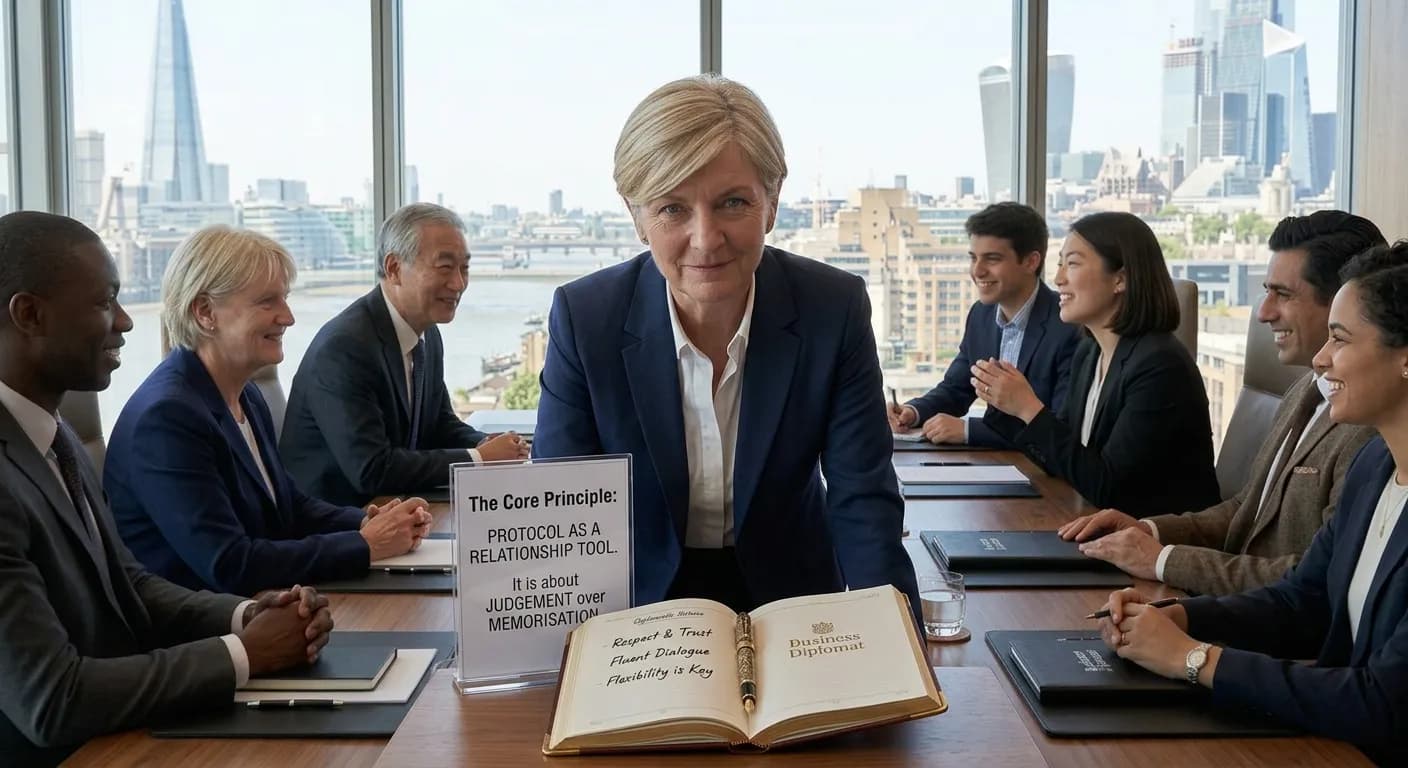
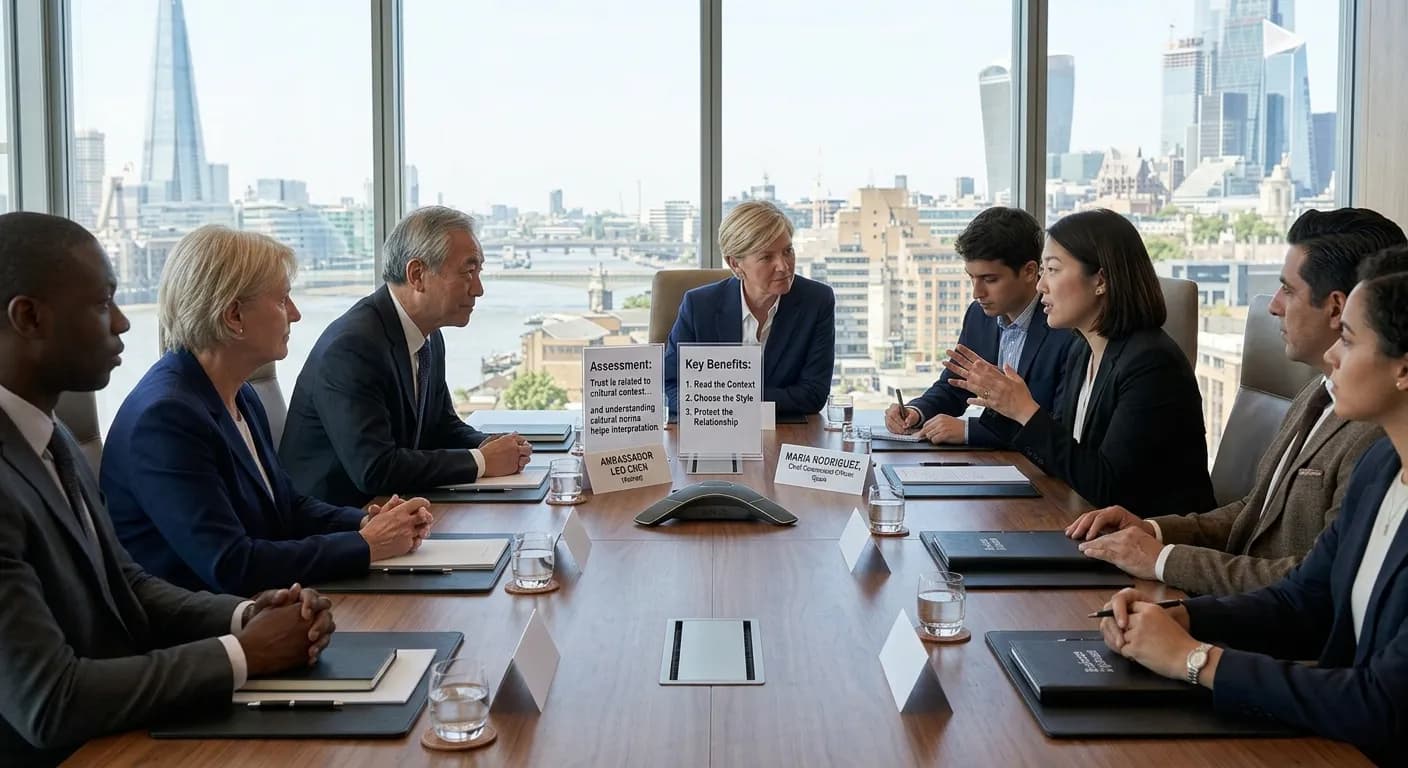
An executive editorial photo representing international business diplomacy. A diverse group of professional business executives and public officials in formal business attire sitting around an elegant wooden boardroom table during a high-level meeting. Large floor-to-ceiling windows behind them show a modern city skyline. On the table are sleek notebooks, pens, glasses of water, and document folders with the text "Business Diplomat" written cleanly on them. All other name cards, signs, and paper documents on the table are completely plain with no names or text. Professional, sophisticated lighting, high-detail editorial photography.
Introduction
Every company doing business across borders has to deal not only with customers and competitors but also with governments, regulators and society. When these relationships are poorly managed, the international environment is a source of uncertainty; when they are managed well, it is the ground for growth. In this part of its interview series, Business Diplomat presents a comprehensive definition of the concept, built with academic care.
Question: What does the concept of Business Diplomat mean to you?
"For me, a Business Diplomat is a person who, using diplomatic skills such as negotiation, communication and relationship-building, ensures the management of economic interests across borders with different actors, including governments, companies, institutions and civil society organisations. A Business Diplomat does not confine themselves to representing the interests of their institution; they also build trust and legitimacy, reduce political and commercial risks, and contribute to the creation of an environment favourable to cooperation and investment. For this reason, we see them as an actor who takes on the role of a strategic bridge between the world of business and the world of diplomacy, and who can turn international relations from a source of risk into opportunities for cooperation and sustainable growth."
Business Diplomat commentary
This three-sentence definition answers three questions in turn: what a business diplomat does, what they add, and what they ultimately are.
Skills and counterparts. The first sentence describes the business diplomat by the tools they use and the parties they deal with. The tools are taken from diplomacy: negotiation, communication and relationship-building. The counterparts fall into four groups: governments, companies, institutions and civil society organisations. The breadth of the list matters. The traditional view of business looks only at commercial partners. Yet the fate of an investment is often decided by a regulator's ruling, a local community's attitude or a civil society report. A business diplomat treats all these actors as parties at the table and finds a separate language for each.
Three contributions beyond representation. The second sentence raises the bar by saying the business diplomat "does not confine themselves to representing", and lists three contributions:
Building trust and legitimacy: Trust is counterparts believing you. Legitimacy is your activity being accepted by society and institutions. A company can hold every legal permit and still not be seen as legitimate in the country where it operates. A business diplomat works to earn that acceptance.
Reducing political and commercial risks: Changes in legislation, tensions in bilateral relations or public reactions usually give signals in advance. Someone who keeps relationships alive and watches the environment sees those signals early and prepares.
Contributing to a favourable environment: This is the widest contribution. A business diplomat prepares the ground not only for their own company but for the investors who come after. Every well-managed relationship makes the business climate between two countries a degree more reliable.
A strategic bridge. The third sentence completes the definition with an image: a strategic bridge between the world of business and the world of diplomacy. The two worlds need each other but work differently. Companies do not know the doors diplomatic channels can open, and diplomats cannot always see the concrete needs of business. A person who knows both languages closes that gap.
From risk to opportunity. The strongest idea in the definition is in its final phrase: turning international relations from a source of risk into opportunity. For many companies, foreign policy is like weather that cannot be controlled: it is awaited and endured. A business diplomat reverses this view. An agreement signed between two countries, a trade corridor opened or a political rapprochement under way is a concrete business possibility for someone able to read it. The phrase "sustainable growth" also sets the measure: the goal is a lasting presence, not a one-off gain.
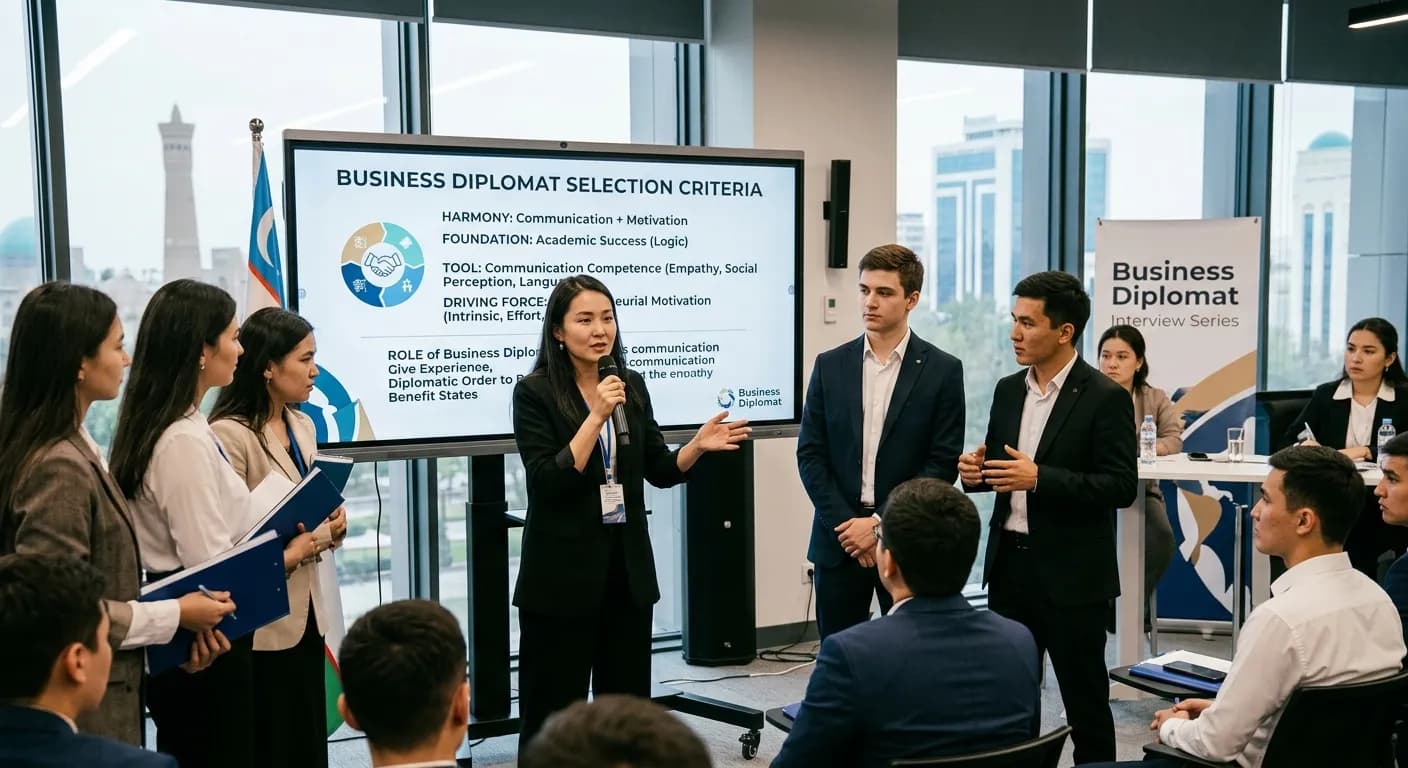
The role of Business Diplomat. The platform's mission is to give young people experience, bring a diplomatic order to the business world, and benefit states by revitalising the economy. The phrase "contributing to a favourable environment" matches the last element of that mission exactly: a business diplomat's work benefits countries as well as their own company. Business Diplomat aims to train young professionals who can speak with governments, institutions and civil society, see risk early and turn it into opportunity.
Conclusion
A business diplomat is a professional who manages cross-border economic interests with diplomatic skills, deals with a range of actors and goes beyond representation to build trust and legitimacy. They reduce risks, contribute to the investment climate and turn international relations from a threat into an opportunity for sustainable growth. Business Diplomat aims to raise the generation that will build this strategic bridge between business and diplomacy.
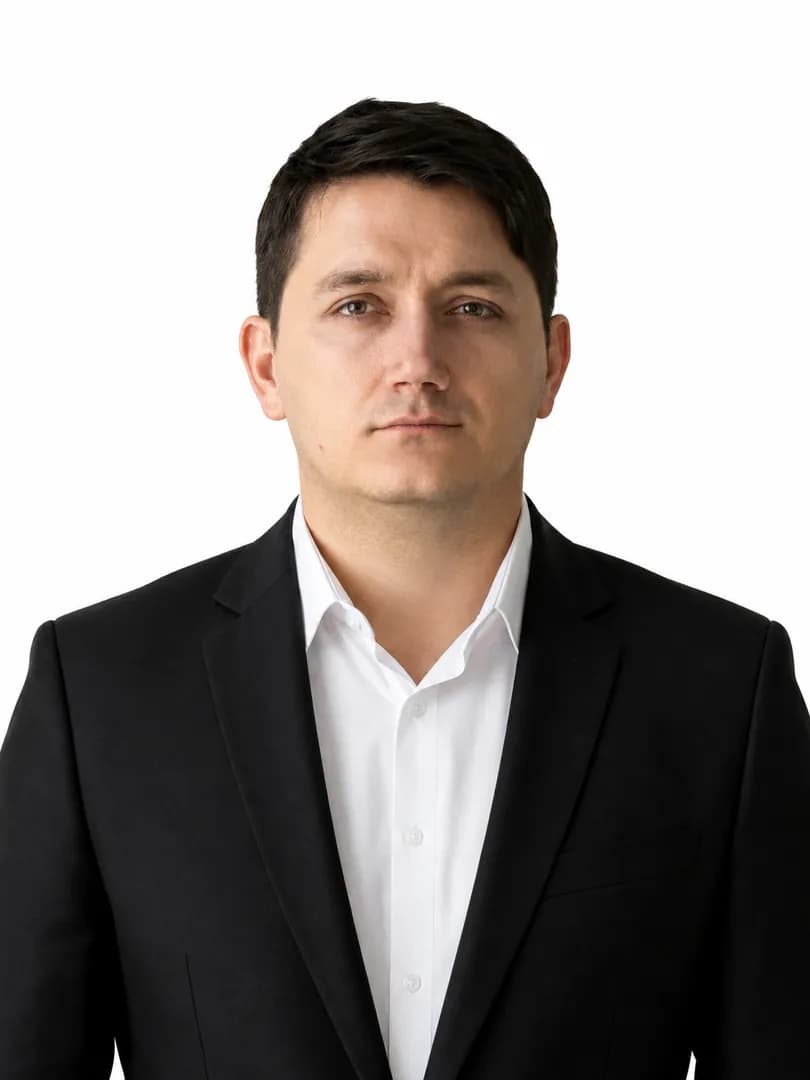
İsmail Polat
Ph. D. in International Relations
Follow EUReflect
See more of our reporting on Google
Mark EUReflect as a preferred source and our stories are ranked higher for you in Top Stories, Discover and Google News — and carry a “preferred” badge when they are cited in AI results.
Add EUReflect as a preferred source