Russia and China Conclude Major Joint Naval Drills “Joint Sea 2025” in the Sea of Japan
The “Joint Sea” series of exercises has been held regularly since 2012, with the 2025 edition marking one of the most complex iterations to date, involving a wide range of multi-domain capabilities.
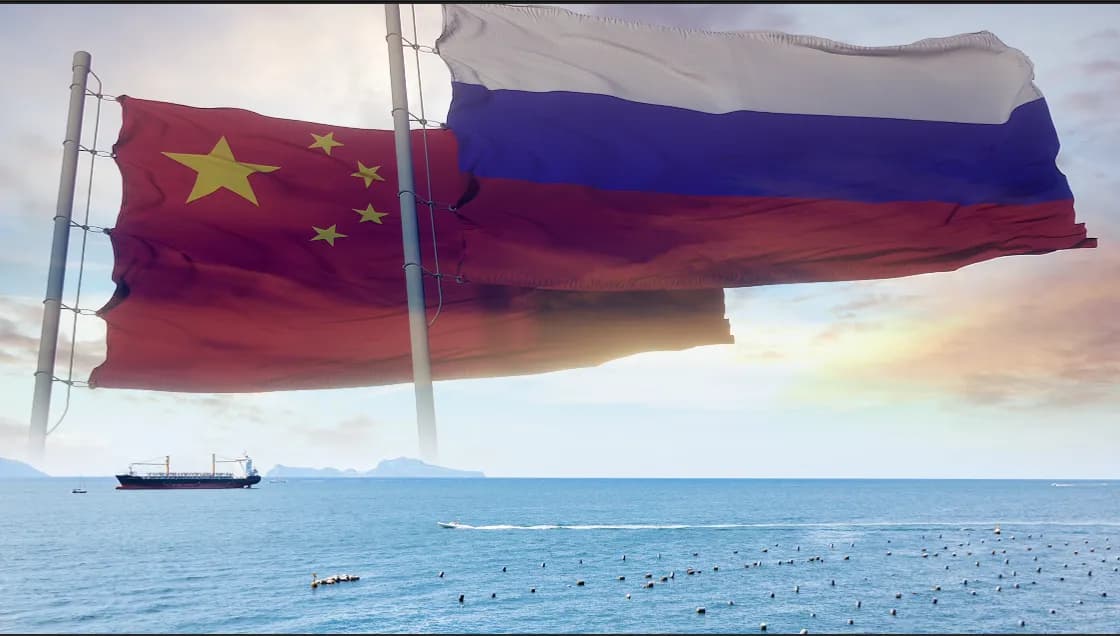
Russia and China have completed their large-scale joint naval exercises, “Joint Sea 2025”, which took place in the Sea of Japan. According to the press service of Russia’s Pacific Fleet, the drills, which began on August 3, consisted of both coastal and maritime components and were carried out with the stated purpose of strengthening bilateral military cooperation and enhancing regional security.
The final stage of the exercises featured joint artillery fire, simulated engagements with an adversary, and defensive operations against unmanned surface vessels and aerial drones. Naval aircraft, including China’s anti-submarine planes and Russia’s Il-38s, as well as shipborne helicopters, participated in a coordinated search for a mock enemy submarine. All operational objectives were reportedly completed successfully.
The Russian flotilla was led by the large anti-submarine ship Admiral Tributs, while the Chinese side was represented by the guided-missile destroyer Shaoxing. Diesel-electric submarines and maritime aviation from both countries also took part. The drills included coordinated anti-submarine warfare, air defense maneuvers, and search-and-rescue operations.
Following the exercise, naval vessels from both countries are expected to form a joint task group for patrol missions in the Asia-Pacific region, the Pacific Fleet stated.
Although the exercises were declared to be defensive in nature and not directed against any third party, some analysts have interpreted them as a response to growing military tensions in the region.
In an interview with RIA Novosti, Igor Korotchenko, editor-in-chief of National Defense magazine and a prominent Russian military analyst, said:
“These joint drills should be seen as a response by Moscow and Beijing to both current and anticipated threats in the Asia-Pacific region.”
Korotchenko cited the increasing militarization of the region, particularly by the United States, as a contributing factor to perceived security risks. He noted that Washington is expected to begin deploying its Typhon intermediate-range missile systems in allied countries across the Asia-Pacific as early as 2026.
While no official statements from China directly addressed the geopolitical context, Beijing has previously emphasized the importance of deepening military cooperation with Russia as part of a broader strategic partnership.
The “Joint Sea” series of exercises has been held regularly since 2012, with the 2025 edition marking one of the most complex iterations to date, involving a wide range of multi-domain capabilities.
Sources:
Pacific Fleet Press Service (Russia)
RIA Novosti interview with Igor Korotchenko
Botakoz Unbayeva
Contributing writer at EUReflect.
Follow EUReflect
See more of our reporting on Google
Mark EUReflect as a preferred source and our stories are ranked higher for you in Top Stories, Discover and Google News — and carry a “preferred” badge when they are cited in AI results.
Add EUReflect as a preferred source