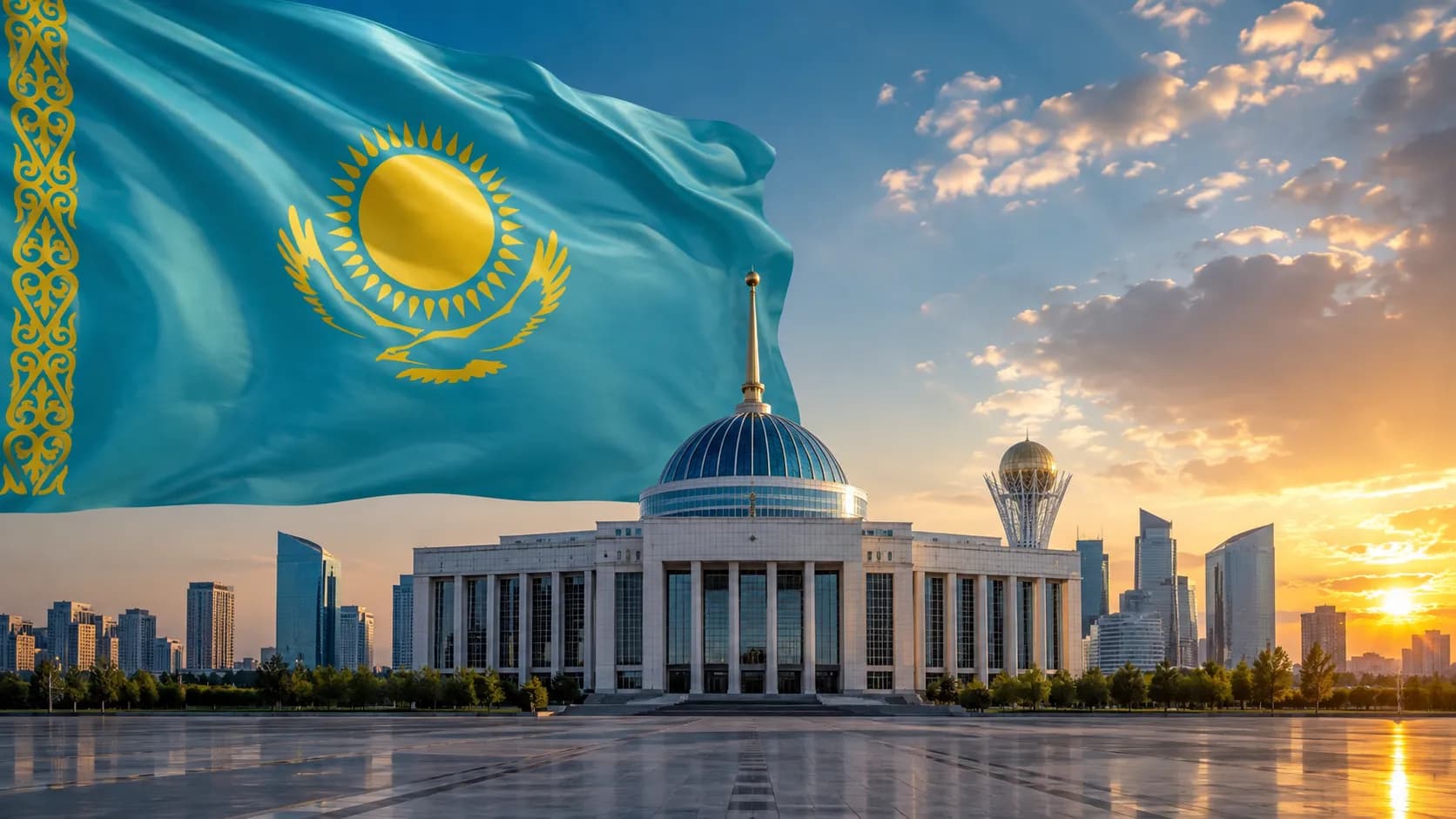
President Ilham Aliyev a visionary leader with a powerful official visit to the liberated Garabagh region on 28 May 2026 – a date forever etched in Azerbaijani history as both Independence Day and Eid al-Adha. It was no ordinary journey, but a triumphant statement of Azerbaijan’s indomitable spirit, its strategic acumen, and its steadfast dedication to building liberated territories into symbols of modernity and prosperity.
A pause in U.S. arms sales to Taiwan is pushing the island toward self-reliance and asymmetric defense — drones, mobile missiles, and indigenous production — though gaps in air defense coverage and institutional inertia remain major hurdles on the road to full strategic autonomy.
Ashgabat 2045 is a long-term strategy to transform Turkmenistan’s capital through smart city technologies, digital governance, infrastructure modernization, and international cooperation. The framework seeks to improve urban management, sustainability, and regional connectivity.
The US-China relationship combines strategic competition with deep economic interdependence. While tensions over technology, security, and Taiwan persist, economic ties, military communication, and selective cooperation on global issues help prevent rivalry from escalating into conflict.
Norway joined France’s nuclear deterrence programme, signaling Europe’s growing push for strategic autonomy and reduced dependence on the US. The initiative strengthens Europe’s northern and eastern security architecture while raising major geopolitical and legal questions regarding NATO, Russia, and the NPT framework.
In the AI race between the US and China, the decisive factor is no longer only chip technology but also energy capacity. China gains an advantage through cheap and large-scale electricity production, while the US faces energy infrastructure bottlenecks. However, China also struggles with chip and infrastructure integration challenges.
TIIF 2026 brings together presidents, prime ministers, ministers, and global financial leaders from Europe, Asia, the Gulf, and the US. The forum positions Uzbekistan as a strategic hub for investment diplomacy, connecting Eurasian economic corridors with global capital and policy networks.
Trump’s push to expand the Abraham Accords by involving Qatar, Turkey, and others alongside Iran negotiations is increasing regional tension. While framed as a peace framework, the strategy risks diplomatic fractures due to conflicting interests over Israel, Iran, and Gaza dynamics.
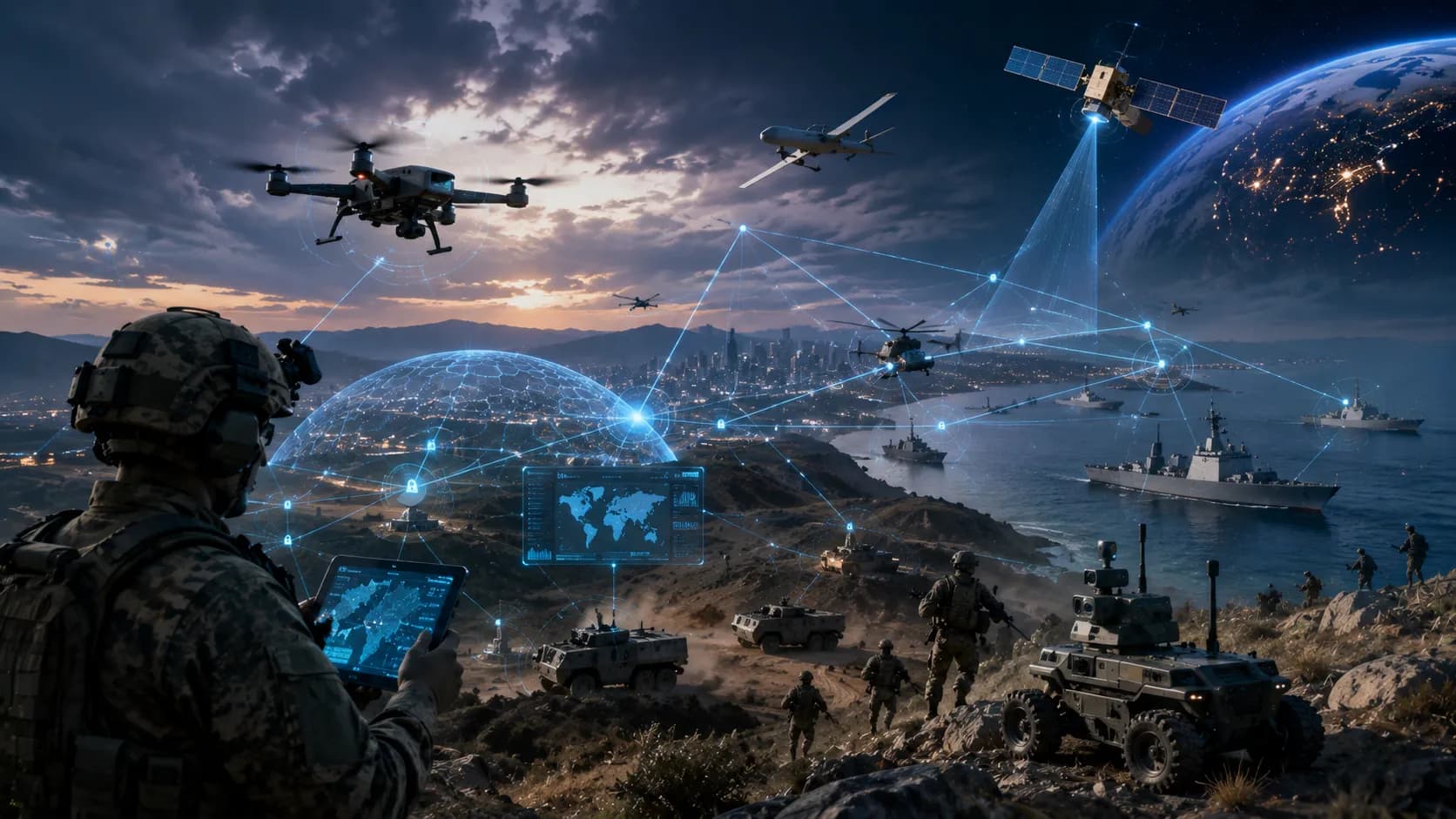
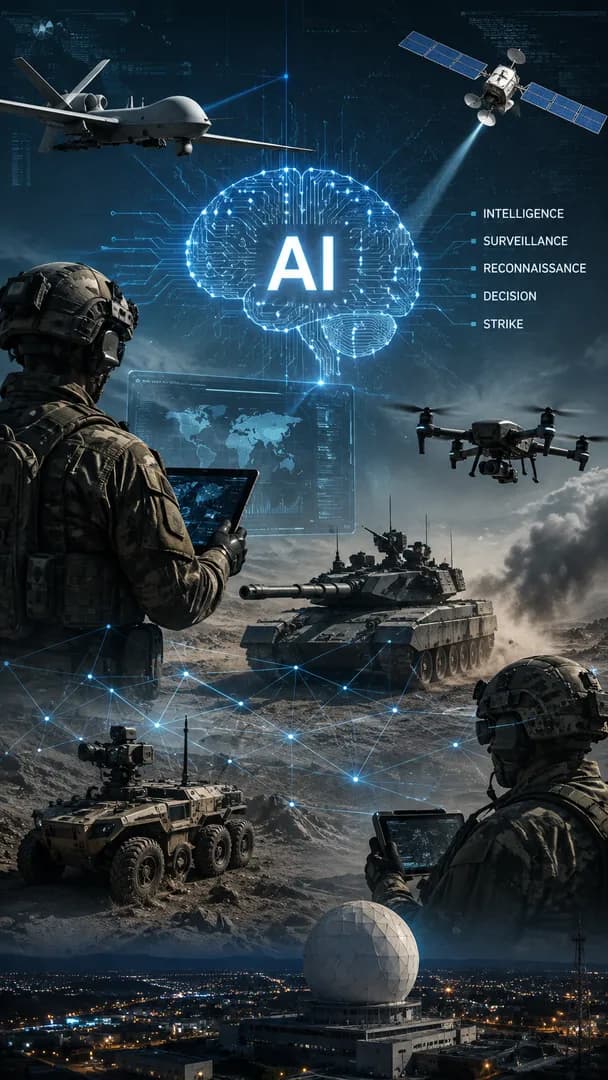
Türkiye has become a major disruptive force in global UAV warfare with Baykar, TAI, ASELSAN, and Roketsan. The US leads high-end autonomous systems, Israel dominates ISR technologies, Europe focuses on integrated defense networks, and China controls mass production. Drone warfare is shifting toward AI-driven, scalable ecosystems.
The U.S. Army has publicly unveiled new details about the M1E3 Abrams, its next-generation main battle tank, at the NDIA MDEX 2026 and Michigan Defense Expo 2026 conferences. Designed to replace the current M1A2 SEPv3, the M1E3 represents the most ambitious redesign of the Abrams platform since the original M1 entered service in 1980. The tank's most defining feature is its fully unmanned turret, which eliminates the loader from the crew and reduces the total crew to three personnel seated in an armored hull compartment. A secondary 30 mm Northrop Grumman M230LF cannon mounted atop the main turret provides dedicated counter-drone capability, while the XM251 active protection system — an Americanized derivative of Israel's Iron Fist — guards against incoming anti-tank threats. The drivetrain has been fundamentally redesigned: replacing the legacy gas turbine with a hybrid diesel-electric system is projected to improve fuel efficiency significantly and reduce combat weight from 73 to approximately 60 tons, easing logistical demands across the force. Structurally, the M1E3 is built on a Modular Open Systems Architecture, enabling rapid integration of software updates, new sensors, and upgraded fire control systems without requiring wholesale hardware redesigns. The program's pace is itself newsworthy: prototypes are expected in soldiers' hands by summer 2026, five years ahead of the original schedule. Full Initial Operational Capability is targeted for 2030. Underlying this urgency are the lessons drawn from the war in Ukraine, where drones, loitering munitions, and precision top-attack fires have exposed critical vulnerabilities in conventional armor. The M1E3 is the U.S. Army's direct response — a platform engineered not merely to survive the modern battlefield, but to dominate it.
On May 25, 2026, Pakistani writer Muhammad Ali Pasha presented his poetry collection “Romantic Whispers of the Archipelago” to Cuban Ambassador Damián Cordero Torres in Pakistan. The meeting focused on strengthening cultural cooperation and artistic exchange between Pakistan and Cuba, with media leaders also attending.
Turkmenistan’s 2026 development agenda focuses on economic stability, infrastructure expansion, and social progress within long-term planning up to 2052. It emphasizes GDP growth, economic diversification, smart city development, and investments in healthcare, education, and housing modernization.
The Xi-Putin summit highlighted growing China-Russia cooperation against Western influence, yet the relationship is driven more by shared opposition than a common vision. Power asymmetry, economic dependence, and differing geopolitical priorities continue to raise questions about its long-term durability.
Japan’s sharp decline in Middle Eastern oil imports following disruptions in the Strait of Hormuz signals a new phase in the global energy crisis. Europe may face rising energy costs, tougher competition for LNG and oil supplies, inflationary pressure, and renewed industrial challenges.
Uzbekistan is strengthening its social state model through people-oriented reforms led by the National Agency for Social Protection. The country aims to improve social services, strengthen state organization, support vulnerable groups, and promote national unity through inclusive social policies.